






Definition and Purpose of the Tenancy Guarantor Agreement Template
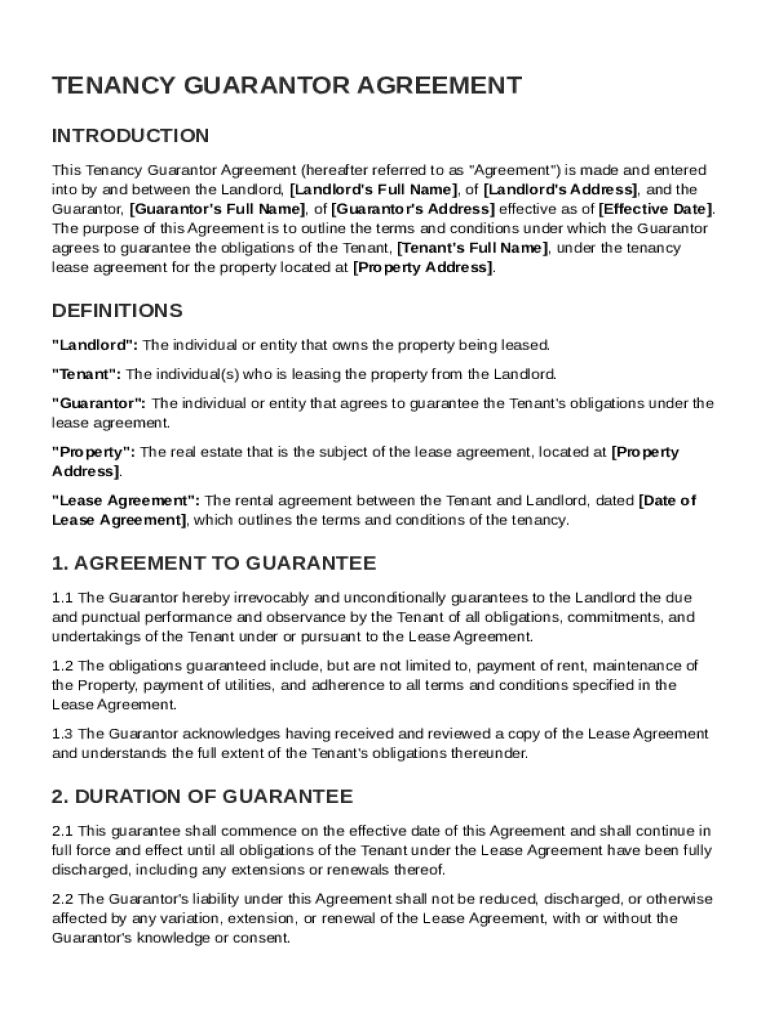
The Tenancy Guarantor Agreement Template serves as a legally binding document that outlines the obligations of a Guarantor who agrees to back the tenant's financial responsibilities under a lease agreement. It details the terms under which the Guarantor is required to cover rent and other potential costs if the tenant defaults. This essential agreement reduces risk for landlords by providing an additional layer of security, ensuring that lease obligations are met even if the tenant is unable to fulfill their financial commitments. The agreement includes clauses about obligations, duration, indemnity, and applicable laws, providing clarity and enforceability in different circumstances.
Key Elements of the Agreement
- Parties Involved: Identification of the tenant, landlord, and Guarantor.
- Responsibilities: Specific obligations of the Guarantor, including rent and potential property damage.
- Conditions of Guarantee: Situations under which the Guarantor must fulfill tenant obligations.
- Duration of Commitment: Time period for which the Guarantor’s responsibilities are applicable.
- Termination Provisions: Conditions that allow for release from obligations.
- Governing Law: Jurisdiction under which the agreement falls.
How to Use the Tenancy Guarantor Agreement Template
Utilizing the Tenancy Guarantor Agreement Template involves several steps to ensure all relevant details are accurately incorporated. Begin by downloading the template from a trusted source like DocHub, which supports a wide range of formats for compatibility and ease of use.
Completing the Template
-
Download and Open: Access the document via a desktop or mobile browser through DocHub’s platform.
-
Identify Parties: Clearly list the names and contact information of the tenant, landlord, and Guarantor.
-
Specify Obligations: Outline specific financial obligations to be guaranteed, including any additional fees or penalties.
-
Set Terms: Define the duration and conditions of the agreement, including any renewal or termination clauses.
-
Review Legal Clauses: Ensure all indemnity and waiver clauses are understood and agreed upon by all parties.
-
Obtain Signatures: Use DocHub's electronic signature feature to sign the agreement securely.
Examples of Use
- College Students: Guarantors often provide security for students who lack sufficient income.
- New Tenants: Individuals with limited credit history may require a Guarantor.
- High-Risk Areas: Agreements used in areas where tenant default is more common.
Steps to Complete the Tenancy Guarantor Agreement Template
Filling out the Tenancy Guarantor Agreement Template involves careful attention to detail. It is crucial to ensure all sections are filled out completely and accurately to prevent legal complications.
Detailed Steps
-
Gather Information: Collect all necessary details about the tenant, landlord, and Guarantor, including personal information and financial obligations.
-
Enter Details: Input these into the template, ensuring clarity and correctness.
-
Define Terms and Conditions: Clearly state any specific conditions, including payment expectations and breach scenarios.
-
Add Legal Provisions: Ensure all legal language is correct and comprehensible to non-legal parties, highlighting the importance of each clause.
-
Secure Signatures: Utilize DocHub’s electronic signing feature to authenticate the agreement.
-
Review and Confirm: Double-check all information and have all parties review before signing.
Variations
- Conditional Guarantees: Only triggered upon specific unmet tenant obligations.
- Time-Bound Guarantees: Limited to a predetermined lease period.
State-Specific Rules for the Tenancy Guarantor Agreement
In the United States, different states have varying laws and regulations regarding tenancy agreements. Understanding these is crucial for ensuring the Tenancy Guarantor Agreement is valid and enforceable.
Important State Variations
- California: Requires specific disclosures and advisories to protect tenant rights.
- New York: Has additional requirements for security deposits in guaranteed leases.
- Texas: Allows for broad leeway in defining Guarantor obligations but mandates clear language.
Practical Scenarios
- Lease Start Dates: Some states require specific notice periods before the lease is active.
- Guarantor Rights: States differ on the legal remedies available to Guarantors if obligations are fulfilled on behalf of the tenant.
Legal Use of the Tenancy Guarantor Agreement Template
The legal enforceability of the Tenancy Guarantor Agreement Template hinges on the use of precise language and adherence to compliance needs as dictated by the ESIGN Act. The agreement is legally binding when executed according to these requirements.
Ensuring Legal Compliance
- Electronic Signatures: Must meet legal criteria for validity.
- Clarity of Terms: Avoid vague language which may lead to disputes.
- Informed Consent: All parties must enter the agreement voluntarily with full understanding of their obligations.
Legal Outcomes
- Dispute Resolution: Agreements often include clauses regarding dispute resolution, which can vary by jurisdiction.
- Breach Consequences: Clearly stated consequences for any breaches in agreement terms provide protection for landlords.
Required Documents and Information
Ensuring that all necessary documentation is ready and available before completing the Tenancy Guarantor Agreement is crucial for a smooth process.
Documentation Checklist
- Identification: Government-issued IDs for all parties.
- Financial Proof: Income verification for the Guarantor.
- Lease Agreement: Copy of the tenant’s lease agreement.
- Guarantor’s Credit Report: Optional for verifying financial reliability.
Additional Considerations
- Background Checks: In some cases, additional documentation may be requested, including criminal background checks.
- References: Personal or professional references may be required to establish credibility.
Examples of Using the Tenancy Guarantor Agreement Template
Real-world applications of the Tenancy Guarantor Agreement Template illustrate its utility and adaptability in various situations.
Common Scenarios
- Student Housing: Parents often act as Guarantors for students leasing apartments.
- First-Time Renters: Young professionals with limited credit history often require a Guarantor.
- Temporary Employment: Individuals with non-permanent job status might need a Guarantor to secure a lease.
Practical Implications
- Peace of Mind: Provides landlords and tenants with security regarding financial commitments.
- Streamlined Processes: Facilitates quicker lease approvals by minimizing financial risk.
By adhering to these guidelines and understanding the specific requirements of the Tenancy Guarantor Agreement Template, individuals and businesses can effectively manage obligations, reduce risks, and ensure legal compliance in rental agreements.