






Definition and Meaning of the Small Business Investor Agreement Template
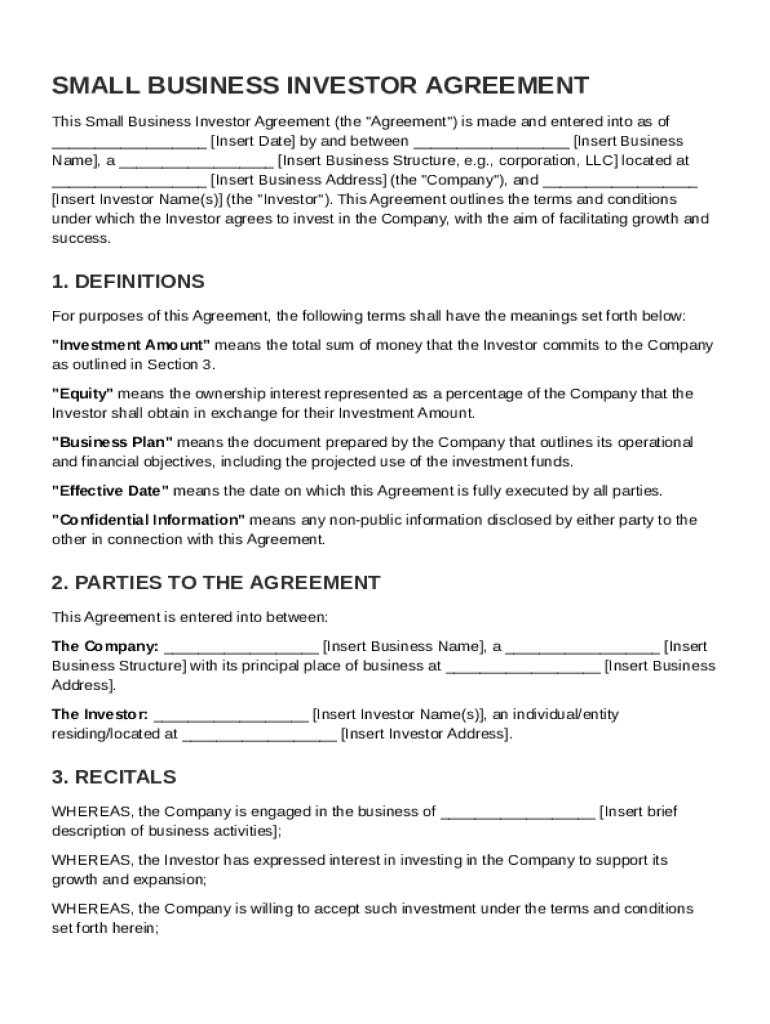
The Small Business Investor Agreement Template is a formal document that defines the parameters under which an individual or entity invests in a small business. It details the investment amount, terms, and conditions of equity ownership, as well as the roles and responsibilities of both the investor and the company. This agreement acts as a legal contract, ensuring that the interests of both parties are safeguarded while facilitating the smooth operation and growth of the business. It includes clauses on confidentiality, dispute resolution, termination conditions, and governing law, providing a comprehensive framework for the investment relationship.
Key Elements of the Small Business Investor Agreement Template
A comprehensive Small Business Investor Agreement Template comprises several essential components that establish a clear understanding between the investor and the business. These elements typically include:
- Investment Amount and Structure: Specifies the total amount of capital to be invested and the form of investment, such as equity or convertible debt.
- Equity Ownership and Dilution: Details the percentage of ownership the investor will receive and conditions under which ownership may be diluted.
- Use of Funds: Outlines how the invested capital will be utilized by the business to ensure alignment with strategic goals.
- Rights and Obligations: Enumerates the rights and duties of both the investor and the company, including voting rights and board representation.
- Confidentiality Agreements: Ensures that proprietary and sensitive information remains protected.
- Termination Conditions: Describes the circumstances under which the agreement may be terminated.
How to Use the Small Business Investor Agreement Template
To effectively use the Small Business Investor Agreement Template, follow a systematic approach:
- Review and Customize: Begin by thoroughly reviewing the template to understand its structure and provisions. Customize it to meet the specific needs and expectations of both parties involved.
- Input Key Information: Enter essential details such as the names of the parties, investment amount, and specific terms unique to the investment arrangement.
- Validate Legal Compliance: Ensure all legal elements satisfy regulatory requirements pertinent to your specific jurisdiction.
- Consult Legal Counsel: Before finalizing, seek legal advice to address any potential issues or uncertainties within the document.
- Sign and Execute: Once all parties are satisfied, execute the agreement through signatures to make it legally binding.
Consider using document management tools like DocHub to annotate, revise, and sign the document online efficiently.
Steps to Complete the Small Business Investor Agreement Template
Completing the Small Business Investor Agreement Template involves multiple steps:
- Gather Information: Collect all necessary data, such as investor details, business background, and financial figures.
- Draft Clauses: Populate each section with precise clauses that capture the intentions and expectations of both parties.
- Review Terms: Examine all terms and provisions to ensure they align with the agreed scope and investment objectives.
- Incorporate Legal Provisions: Include provisions for dispute resolution, confidentiality, and governing law to mitigate risks.
- Proofread and Edit: Carefully proofread the document to correct any errors or inconsistencies.
- Get Signatures: Secure signatures from authorized representatives of both parties to formalize the agreement.
Who Typically Uses the Small Business Investor Agreement Template
The template is primarily utilized by:
- Aspiring Entrepreneurs: Small business owners seeking capital injections to grow their enterprise.
- Angel Investors: Individuals or groups providing financial backing to startups and small businesses in exchange for equity.
- Venture Capitalists: Professional investors identifying promising small businesses for high return opportunities.
- Business Lawyers: Legal professionals drafting investment documents on behalf of clients.
All parties benefit from a well-structured template that sets clear expectations and reduces misunderstandings.


Legal Use of the Small Business Investor Agreement Template
This template serves as a legal instrument to formalize investment agreements, providing protection to both investors and business owners. It obligates compliance with relevant legal frameworks, such as the U.S. Securities and Exchange Commission (SEC) regulations and state-specific corporate laws. Parties can incorporate arbitration clauses to resolve disputes privately and efficiently. Additionally, provisions for confidentiality are implemented to secure proprietary business information. By adhering to these legal stipulations, both parties enter a mutually beneficial and secure investment relationship.
State-Specific Rules for the Small Business Investor Agreement Template
Investment agreements may be subject to specific state laws that affect their execution and enforceability. It's essential to consider:
- Registration Requirements: Certain states may require registration of the investment agreement or associated securities.
- State-Specific Disclosure Obligations: Varies by state but may include additional disclosure of business operations or financial status.
- Differences in Governing Law: States may have unique provisions regarding contract interpretation and dispute resolution.
Consult with a legal professional familiar with the policies of your state to ensure compliance and avoid legal complications.
Examples of Using the Small Business Investor Agreement Template
Practical implementation of these agreements can vary:
- Tech Startups: An investor provides seed capital to a software company intending to expand its development team.
- Retail Enterprises: Business owners acquire funding from an investor to increase inventory and market reach.
- Healthcare Ventures: An investment in a healthcare startup aiming to develop a new medical device.
These examples highlight the template's versatility and its role in facilitating varied types of business growth.