01. Edit your form online
Type text, add images, blackout confidential details, add comments, highlights and more.

Type text, add images, blackout confidential details, add comments, highlights and more.

Draw your signature, type it, upload its image, or use your mobile device as a signature pad.

Send it via email, link, or fax. You can also download it, export it or print it out.
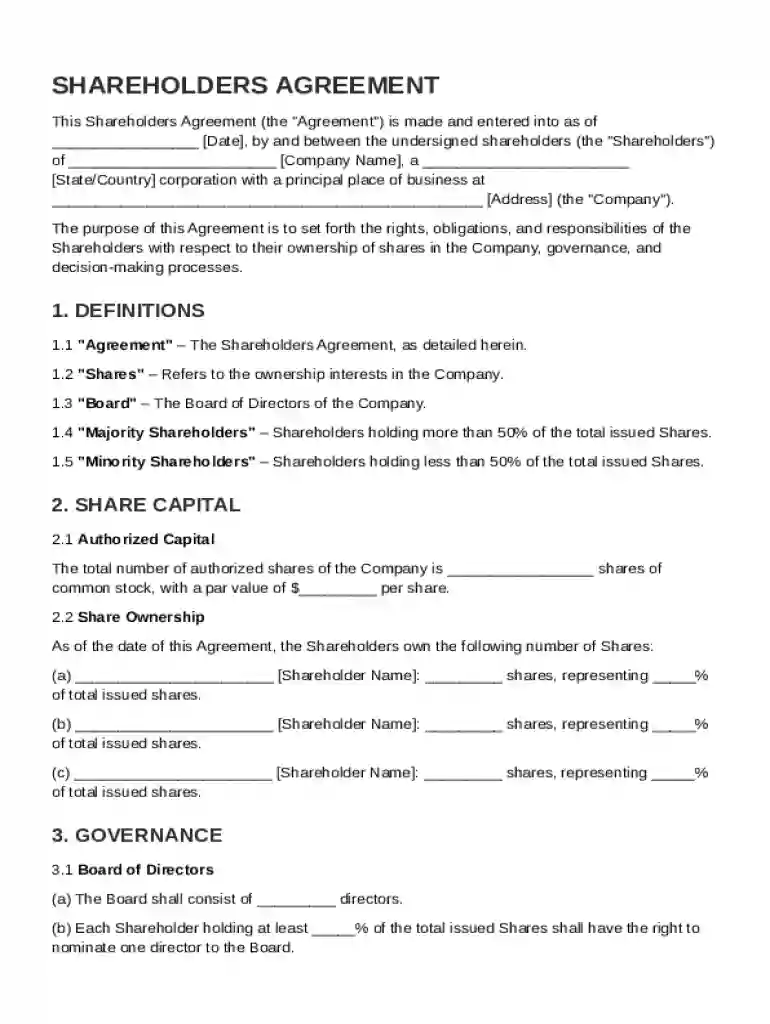
A Shareholders Agreement Template is a pre-designed document that helps outline the complex legal arrangement between shareholders within a corporation. It is vital for defining the rights, obligations, and responsibilities of each shareholder, ensuring that management, decision-making processes, and conflict resolution mechanisms are clear and legally enforceable. This template serves as a foundational tool for establishing governance structures, including the Board of Directors, and specifies aspects like share allocations, voting rights, dividend distribution, confidentiality, and more.
The primary aim of this agreement is to protect shareholders' interests, facilitate smooth business operations, and preempt potential disputes by setting clear expectations. This legal document typically includes detailed provisions about the transfer of shares, decision-making protocols for major corporate actions, and exit strategies, such as buy-sell agreements.
The Shareholders Agreement Template is composed of several critical elements that ensure comprehensive governance and mutual understanding among stakeholders:
Share Capital and Ownership Structure: Outlining the initial and future distributions of shares among shareholders, detailing equity ownership percentages, and establishing the initial capital contributions.
Governance and Decision-Making: Defining the establishment and powers of the Board of Directors, setting protocols for meetings, voting rights, and the decision-making hierarchy for major corporate actions.
Profit Distribution: Guidelines for the distribution of dividends among shareholders and reinvestment of profits back into the company.
Transfer and Sale of Shares: Procedures for the transfer of shares, including pre-emptive rights, buy-sell agreements, and conditions under which shares can be sold or transferred.
Exit Strategies: Mechanisms for the voluntary or forced exit of shareholders, including terms for buyouts, and valuation methods for exiting shareholder's shares.
Dispute Resolution: Processes to address shareholder disputes, outlining steps for mediation, arbitration, or legal proceedings if necessary.
Confidentiality and Non-Compete Clauses: Protecting company secrets and preventing shareholders from engaging in competitive businesses against the corporation.
Shareholders Agreement Templates serve as legally binding documents in corporate law within the United States. They are essential tools for both establishing start-ups and managing ongoing corporate relationships. These documents must adhere to the legal frameworks of the jurisdiction in which the corporation operates, ensuring that all provisions are enforceable under U.S. corporate law.
Using such a template helps demarcate the boundaries for operations and stakeholder interactions, minimizing potential legal disputes and providing a reliable reference for resolution in case disagreements arise. It is advisable to consult legal professionals while drafting or customizing the agreement to ensure compliance with all applicable laws.
Obtaining a Shareholders Agreement Template involves determining the specific needs of your corporation and selecting an appropriate template that aligns with these requirements. Here’s a typical process:
Identify Needs: Pinpoint the specific elements required in the agreement based on your corporation's operational and strategic goals.
Select a Template: Choose a professional, well-structured template that covers all necessary legal bases. Templates can be acquired through business services providers, legal software, or professional legal advisors.
Review with Legal Experts: Once a template is chosen, review it with legal counsel to ensure that it meets all legal requirements unique to your jurisdiction and specific situations.
Customize the Template: Tailor the template to reflect the unique structure and requirements of your corporation, including any particular terms agreed upon by shareholders.
Approval and Signing: Facilitate discussions among shareholders, finalize the document, and proceed to sign the agreement, making it legally binding.
Completing the Shareholders Agreement Template requires careful attention to detail to ensure it accurately reflects shareholder intentions and legal standards. Below is a step-by-step guide:
Gather Relevant Information: Compile necessary data regarding shareholder identities, share allocations, initial capital contributions, and planned governance structures.
Input Essential Details: Populate the template with specific information about the corporation, including the company's purpose, objectives, and business strategies.
Review Governance Structures: Clearly define the roles of the Board of Directors and other key positions, detailing decision-making processes and hierarchies.
Outline Shareholder Rights and Obligations: Articulate each shareholder's rights, duties, restrictions, and benefits to ensure clarity and fairness.
Finalize Terms and Clauses: Confirm the inclusion of essential clauses like confidentiality, non-compete, dispute resolutions, and exit strategies.
Legal Review: Conduct a legal review to assure comprehensive coverage of all applicable laws and regulations.
Seek Shareholder Approval: Present the agreement to shareholders for their input, amendments, and approval.
Signature Collection and Filing: Collect signatures from all necessary parties and ensure the document is appropriately filed within corporate records for future reference.
Understanding key terminology is essential when working with Shareholders Agreement Templates to ensure precise communication and compliance. Important terms include:
The Shareholders Agreement Template is primarily utilized by:

Certain business structures benefit significantly from Shareholders Agreement Templates, including:
These templates are less necessary for sole proprietorships and informal business arrangements, which do not involve multiple stakeholders.
At DocHub, your data security is our priority. We follow HIPAA, SOC2, GDPR, and other standards, so you can work on your documents with confidence.