






Definition & Meaning
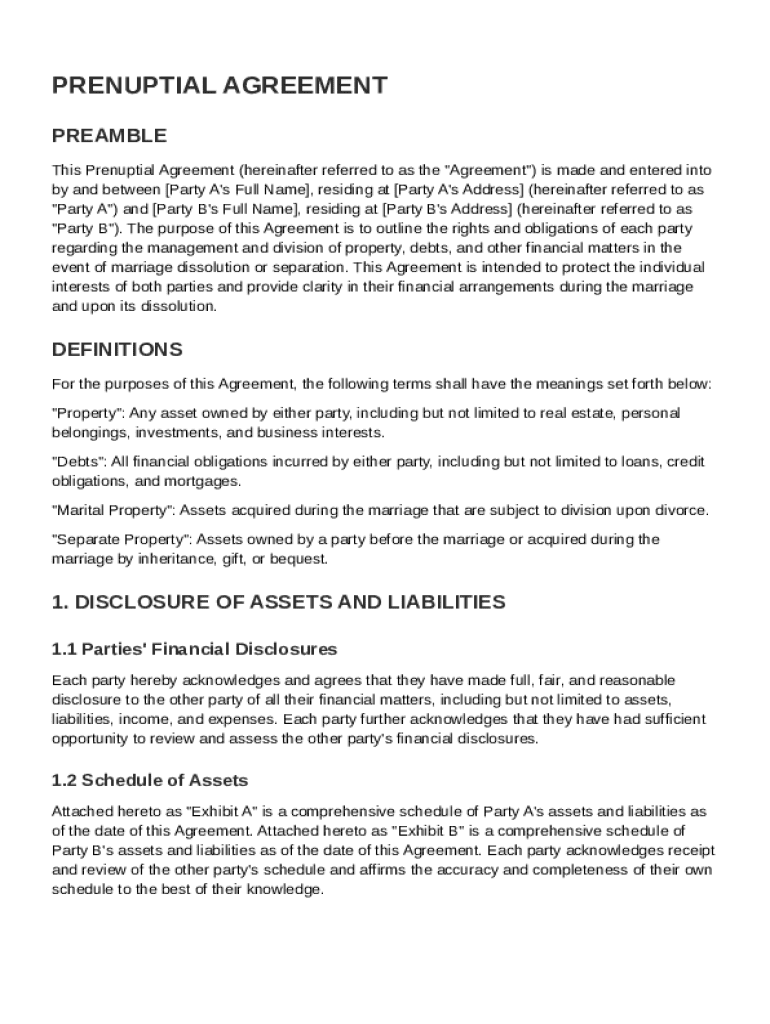
A prenuptial agreement, often created using a template made by an attorney, is a legal document entered into by two parties prior to their marriage. This agreement outlines the way assets, properties, and debts will be handled in the event of a divorce or separation. The purpose is to provide clarity regarding financial matters and to protect individual interests. It includes terms like 'Property', 'Debts', 'Marital Property', and 'Separate Property', which are crucial for understanding how assets will be managed.
Importance of Prenuptial Agreements
Prenuptial agreements serve several important purposes. They help in defining financial boundaries and responsibilities, thus reducing the potential for disputes in case of a marriage breakdown. By clearly delineating separate and marital properties, these agreements serve to protect personal and inherited assets. The legal clarity they provide can be invaluable in circumstances where one or both parties have significant assets, children from previous relationships, or have been previously married.
How to Use the Template
Using a pre-nuptial agreement template involves several steps that ensure it meets legal standards and serves your intended purposes. Most templates made by attorneys are designed to address the core components necessary for a valid agreement:
-
Download and Review: Begin by downloading the template and carefully reviewing its contents to understand all included sections.
-
Customize the Template: Modify the document to reflect the unique financial and personal arrangements between you and your partner. This could include specific details about assets, debts, and income.
-
Add Specific Clauses: Insert clauses that pertain to spousal support, property division, and other financial matters that need clarity.
-
Seek Legal Advice: It's essential to consult a qualified attorney to review the customized document. They can ensure the terms comply with state laws and are enforceable.
-
Finalize and Sign: Once any legal review is complete, both parties should sign the agreement, ideally with witness signatures or notarization.
Practical Examples of Use
For a couple where one partner owns a business, the prenuptial agreement can specify that the business remains a separate property. Another example is when one party wants to ensure a family heirloom remains in their possession post-marriage, the agreement can reflect this.
Key Elements of the Template
The prenuptial agreement template includes several key sections that must be completed properly for the agreement to be effective:
- Identification of Parties: Full names and addresses of both parties are clearly stated.
- Statement of Intent: Language that indicates the agreement is meant to outline rights and obligations with respect to property and finances.
- Descriptions of Property: A detailed listing of assets and debts for both parties, identifying what constitutes separate and marital property.
- Spousal Support Terms: Provisions detailing whether spousal support will be waived or granted in the future.
- Dispute Resolution Process: An outline for how future disputes will be handled, possibly through mediation or arbitration.
- Termination Conditions: Circumstances under which the agreement would become void.
Legal Use and Compliance
In the U.S., prenuptial agreements are governed by state laws, which means their enforceability can vary. To be legally binding, a prenuptial agreement must meet certain requirements:
- Voluntary Execution: Both parties must enter into the agreement willingly and without coercion.
- Full Disclosure: There must be full financial disclosure from both parties regarding assets and debts.
- Fair and Reasonable Terms: The contents of the agreement must be equitable at the time of execution.
Cases When Prenups are Contested
Prenuptial agreements can be contested if evidence shows coercion, lack of mental capacity at the time of signing, or if the agreement was signed under fraudulent circumstances. Also, failure to disclose assets can render the agreement void.
Steps to Complete the Template
-
Begin with Personal Information: Enter personal details for both parties, including full legal names and contact information.
-
Financial Statement Attachment: Attach a detailed financial statement as part of the template to outline current financial positions.
-
Declare Separate vs. Marital Property: Clearly define which properties will remain separate and which will be considered marital assets.
-
Define Obligations: Outline financial obligations, including debt responsibilities and any provision for spousal support.
-
Legal Review: Have an attorney review the draft for any legal inadequacies and ensure it complies with state laws.
-
Signing and Notarization: Both parties must sign in the presence of a notary public, providing additional legal validity.
Who Typically Uses the Template
Prenuptial agreements are particularly common among:
- High Net Worth Individuals: Those with significant assets looking to protect their estates.
- Business Owners: Individuals wishing to keep their business separate in case of divorce.
- Individuals with Children from Previous Marriages: Seeking to protect children's inheritance rights.
- Repeat Marriages: Those entering second or subsequent marriages may use them to keep previous financial obligations separate.


State-Specific Rules
Family law varies by state, and prenuptial agreements must adhere to local laws to be enforceable:
- Community Property States: Like California or Texas, require careful delimitation of separate and marital property.
- Equitable Distribution States: Such as New York or Florida, focus on fairness if the agreement is disputed in divorce proceedings.
Key Considerations
It is crucial for individuals in certain states to ensure that their prenuptial agreements are updated or reviewed according to any state law changes. Consulting a local attorney knowledgeable about state-specific legal nuances is recommended.
Examples of Using the Prenuptial Agreement
Practical Application
For professional athletes, entering a marriage with substantial endorsement deals and earnings, a prenuptial agreement can protect their financial future by defining which earnings or contracts are considered separate. Similarly, tech entrepreneurs with substantial intellectual property interests may use a prenuptial agreement to protect these assets from future claims.
Case Studies
An entrepreneur in California ensures separate property status for their startup by outlining it in a prenuptial agreement. Meanwhile, in New York, a couple uses the agreement to stipulate clear boundaries on how future potential stock options would be divided.
By understanding these aspects and utilizing the prenuptial agreement template effectively, parties can ensure their financial interests are protected in a legally sound manner.