




01. Edit your form online
Type text, add images, blackout confidential details, add comments, highlights and more.

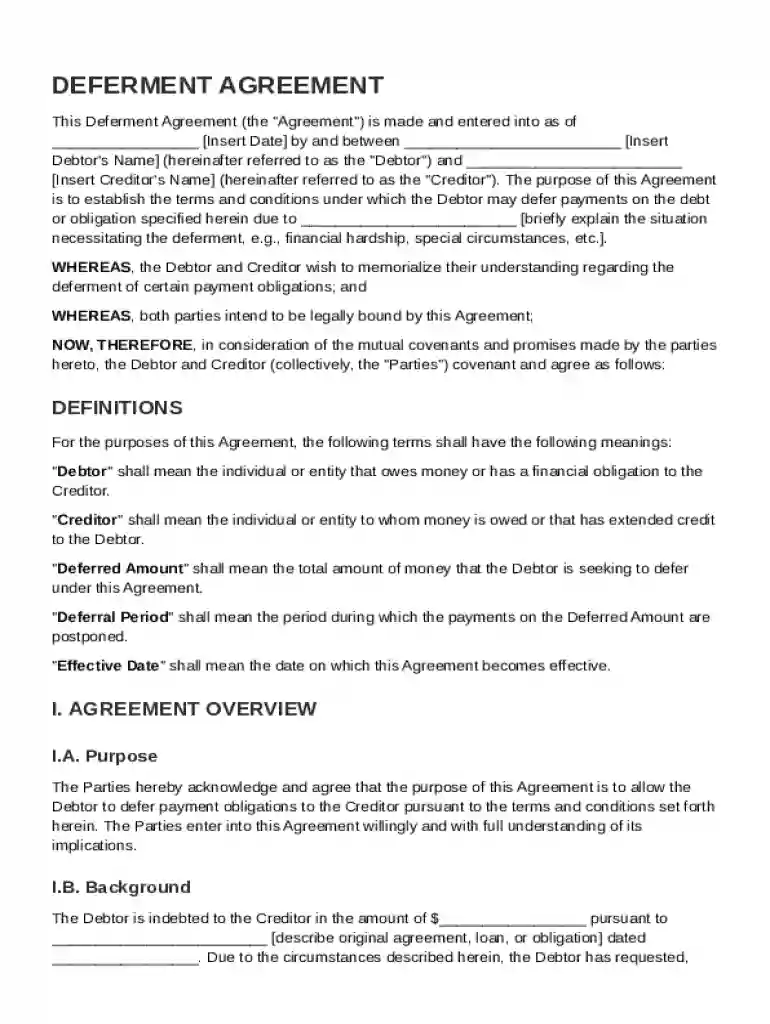
Type text, add images, blackout confidential details, add comments, highlights and more.

Draw your signature, type it, upload its image, or use your mobile device as a signature pad.

Send it via email, link, or fax. You can also download it, export it or print it out.
A Deferment Agreement Template serves as a formal contract that allows a debtor to delay payments owed to a creditor under agreed-upon terms. Typically used in scenarios like financial hardship, this document clarifies the conditions under which payments can be postponed. It establishes mutual understanding between parties and sets the deferment period, effectively outlining the roles and responsibilities of each party involved. This template not only acts as formal documentation of the deferment, ensuring understanding and compliance from both sides, but it also protects the debtor from defaulting, provided that they adhere to the stipulated terms.
Several core components make up a comprehensive Deferment Agreement Template, each crucial for maintaining clarity and legal validity. These include:
This robust structure prevents misunderstandings and ensures both parties are aware of their responsibilities throughout the deferment period.
When preparing the Deferment Agreement Template, follow these guided steps for successful completion:
Each step demands precision to ensure that the template is legally binding and effective.
Incorporating a Deferment Agreement Template into a business or personal financial strategy involves understanding its legal implications. Firstly, the agreement must comply with regional laws to be enforceable. In the United States, this means adhering to both federal regulations and state-specific statutes. It's essential to ensure that the agreement is not in conflict with any prior agreements or legal obligations of the involved parties. Furthermore, the Deferment Agreement is designed to be mutually beneficial, providing creditors assurance of eventual payment while offering debtors breathing space during difficult financial periods.
Understanding specific terms within the Deferment Agreement Template is critical for users:
These terms form the backbone of the agreement, ensuring all parties acknowledge and comprehend their financial implications.
The Deferment Agreement Template is used by various parties who need flexible payment terms. Typical users include:
Each of these user groups requires specific terms suited to their situation, underscoring the adaptability of the template.


Deferment agreements must adhere to state-specific laws and regulations, which can vary significantly across the United States. Key factors to consider include:
Understanding these nuances ensures compliance and mitigates potential legal challenges.
Establishing eligibility criteria is vital to ensure that deferments are granted fairly and in appropriate circumstances. These criteria often involve:
Clear criteria help determine the genuine need for deferment, reducing misuse and possible disputes.

At DocHub, your data security is our priority. We follow HIPAA, SOC2, GDPR, and other standards, so you can work on your documents with confidence.


