






Key Elements of the Supplier Quality Agreement Template
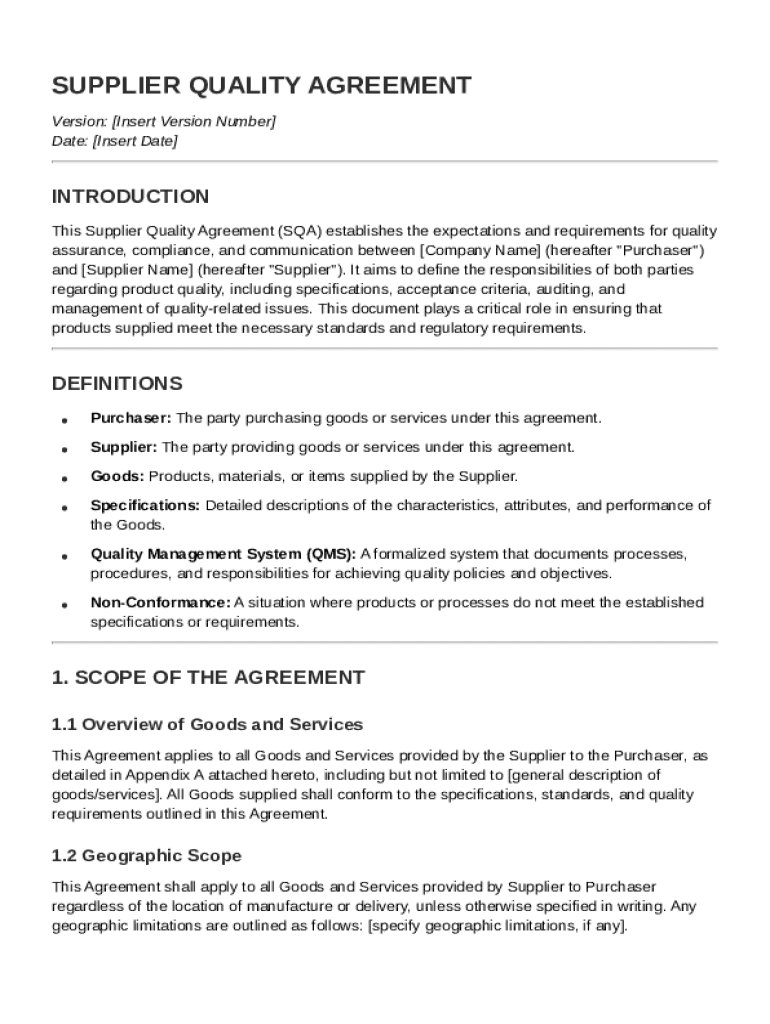
A Supplier Quality Agreement (SQA) template is a critical document that outlines various elements to ensure clarity and mutual understanding between a Purchaser and a Supplier. It typically includes key sections such as:
-
Quality Assurance Expectations: This section specifies the quality standards and compliance measures required by the Purchaser and how the Supplier should meet these standards. It lays the foundation for performance evaluation.
-
Specifications and Acceptance Criteria: Detailed technical and non-technical specifications of the products or services are included here. The acceptance criteria are outlined to define what makes the deliverables acceptable or rejectable.
-
Roles and Responsibilities: Clarifies the distinct roles each party plays, ensuring there is no ambiguity about who is responsible for what aspects of the agreement, such as delivery, inspection, and reporting.
-
Non-Conformance Management: Procedures for handling deviations from agreed specifications and the corrective actions to be taken are defined to maintain quality control.
-
Confidentiality Obligations: This section ensures that both parties agree to protect sensitive information shared during their business relationship.
-
Dispute Resolution Processes: Sets out the methods for resolving any disagreements that may arise, including mediation or arbitration if necessary.
Each of these elements helps in maintaining a structured and transparent relationship, mitigating risks, and ensuring the quality of delivered goods or services.
Steps to Complete the Supplier Quality Agreement Template
Completing an SQA template involves a systematic approach to ensure that every necessary aspect is addressed:
-
Pre-Agreement Preparation: Gather all relevant documents, such as previous agreements and quality assurance standards, to ensure all information is up-to-date and relevant.
-
Define the Scope: Clearly define what products or services are covered by the agreement and their specific requirements.
-
Collaborate with Stakeholders: Engage both internal teams and the Supplier in drafting the initial version of the agreement to incorporate all viewpoints and expertise.
-
Draft the Agreement: Use the SQA template to fill in essential information such as roles, responsibilities, and quality specifications.
-
Review and Revise: Have legal and quality assurance teams review the completed template, making revisions as necessary to close any gaps or address ambiguities.
-
Finalize and Sign: After thorough review and agreement from all parties, finalize the document with authorized signatures to make it legally binding.
By following these steps, both parties can ensure a comprehensive and effective agreement is in place.
Who Typically Uses the Supplier Quality Agreement Template
The SQA template is usually employed by organizations engaged in manufacturing, procurement, and supply chain management. Typical users include:
- Quality Managers: Responsible for ensuring that products meet required standards.
- Procurement Officers: Negotiate terms and conditions with Suppliers.
- Legal Teams: Ensure that the agreement adheres to legal standards and practices.
- Suppliers: Those providing goods or services under predefined quality conditions.
These users rely on the template to protect their interests and ensure mutual adherence to agreed quality standards.


Legal Use of the Supplier Quality Agreement Template
The legal framework surrounding an SQA is crucial in binding both parties to their commitments. Key aspects include:
-
Compliance with Regulations: Ensures that all activities and responsibilities adhere to industry-specific regulations and national laws.
-
Intellectual Property Rights: Clearly outlines the ownership and use rights of any IP involved in the agreement, safeguarding against infringement.
-
Contractual Obligations: Legally binding clauses that stipulate the duties and penalties associated with breach, providing a structural legal backbone.
Legal teams play an essential role in drafting these sections to mitigate risks and ensure compliance with applicable laws and regulations.
How to Use the Supplier Quality Agreement Template
Using an SQA template effectively requires understanding its components and tailoring them to specific business needs:
-
Selection of the Template: Choose a template that matches industry practices and the scale of the business relationship.
-
Customization: Modify the template to reflect unique organizational and product-specific requirements, including any particular quality standards.
-
Collaboration: Work closely with the Supplier to agree on each section of the template and make mutually beneficial adjustments.
-
Implementation: Apply the completed agreement to structure all interactions and transactions with the Supplier, ensuring clear expectations and accountability.
Employing an SQA template in this manner helps streamline processes and prevents miscommunication.
Important Terms Related to Supplier Quality Agreement Template
Understanding specific terms can enhance the effectiveness of an SQA. Commonly used terms include:
- Quality Metrics: Quantitative measures used to evaluate Supplier performance.
- Audit Rights: The Purchaser's right to inspect and verify Supplier's adherence to quality standards.
- Risk Management: Strategies to identify and mitigate potential risks to quality.
- Continuous Improvement: Commitment to ongoing enhancement of processes and products.
Grasping these terms ensures accurate communication and proper implementation of agreed terms.
Examples of Using the Supplier Quality Agreement Template
Practical examples illustrate how the SQA template can be applied:
- Automotive Industry: Ensures parts delivered by Suppliers meet safety and performance standards.
- Pharmaceutical Industry: Guarantees that supplied materials comply with regulatory requirements for drug production.
- Electronics Manufacturing: Manages the quality of components used in assembly lines to prevent defects.
These examples highlight the versatility and necessity of SJAs across various sectors.
State-Specific Rules for the Supplier Quality Agreement Template
In the U.S., certain states may have particular rules that impact SQAs:
- California: Requires compliance with stricter environmental and safety standards.
- New York: May impose additional labor law considerations affecting procurable services.
- Texas: Often focuses on oil and gas industry-specific quality regulations.
Considering these state-specific rules is essential for compliance and effective Supplier management.
Digital vs. Paper Version
In the digital age, many organizations prefer digital SQAs for ease of use and efficiency:
- Digital Version: Offers benefits such as easy editing, electronic signatures, and seamless integration with document management tools like DocHub.
- Paper Version: Although less common, may still be used for legal reasons or in industries where digital documents are not yet fully embraced.
Choosing the right format depends on business technology capabilities and compliance requirements, with digital options often offering greater flexibility and convenience.