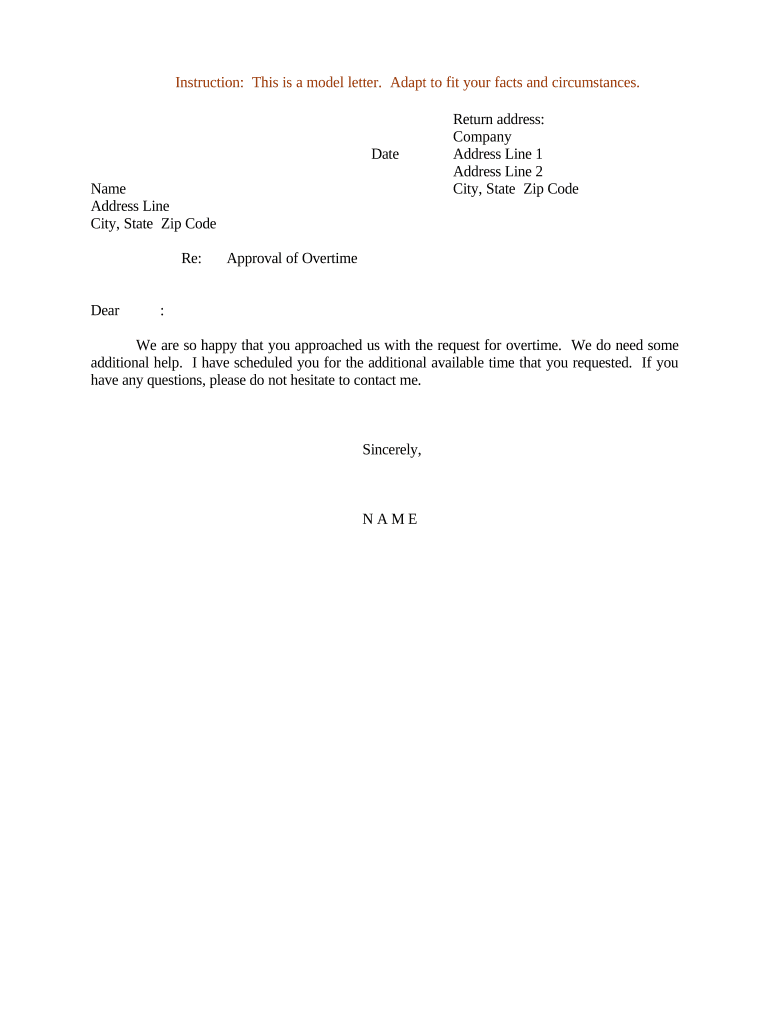







Definition and Significance of the Overtime Letter
An overtime letter serves as a formal document used to request or approve additional work hours beyond a standard workweek. This correspondence is significant in various employment settings, as it outlines the specifics of the overtime request, including the justification for the extra hours, the duration of the overtime, and any associated compensation. It fosters transparent communication between an employee and an employer, reflecting the commitment to clarity regarding work expectations and compensation.
Purpose of the Overtime Letter
- Formal Request: It acts as a formal medium to facilitate requests for extra hours, ensuring that such requests are documented.
- Acknowledgment: It can also confirm the employer's acknowledgment and approval of the overtime work, aligning both parties on the details of the arrangement.
By utilizing an overtime letter, organizations can establish a systematic approach to managing overtime work and ensure compliance with labor regulations surrounding work hours and pay.
Key Elements of an Overtime Letter
An effective overtime letter must contain several key components to ensure clarity and completeness. Here are the essential elements to include:
- Date: Clearly indicate the date when the letter is written.
- Recipient Information: Include the recipient's name, title, and company address to personalize the communication.
- Subject Line: A clear subject line, such as "Request for Overtime Approval," provides immediate context.
- Salutation: Begin with a professional greeting, using the recipient's last name if possible.
- Statement of Request: Clearly articulate the nature of the request for overtime. For example, specify why overtime is necessary, such as increased workload during a project deadline.
- Duration: Provide details regarding how long the overtime will last, including specific dates and hours.
- Acknowledgment of Policies: Reference any company policies related to overtime requests to demonstrate awareness of formal procedures.
- Closing Statement: Offer a courteous conclusion, expressing appreciation for the recipient’s consideration and willingness to discuss further.
Including these elements develops a definitive and respectful request, increasing the likelihood of approval.
Steps to Complete an Overtime Letter
When drafting an overtime letter, following a structured approach can enhance clarity and professionalism. Here are the steps to consider:
- Start with a Template: Use a defined template to maintain a formal appearance and layout.
- Fill in the Details: Enter the date, recipient's information, and a specified subject line. Personalizing the salutation is critical as it reflects professionalism.
- Clearly Outline the Request: In the body, state the reasons for requesting overtime, detailing the specific project or workload involved.
- Specify Timeframes: Clearly indicate the expected overtime hours and dates for better planning.
- Review and Edit: Thoroughly review the letter for any grammatical errors or unclear phrases before finalizing it.
- Distribute: Send the letter through the appropriate channel, whether electronically or via traditional mail, ensuring it reaches the intended recipient.
Following these steps can help create a comprehensive and effective communication piece, which minimizes misunderstanding and promotes efficient workflows within the organization.
Legal Considerations Surrounding the Overtime Letter
Understanding the legal framework surrounding overtime can protect both employers and employees. Here are key considerations:
- Fair Labor Standards Act (FLSA): This act outlines how overtime is handled for non-exempt employees, requiring accurate documentation of hours worked.
- State Laws: Some states may have additional requirements regarding overtime, such as mandatory rest periods or specific criteria for overtime eligibility. Employers must be familiar with both federal and state laws to ensure compliance.
- Documentation: Maintaining proper records of overtime letters can help defend against potential legal disputes regarding wages or hours worked, ensuring adherence to regulations.
It is critical for both employers and employees to engage with these legal considerations to ensure that their practices align with applicable labor laws.
Examples of Using the Overtime Letter
To illustrate the application of an overtime letter, consider the following scenarios:
- Project Deadline: An employee working in project management may need to request extra hours to meet a crucial deadline. The letter specifies the tasks that require additional time, emphasizing the impact on project success.
- Seasonal Workload Increase: An employee in retail might request overtime during peak shopping periods, providing justification by citing increased customer traffic and the necessity for additional staffing.
- Unexpected Absences: An employee might need to cover for a colleague suddenly unable to work. The overtime letter would detail the new responsibilities taken on in light of the absence.
Each scenario highlights the necessity of a clear, articulate request and helps establish workflows that contribute positively to organizational productivity.