Definition and Meaning
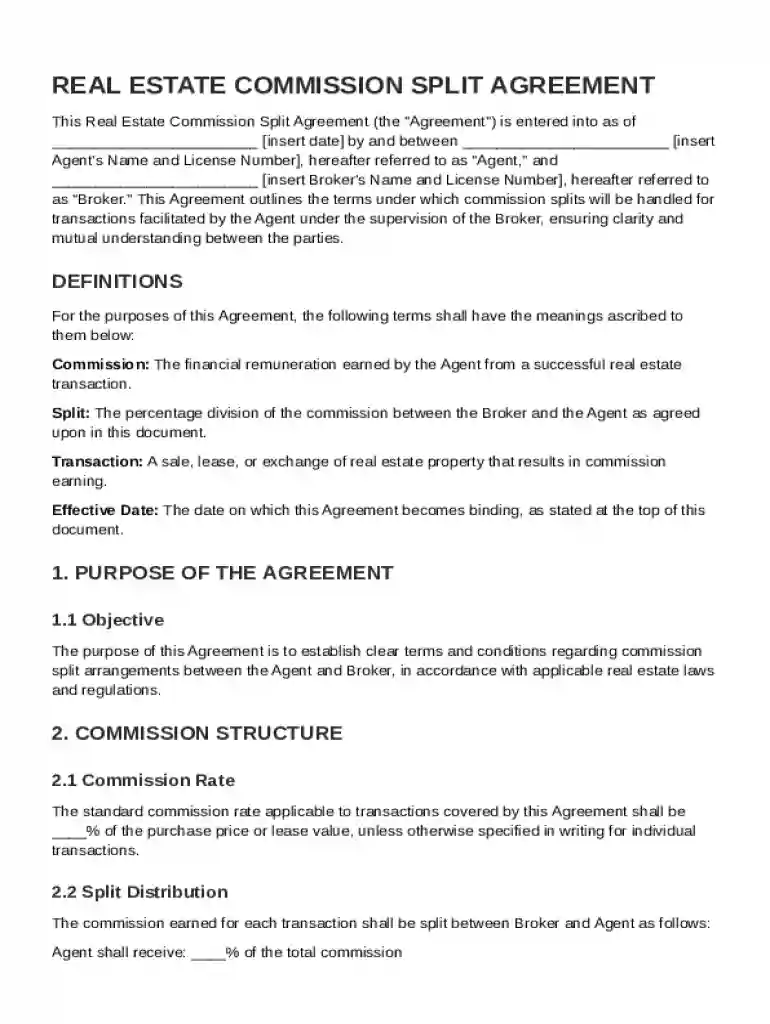
The Real Estate Commission Split Agreement Template is a structured legal document used to detail the terms and conditions under which real estate commissions are divided between an agent and their broker. This agreement specifies roles, responsibilities, and the percentage of commission each party will receive for closed transactions. By providing a clear framework, this template helps prevent disputes and misunderstandings, ensuring transparency in real estate transactions.
Key Components
- Parties Involved: Identifies the agent and the broker participating in the agreement.
- Commission Structure: Details the percentage split between the agent and broker.
- Payment Schedule: Outlines when payments will be made following the closure of transactions.
- Responsibilities: Defines the duties and obligations of both the agent and broker.
- Confidentiality Clause: Ensures that sensitive information remains secure.
- Dispute Resolution: Provides a method for resolving any disagreements that may arise.
- Termination Conditions: Specifies how and when the agreement can be terminated.
Benefits for Users
- Clarity and Transparency: Establishes clear expectations and understanding between parties.
- Legal Protection: Provides a formal, documented agreement that can be referenced in the event of disputes.
- Professionalism: Enhances the professional standing of agents and brokers by formalizing their working relationship.
How to Use the Real Estate Commission Split Agreement Template
Using the template involves several key steps to ensure it is properly filled out and executed. Here’s a guide on how to utilize this document effectively:
- Download the Template: Obtain the template from a reputable source or document workflow service like DocHub.
- Customize the Agreement: Fill in the specific details, including names, percentages, and dates relevant to your agreement.
- Review with Both Parties: Both the agent and broker should review the terms to ensure mutual understanding.
- Legal Consultation: Consider having the document reviewed by a legal professional to ensure compliance with state laws.
- Sign and Execute: Both parties should sign the document to formalize the agreement.
Tips for Effective Use
- Ensure Accuracy: Double-check all figures and dates to avoid errors.
- Simplify Language: Use clear, concise language to ensure both parties understand the terms.
- State Compliance: Verify that the document complies with real estate laws in your state.
Key Elements of the Real Estate Commission Split Agreement Template
The template includes several crucial elements that make up the comprehensive nature of the agreement. Each section is designed to cover specific aspects of the agent-broker relationship, including:
- Agent and Broker Information: Clearly states the identities of the parties involved.
- Commission Details: Describes the agreed-upon percentage or formula for commission splits.
- Term of Agreement: Specifies the duration for which the agreement is valid.
- Signatures: Provides space for the parties to sign, indicating their agreement to the terms.
Importance of Each Element
- Details and Specifications: Ensures that each party knows their obligations, reducing the potential for conflict.
- Defined Agreements: Aids in the precise understanding of financial arrangements and expectations.
- Formal Documentation: Enhances the enforceability of the agreement.
Important Terms Related to the Real Estate Commission Split Agreement Template
Understanding the terminology within the agreement is vital for its effective use. Some key terms include:
- Commission Split: Refers to the division of commission earnings from real estate transactions.
- Brokerage Rate: The percentage or fee charged by the broker for managing and closing sales.
- Retainer Fees: Initial payments made to secure services, which may affect commission splits.
Clarifying Terms for Users
- Commission Split vs. Brokerage Rate: Distinguishes the agent’s share from the broker’s administrative fee.
- Retainer Fees Impact: Explains how upfront fees can alter the net earnings from sales.
Legal Use of the Real Estate Commission Split Agreement Template
The legal aspects of using the template include complying with state regulations and adhering to real estate laws. Legal compliance ensures the legitimacy and enforceability of agreements.
Steps to Ensure Legal Compliance
- Research State Regulations: Understand specific legal requirements in your state.
- Consult a Lawyer: Seek professional advice to navigate complex legal language and ensure adherence.
- Include Legal Clauses: Incorporate clauses for confidentiality, liability, and termination as needed.
Scenarios for Legal Considerations
- Multi-State Operations: For brokers operating in multiple states, ensure compliance with each jurisdiction's laws.
- Conflict Resolution: Outline a clear process for handling disputes to minimize legal challenges.
State-Specific Rules for the Real Estate Commission Split Agreement Template
Real estate laws can vary significantly across different states in the U.S., making it essential to customize the agreement to reflect local regulations.
Key State-Specific Variations
- Commission Caps: Some states have limits on the percentages that can be charged.
- Disclosure Requirements: Varying rules on what information must be communicated to clients.
- Termination Clauses: Differences in how agreements can be legally ended in various states.
Adapting the Template
- Research State Law: Adjust the template to meet local legal requirements.
- Incorporate Required Provisions: Ensure all state-mandated clauses and information are included.
- Seek Local Legal Advice: Use a state-based attorney to assure compliance.
Examples of Using the Real Estate Commission Split Agreement Template
Real-world applications of the agreement template highlight its utility and adaptability in various situations:
- New Agent Partnerships: When a new agent joins a brokerage, using the agreement ensures clarity from the start.
- High-Volume Brokers: For brokers handling numerous agents and transactions, the template standardizes agreements.
- Agent Broker Disputes: Acts as a reference to resolve misunderstandings and disputes over commission divisions.
Illustrative Case Studies
- Case A: An agent and broker in California use the template to formalize a 60-40 commission split, adjusting for state laws.
- Case B: A brokerage firm standardizes agreements across its 50 agents, streamlining operations and reducing administrative errors.