






Definition and Meaning
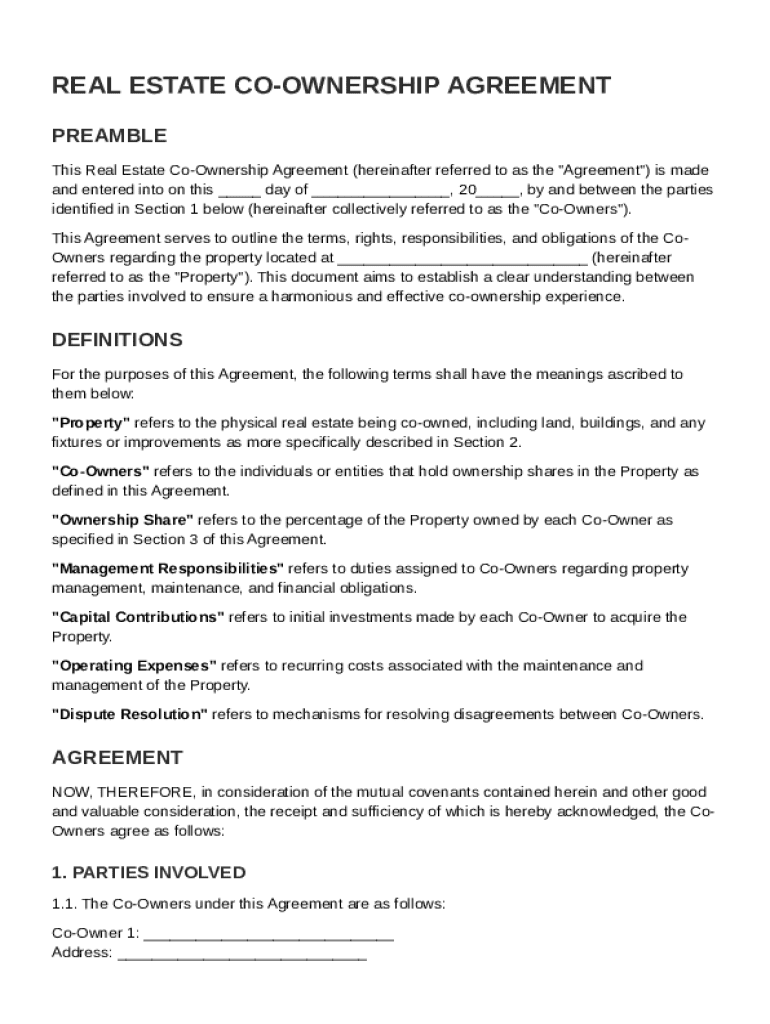
The Real Estate Co-Ownership Agreement Template is a structured legal document that outlines the agreement between parties who co-own a real estate property. This template serves to establish clear guidelines regarding each co-owner's rights, responsibilities, and obligations. It is essential for organizing the collaborative management of a property and ensures that all involved parties have a shared understanding of their roles. This template covers several key areas, including management responsibilities, capital contributions, decision-making processes, transfer of ownership rights, and dispute resolution mechanisms.
How to Use the Real Estate Co-Ownership Agreement Template
To effectively use the Real Estate Co-Ownership Agreement Template, follow these steps:
-
Identify the Parties Involved: Clearly list all individuals or entities participating in the co-ownership of the property.
-
Define Ownership Shares: Specify the percentage of ownership each party holds. This can often influence decision-making and profit-sharing clauses.
-
Outline Responsibilities: Detail each party's responsibilities in managing and maintaining the property.
-
Specify Financial Contributions: Clearly document any initial capital contributions or ongoing financial commitments required from each co-owner.
-
Include Dispute Resolution: Provide a framework for resolving disagreements, which may include mediation or arbitration guidelines.
-
Review and Sign: All parties should carefully review the template, make any necessary modifications, and sign the document to make it legally binding.
Key Elements of the Real Estate Co-Ownership Agreement Template
The Real Estate Co-Ownership Agreement Template includes multiple critical components:
-
Property Description: A detailed description of the property, including its address and unique identifiers like lot numbers.
-
Ownership Details: Specifies how ownership interests are divided among co-owners.
-
Management Structure: Outlines how the property will be managed and who is responsible for various tasks.
-
Financial Obligations: Includes details on how expenses, taxes, and revenues will be handled and allocated.
-
Decision-Making Process: Describes how decisions about the property are made, including voting rights and frequency of meetings.
-
Transfer of Interest: Provides guidelines for how and when a co-owner may sell or transfer their interest in the property.
Important Terms Related to the Real Estate Co-Ownership Agreement Template
Understanding the terminology is crucial for all parties engaged in co-ownership. Key terms include:
-
Co-Owners: The parties who own the property jointly.
-
Ownership Share: The percentage of the property owned by each co-owner.
-
Capital Contributions: Initial investments made by each party towards the purchase of the property.
-
Operating Expenses: Ongoing costs related to the maintenance and management of the property.
-
Dispute Resolution: Mechanisms in place to resolve conflicts between co-owners.
Legal Use of the Real Estate Co-Ownership Agreement Template
The Real Estate Co-Ownership Agreement Template acts as a legal contract that must be adhered to by all signing parties. It should be drafted inline with federal and state laws to ensure its enforceability. It can be used to provide legal clarity in court proceedings if disputes arise. To maintain its legality, the agreement should be reviewed by a legal professional, especially when complex property interests or multiple jurisdictions are involved.
Steps to Complete the Real Estate Co-Ownership Agreement Template
Completing this template involves several crucial steps:
-
Draft Construction: Begin by filling out the basic information involving property description and co-owners' details.
-
Detail Ownership Structures: Clearly document each party’s percentage ownership and responsibilities.
-
Detail Management Duties: Include who is responsible for what in terms of daily management and long-term maintenance.
-
Clarify Financials: Establish who will cover costs and how profits are distributed.
-
Include Conflict Resolution Tactics: Write in any methods for handling potential disagreements.
-
Legal Review and Confirmation: Have a legal expert review the document to confirm its completion and compliance with relevant laws.
State-Specific Rules for the Real Estate Co-Ownership Agreement Template
Different states have varying regulations regarding real estate co-ownership. It is essential that the template be adjusted to reflect:
-
State Property Laws: Understand how state laws impact property management and owner responsibilities.
-
Tax Regulations: Examine state tax obligations concerning co-owned properties.
-
Transfer and Sale Procedures: Legal requirements for the transfer or sale of ownership shares differ between states.
It is crucial to research state-specific requirements or consult with a legal expert to ensure compliance.
Examples of Using the Real Estate Co-Ownership Agreement Template
For practical understanding, consider varying scenarios such as:
-
Family Ownership: Relatives buying a vacation home together who need clear guidelines on usage and cost-sharing.
-
Investment Partnerships: Business investors pooling resources to buy income property, requiring profit-sharing arrangements.
-
Inherited Properties: Heirs co-inheriting a property and needing to establish management and occupation rights.
By tailoring the template in these examples, parties can safeguard their interests and avoid potential disputes.