
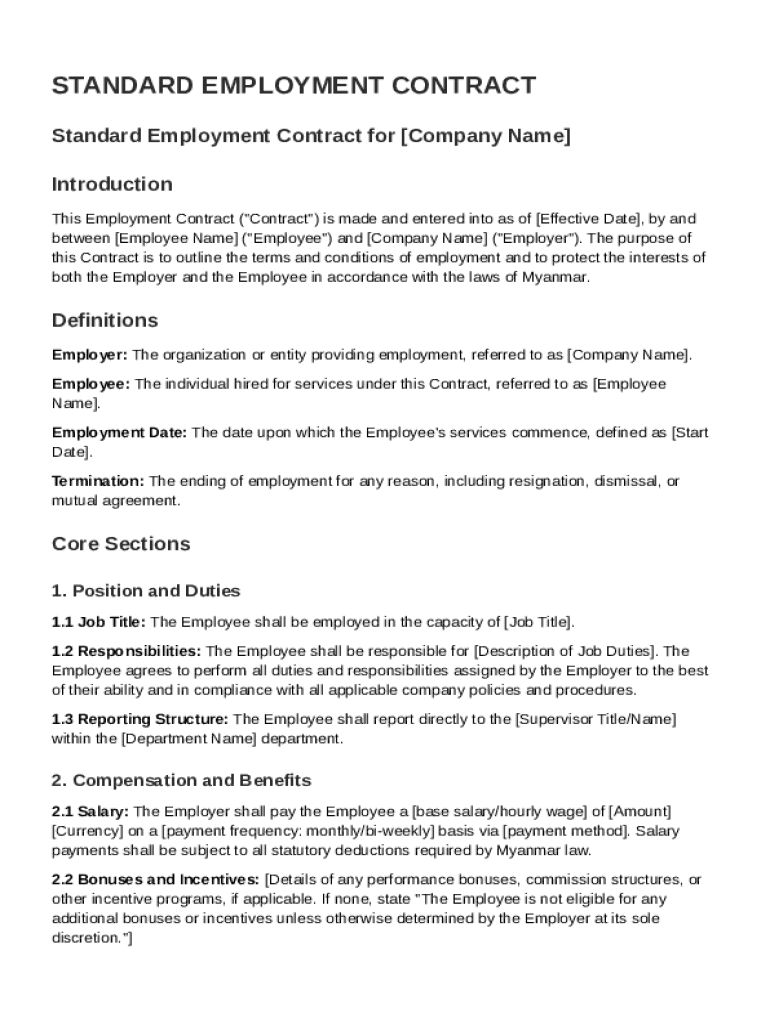







Definition and Meaning of the Standard Employment Myanmar Contract Template
The Standard Employment Myanmar Contract Template is a legal document used to establish the terms and conditions of employment between an employer and employee within Myanmar. This template is designed to provide clarity and protect the rights of both parties under local labor laws. It typically includes sections detailing job responsibilities, compensation, work schedules, durations of employment, confidentiality agreements, conditions for termination, and dispute resolution mechanisms.
Key Features
- Job Position and Description: Clearly defines the role and responsibilities expected of the employee.
- Compensation Details: Outlines salary, benefits, and any performance-based incentives.
- Work Schedule: Specifies working hours, days, and any overtime requirements.
- Employment Duration: States the contract's start and end dates, or conditions for a permanent position.
How to Use the Standard Employment Myanmar Contract Template
Deploying the Standard Employment Myanmar Contract Template effectively requires understanding how to tailor it to specific job roles and organizational needs. The template can be adapted to ensure compliance with both Myanmar labor laws and the internal policies of the hiring company.
Steps for Customization
- Identify the Specifics of the Role: Tailor job descriptions and responsibilities to match the actual job role.
- Adjust Compensation and Benefits: Modify the compensation section to reflect the financial terms agreed upon.
- Clarify Confidentiality Terms: Customize clauses related to confidentiality to align with industry standards and company policies.
Example Scenarios
- In a Tech Startup: The confidentiality clause might be more stringent due to intellectual property considerations.
- For Seasonal Employment: The duration of employment would include specific start and end dates, focusing on the seasonal demand.
Key Elements of the Standard Employment Myanmar Contract Template
A comprehensive understanding of the template's key elements can facilitate a clear and legally sound employment contract.
Essential Components
- Confidentiality Agreement: Protects employer interests by restricting the employee's ability to share sensitive information.
- Termination Conditions: Specifies what constitutes grounds for termination and the process for either party to initiate it.
- Dispute Resolution: Outlines the methods through which employment disputes may be resolved, often involving arbitration or mediation.
Practical Considerations
- Legal Compatibility: Ensure clauses align with current Myanmar labor laws.
- Comprehensive Coverage: All relevant aspects of the employment relationship should be explicitly covered in the template to avoid ambiguities.
Legal Use of the Standard Employment Myanmar Contract Template
The legal application of the template involves ensuring it aligns with applicable labor regulations while safeguarding both employer and employee rights.
Compliance Measures
- Legally Binding Clauses: Confirm that all sections align with national and international labor regulations.
- Review by Legal Professionals: Consult legal experts to verify the contract's enforceability and compliance.
Case Study
- Small Businesses: For businesses with limited legal resources, using a vetted contract template can improve compliance and reduce the risk of disputes.
Steps to Complete the Standard Employment Myanmar Contract Template
Completing this template involves structured steps to ensure completeness and clarity.
Instructional Sequence
- Fill Personal Details: Ensure accurate entry of personal information for both the employer and the employee.
- Define Employment Terms: Clearly state the terms related to job position, duration, and compensation.
- Finalize Legal Clauses: Complete sections on confidentiality, dispute resolution, and termination conditions.
- Review and Verify: Conduct a detailed review to ensure accuracy and completeness.
Verification Process
- Document Review: Both parties should review the document to ensure full understanding and agreement.
- Signatures: The final step involves signing the document, making it legally binding.
Important Terms Related to the Standard Employment Myanmar Contract Template
Understanding specific terminology within the contract can enhance clarity and avoid misunderstandings.
Definition of Terms
- "Confidentiality": The duty to keep company information private.
- "Compensation": All monetary and non-monetary benefits agreed upon for the work performed.
- "Dispute Resolution": The process established to resolve conflicts relating to the employment.
Application Tips
- Clarity in Language: Use precise language to define terms, ensuring both parties interpret the contract identically.
- Legal References: Include references or definitions for legal terms used within the document for clarity.
Who Typically Uses the Standard Employment Myanmar Contract Template
Understanding the typical users of this contract template helps highlight its versatility and applicability.


Target Users
- Corporate Employers: Larger firms employing multiple staff members.
- SMEs: Small and medium-sized enterprises looking for standardized legal agreements.
- NGOs and Nonprofits: Organizations in need of compliant employment terms for staff.
User Insights
- Efficiency: Organizations often prefer standardized templates to reduce legal costs and improve efficiencies in HR processes.
- Diverse Application: Suitable across various industries including technology, manufacturing, and services.
Examples of Using the Standard Employment Myanmar Contract Template
Real-world applications illustrate the practical utility and adaptability of the contract template.
Case Studies
- Tech industry: A tech startup might use this template for contract employees, ensuring a focus on intellectual property and confidentiality.
- Hospitality Sector: Seasonal workers in hospitality may find terms adjusted for temporary employment conditions and specific work schedules.
Learning Points
- Versatility: The template can be adapted for different industries while ensuring legal compliance.
- Employee Protection: Proper usage aids in safeguarding employee rights through clear job definitions and fair compensation terms.




