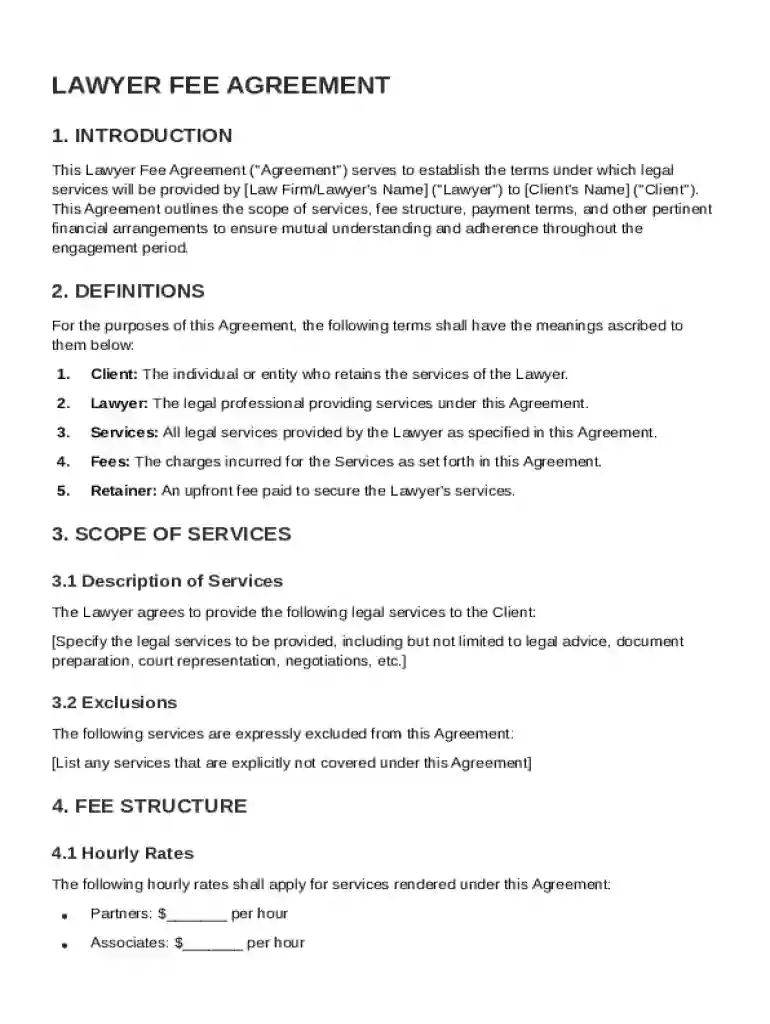
Definition and Meaning
The Lawyer Fee Agreement Template is a structured document used to clearly outline the terms and conditions for legal services rendered by a lawyer to a client. The form serves to establish a mutual understanding regarding the financial arrangements and responsibilities of both parties involved in the legal representation. This template typically encompasses several key sections, including definitions, scope of services, fee structures (such as hourly rates, flat fees, and contingency fees), payment terms, client responsibilities, termination conditions, confidentiality obligations, dispute resolution methods, and other miscellaneous provisions. By formalizing these aspects, the agreement helps prevent misunderstandings and disputes related to the legal service contract.
Key Elements of the Lawyer Fee Agreement Template
The Lawyer Fee Agreement Template contains several critical components that both parties need to carefully review and understand. These elements include:
- Scope of Services: This section outlines the specific legal services that the lawyer will provide.
- Fee Structure: Details the payment terms agreed upon by the lawyer and the client, potentially including different fee arrangements such as hourly rates, flat fees, and contingency fees.
- Payment Terms: Specifies the payment schedule, including any upfront retainer fees, periodic billing, and methods of payment.
- Client Responsibilities: Defines the responsibilities of the client, such as providing timely information and cooperating with the lawyer's directives.
- Termination Conditions: Provides the conditions under which the services can be terminated by either party.
- Confidentiality Obligations: Highlights the importance of maintaining confidentiality concerning the client's information and case details.
- Dispute Resolution Methods: Provides ways to resolve conflicts or disagreements that may arise during the duration of the agreement.
Steps to Complete the Lawyer Fee Agreement Template
Filling out the Lawyer Fee Agreement Template requires attention to detail to ensure all necessary information is accurately represented. Here is a step-by-step process to complete the form:
- Review the Introductory Section: Verify that all parties' names and details are correctly listed, including addresses and contact information.
- Define the Scope of Services: Clearly state the legal services to be provided, including any specific exclusions or limitations.
- Outline the Fee Structure: Detail the agreed-upon fee arrangement, whether it be hourly rates, flat fees, or contingency-based fees.
- Specify Payment Terms: Include information on billing cycles, retainer fees, and due dates for payments.
- Clarify Client Responsibilities: Ensure the client understands their role in providing necessary information and cooperation.
- Establish Termination Terms: Set guidelines for how the agreement can be terminated, including notice periods and any fees for termination.
- Address Confidentiality Obligations: Outline the importance of maintaining confidentiality regarding client information.
- Agree on Dispute Resolution Methods: Document procedures for resolving disputes, such as mediation or arbitration.
Important Terms Related to Lawyer Fee Agreement Template
Understanding the terminology involved in a Lawyer Fee Agreement is crucial for ensuring clarity and compliance. Key terms include:
- Retainer Fee: An upfront cost paid by the client to secure the lawyer's services.
- Contingency Fee: A payment arrangement where the lawyer receives a percentage of the funds awarded to the client if the case is won.
- Retainer Agreement: A related form that typically outlines the terms specific to the initial payment arrangement before services begin.
- Billable Hours: Hours worked by the lawyer that are eligible for charging the client.
- Arbitration Clause: A provision specifying how disputes will be handled outside of court.
- Conflict of Interest: Situations in which the lawyer may have interests that could impede their ability to represent the client impartially.
Legal Use of the Lawyer Fee Agreement Template
Establishing the legal use of a Lawyer Fee Agreement ensures that both parties are aware of the enforceable aspects of the document. The template serves several legal functions:
- Provides Documentation: Offers a record of the agreement terms, potentially useful in dispute resolution or legal proceedings.
- Clarifies Rights and Obligations: Details each party's obligations, reducing the likelihood of ambiguity in service expectations or payments.
- Ensures Compliance with Laws: Ensures that the fee structures and services comply with legal regulations, such as those stipulated by state bar associations.
- Supports Ethical Practice: Helps uphold professional ethics in legal transactions by clearly defining what is expected from both lawyer and client.
State-Specific Rules for the Lawyer Fee Agreement Template
Different states within the U.S. may have specific rules or guidelines regarding lawyer fee agreements, which can impact how these templates are used:
- State Bar Rules: Each state may have its own bar association that enforces rules on allowable fee structures and client communication requirements.
- Mandatory Disclosures: Some states require that agreements include specific disclosures related to client rights or fee disputes.
- Fee Dispute Resolutions: In certain jurisdictions, there may be mandatory arbitration programs for fee disputes between lawyers and clients.
- Contingency Fee Limitations: Some states regulate or limit the percentage a lawyer may collect in contingency fee cases, particularly concerning personal injury lawsuits.
Examples of Using the Lawyer Fee Agreement Template
Understanding how the Lawyer Fee Agreement Template can be applied in real-world scenarios provides valuable context for its usage:
- Divorce Proceedings: A lawyer could use this template to outline fees for representing a client in divorce court, including costs for custody arrangements and asset division.
- Criminal Defense: An attorney representing a client facing criminal charges may specify hourly rates and potential additional costs in the agreement.
- Corporate Legal Services: A law firm might employ this agreement to detail the fees and services for ongoing corporate legal counsel, covering areas like regulatory compliance and contract drafting.
- Personal Injury Case: Often involves contingency fees, whereby the client's legal fees are contingent on the successful recovery of a claim.
- Intellectual Property Services: Specifies terms and fees for trademark registration or patent applications managed by a legal professional.