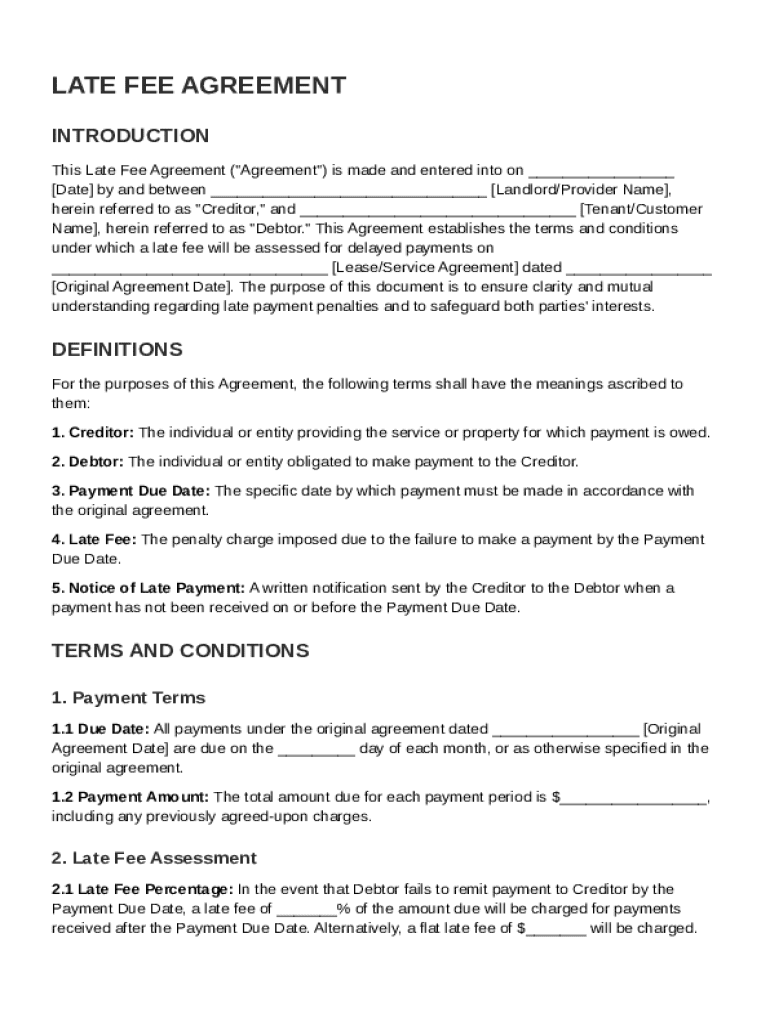







Definition and Meaning
The Late Fee Agreement Template is a document that specifies the terms and conditions for imposing late fees on overdue payments between a creditor, such as a landlord or service provider, and a debtor, such as a tenant or customer. This agreement serves as a preventive legal tool designed to ensure both parties clearly understand the financial repercussions of late payments. It typically outlines the following elements:
- Payment Due Dates: Specifies when payments are expected.
- Late Fees: Details whether the fee is a flat rate or a percentage of the overdue amount.
- Grace Periods: Indicates an allowable delay before fees are assessed.
- Notice Methods: Describes how the debtor will be informed of overdue status and penalties.
- Governing Laws: Identifies the jurisdiction whose laws will govern the agreement's enforcement.
A comprehensive understanding of these components ensures the agreement serves its intended purpose of discouraging payment delays and providing a clear path for handling such occurrences.
How to Use the Late Fee Agreement Template
Utilizing the Late Fee Agreement Template can streamline the process of instituting a late fee system. Here’s how you can effectively use this template:
- Download the Template: Obtain the template from a trusted source or platform like DocHub to ensure legal validity.
- Tailor the Template: Customize the terms to fit your specific situation, including adjusting any percentages or grace periods.
- Fill in Party Details: Input the names and contact information of all involved parties, such as the creditor and debtor.
- Specify Financial Terms: Enter clear details regarding the due dates, late fee structure, and any grace period.
- Finalize the Document: Review the agreement for accuracy, ensuring all terms are clearly stated.
- Obtain Signatures: Use electronic signature tools, ensuring the legality of the document under the ESIGN Act.
Taking these steps will help both parties avoid misunderstandings and provide a clear path for resolving late payment issues.
Key Elements of the Late Fee Agreement Template
Several critical components make up the Late Fee Agreement Template, contributing to its effectiveness:
- Identification of Parties: Clearly defines the involved parties—the creditor and the debtor—ensuring clarity.
- Terms of Payment: Specifies the due date for payments and acceptable payment methods.
- Grace Periods: Offers a defined timeframe before late fees are enacted, providing flexibility and clarity.
- Fee Structure: Details the late fee calculations, whether as a percentage of the unpaid amount or a fixed sum.
- Legal Provisions: Includes applicable laws, ensuring the agreement is enforceable and complies with state-specific regulations.
- Notice Requirements: Sets forth how and when notifications regarding penalties will be communicated.
Each of these elements ensures that the agreement is comprehensive and legally sound, minimizing potential disputes.
Legal Use of the Late Fee Agreement Template
The Legal use of a Late Fee Agreement Template ensures proper understanding and compliance with applicable laws:
- Compliance: Must adhere to state-specific regulations governing late fees in rental and service agreements.
- Binding Nature: When signed, the template becomes a legally binding contract, enforceable in courts.
- Protection Against Disputes: Acts as a safeguard to prevent creditor-debtor misunderstandings and protect against disputes.
- Adherence to Standards: Meets industry standards and legal requirements, aligning with the ESIGN Act for electronic signatures.
Understanding these legal implications helps both parties adhere to compliance and enforce the agreement as needed.
State-Specific Rules for the Late Fee Agreement Template
Each state may have different rules and regulations governing the implementation of Late Fee Agreements:
- Fee Caps: Some states impose a cap on the maximum allowable late fee (e.g., a percentage of monthly rent).
- Notice Requirements: States may dictate how much advance notice must be given to impose late fees.
- Debt Collection Laws: Varying regulations may apply to how long after a due date a creditor can start collection proceedings.
- Recognized Grace Periods: States often have model rules advising acceptable grace periods before fees apply.
Ensuring compliance with these state-specific rules can prevent legal complications in enforcing the agreement.
Why Should You Use a Late Fee Agreement Template
The Late Fee Agreement Template serves multiple functions that benefit both the creditor and debtor:
- Clarity and Transparency: Provides clear terms, reducing misunderstandings about payment expectations.
- Increases Prompt Payment: Encourages on-time payments by clearly defining penalties for delays.
- Legal Protection: Offers a legally enforceable agreement, protecting against disputes.
- Streamlined Processes: Supports efficient management of overdue payments with clear procedures and expectations.
Adopting this template into routine financial operations offers both preventative and protective benefits, enhancing business integrity.
Steps to Complete the Late Fee Agreement Template
Properly completing the Late Fee Agreement Template involves several key steps:
- Gather Essential Information: Collect names, addresses, and contact details for both parties.
- Enter Financial Details: Include payment due dates and method for calculating late fees.
- Define Grace Periods: Clearly specify any grace periods applicable before penalties are assessed.
- Draft Notice Methods: Populate sections with how and when creditors will communicate with debtors about late fees.
- Add Legal Clauses: Incorporate relevant state laws for legitimacy and enforceability.
- Review and Sign: Examine for accuracy, and obtain necessary signatures for the document to become binding.
Detailed coverage of these steps ensures a thorough and binding agreement, optimizing clarity and enforcement.
Who Typically Uses the Late Fee Agreement Template
The Late Fee Agreement Template is utilized by several entities across various scenarios:
- Landlords: Employed in rental agreements to specify terms for collecting late rental payments.
- Service Providers: Used in service contracts where payments are regularly collected, ensuring timely remuneration.
- Businesses: Essential for accounts receivable management, ensuring customers settle dues on time.
- Loan Providers: Applied to formalize terms in loan agreements, managing delays in repayment schedules.
Understanding who utilizes this template provides context on its importance across different industries and scenarios.