
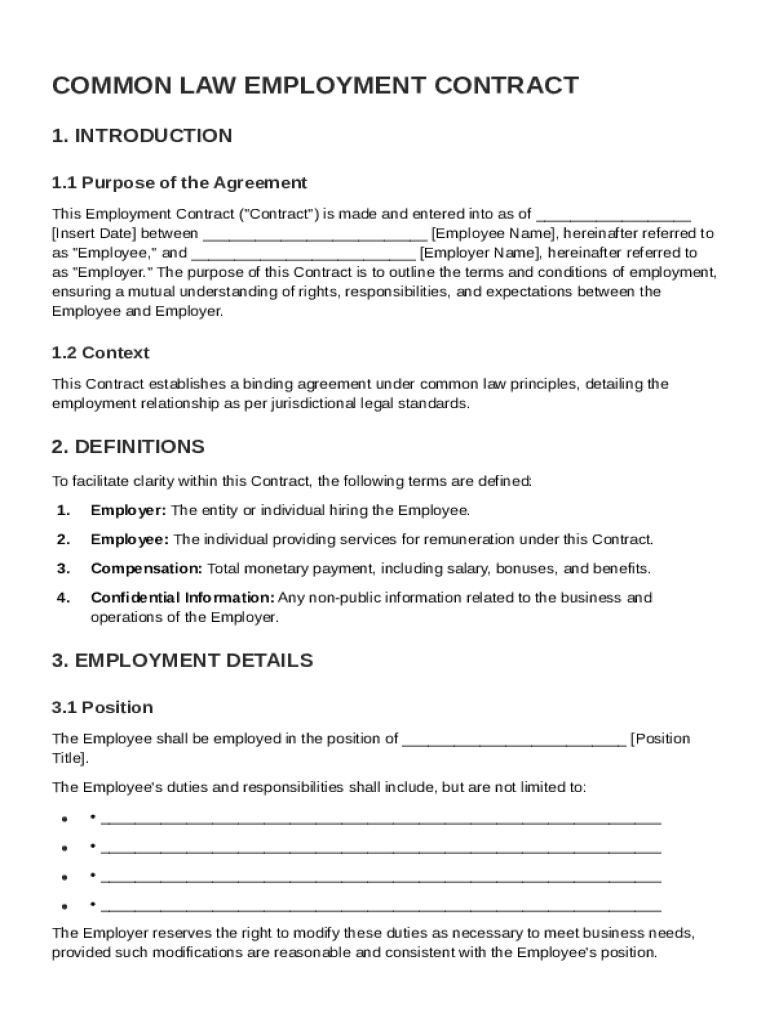







Definition & Meaning
A Common Law Employment Contract Template is a foundational document that establishes the terms and conditions under which an employee is hired by an employer. It serves as a formal agreement defining the roles, responsibilities, and obligations of both parties in the employment relationship. Typically, in a common law employment context, agreements are built upon legal principles developed through court decisions, rather than statutory laws alone. Such contracts ensure clarity and mutual understanding by outlining the fundamental aspects of the employment engagement.
Key Elements of the Common Law Employment Contract Template
Key elements of a Common Law Employment Contract Template include:
- Position and Duties: A clear description of the job title and a detailed outline of the specific duties and responsibilities.
- Compensation and Benefits: Information on salary, wage structure, and any available benefits such as health insurance or retirement plans.
- Duration of Employment: Details regarding the term of employment, whether it is fixed-term or ongoing.
- Work Schedule: Specification of working hours, including expectations around overtime or shift work.
- Obligations and Conduct: Standards of behavior expected from the employee, including codes of conduct, confidentiality obligations, and compliance with policies.
- Termination Conditions: Circumstances under which the employment contract may be terminated by either party, including notice periods and severance.
These elements ensure a comprehensive understanding between employer and employee, minimizing potential disputes.
Steps to Complete the Common Law Employment Contract Template
- Initial Review: Start by reviewing the entire template to understand its structure and necessary information.
- Job Details: Fill in specifics about the employee's role, including position title and job description.
- Compensation: Input the agreed salary or wage rate, along with any additional compensation elements like bonuses or stock options.
- Working Conditions: Clearly define the work hours, including any regulations surrounding breaks and overtime.
- Rights and Obligations: Detail the expectations in terms of workplace behavior, confidentiality, and compliance with laws.
- Review and Revise: Both parties should examine the completed contract for accuracy, suggesting any necessary revisions.
- Signing: After review, both employer and employee should sign the document to formalize the agreement.
Adhering to these steps facilitates a clear and legally sound employment agreement.
Legal Use of the Common Law Employment Contract Template
In the United States, the legal use of a Common Law Employment Contract Template is influenced by the applicable jurisdiction's labor laws. Employers and employees should ensure compliance with both federal and state-specific employment regulations. Common law contracts are binding and enforceable, provided they do not violate statutory requirements, including minimum wage laws or employee rights.
- Compliance: The contract must comply with anti-discrimination laws, wage and hour laws, and health and safety standards.
- Dispute Resolution: It often includes language regarding the process for resolving disputes, whether through arbitration, mediation, or litigation.
- Enforceability: Clear terms ensure enforceability in the event of a legal challenge.
Consulting with legal professionals may be necessary to ensure contract terms adhere to all regulatory standards.
State-Specific Rules for the Common Law Employment Contract Template
Common law employment contracts may be subject to varying state-level regulations in the United States. It is important for both employers and employees to be aware of these differences to ensure compliance:
- Right-to-Work Laws: States like Texas have right-to-work laws affecting union membership and dues.
- State Minimum Wage: State-specific minimum wage laws may differ from the federal minimum wage, impacting compensation clauses.
- Employee Protections: Certain states, such as California and New York, have additional worker protections regarding family leave, data privacy, and non-compete agreements.
Understanding state-specific rules is essential for ensuring the contract's validity and enforceability.
Who Typically Uses the Common Law Employment Contract Template
The Common Law Employment Contract Template is typically used by employers and human resources departments across a range of industries to standardize the hiring process. It provides a versatile framework for:
- Small to Medium Enterprises (SMEs): Seeking cost-effective ways to establish employee agreements without custom legal drafting.
- Corporations: That require uniformity in employment contracts across different departments or locations.
- Public Sector: Government agencies that need to formalize employment terms in compliance with specific public administration laws.
By utilizing a template, these entities ensure consistent and fair employment practices.


Important Terms Related to Common Law Employment Contract Template
Understanding key terms is fundamental when drafting or reviewing a Common Law Employment Contract Template:
- At-Will Employment: A term that indicates that either party may terminate the employment relationship at any time, for any lawful reason.
- Non-Disclosure Agreement (NDA): A confidentiality clause within the contract that protects sensitive company information.
- Probationary Period: An initial phase of employment where either party may terminate the relationship with minimal notice.
- Amendment Clause: Details the process by which terms of the contract may be modified by mutual consent of both parties.
Familiarity with these terms aids in comprehending the full scope of the employment agreement.
Business Types That Benefit Most from Common Law Employment Contract Template
Various types of businesses benefit significantly from employing a Common Law Employment Contract Template:
- Startups: These organizations often seek streamlined, legally compliant ways to hire new talent quickly as they scale.
- Nonprofit Organizations: Require transparent and equitable employment practices for both employees and volunteers.
- Tech Companies: Where confidentiality and intellectual property clauses are critical due to proprietary technology and innovation.
By adopting a standardized contract template, these businesses optimize their hiring processes while aligning with legal best practices.




