




Definition & Meaning
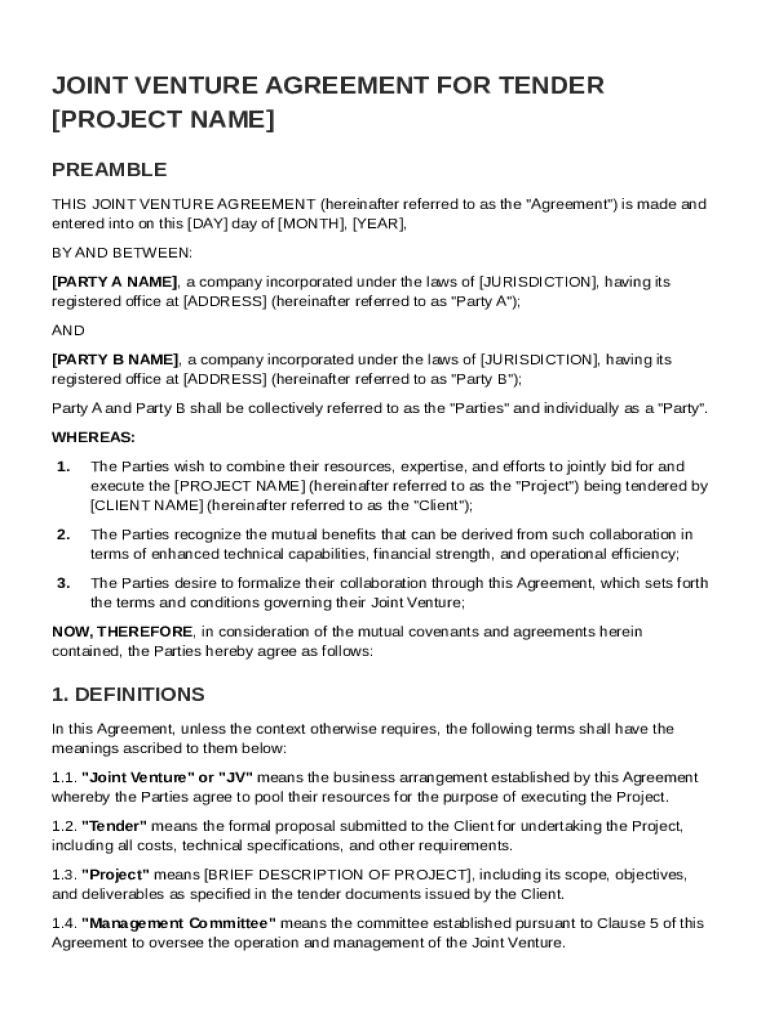
A Joint Venture for Tender Agreement, often utilized in the business realm, is a contractual agreement between two or more parties who aim to collaborate on a specific project, typically involving tendering for a contract. Each participating entity maintains its individual identity, yet they combine their resources and expertise to increase competitive advantage in the bidding process. The agreement defines clear parameters including roles, responsibilities, and contributions of each party, ensuring a mutual understanding and management of joint activities for the duration of the project.
Key Elements of the Joint Venture for Tender Agreement Template
The Joint Venture for Tender Agreement Template encompasses several critical components to ensure clarity and efficiency in partnerships:
- Purpose and Objectives: Clearly articulates the goals, scope, and specific project details the joint venture is targeting.
- Roles and Responsibilities: Outlines each party’s obligations, contributions, and duties, helping to maintain balance and accountability.
- Financial Contributions and Profit Sharing: Specifies the financial input from each partner and how profits and losses will be distributed among them.
- Management Structure: Defines how the joint venture will be governed, including decision-making processes, management roles, and authority levels.
- Confidentiality and Non-disclosure: Protects sensitive information shared within the partnership, preserving competitive advantages.
- Termination Conditions: Establishes the terms under which the agreement can be dissolved, including any penalties for breach of contract.
- Dispute Resolution Processes: Provides mechanisms for resolving disagreements, ensuring a structured approach to conflict management.
Steps to Complete the Joint Venture for Tender Agreement Template
Filling out the Joint Venture for Tender Agreement Template entails several methodical steps:
- Identify Parties: Clearly specify all participating entities, including their official names and contact details.
- Define Project Details: Include the full description of the project, goals, and relevant deadlines.
- Allocate Roles and Responsibilities: Detail the specific duties and contributions required from each party.
- Outline Financial Structure: Document each party's financial obligations, profit-sharing ratios, and billing procedures.
- Determine Management Roles: Define leadership roles and decision-making processes within the joint venture.
- Set Confidentiality Terms: Agree on what constitutes confidential information and how it will be protected.
- Specify Termination and Dispute Terms: Include the terms for ending the partnership and resolving disputes.
Who Typically Uses the Joint Venture for Tender Agreement Template
The Joint Venture for Tender Agreement Template is widely used across various sectors where collaboration is necessary for project execution. Common users include:
- Construction Companies: Cooperating to bid for large-scale infrastructure projects.
- Technology Firms: Partnering to develop innovative solutions leveraging combined expertise.
- Energy and Utility Corporations: Joining forces to tender for energy projects requiring a consortium.
- Consulting Agencies: Working together for comprehensive consulting projects requiring diverse expertise.

Important Terms Related to Joint Venture for Tender Agreement Template
Understanding key legal and business terms is crucial for effectively using this template:
- Joint and Several Liability: Refers to all parties being collectively and individually responsible for the venture's obligations.
- Intellectual Property: Assets that may be developed jointly, specifying ownership and rights post-venture.
- Contingent Liabilities: Potential liabilities that may arise during the project, requiring careful documentation and agreement.
- Exclusivity: Conditions under which partners must refrain from engaging in competing activities during the venture's timeframe.
Legal Use of the Joint Venture for Tender Agreement Template
The Joint Venture for Tender Agreement must comply with relevant laws and regulations to provide legal enforceability:
- ESIGN Act Compliance: Ensures digital signatures are valid and legally binding, enhancing the document’s legitimacy for U.S.-based entities.
- State-Specific Regulations: Individual state laws may impact certain contractual elements, requiring customized adjustments based on jurisdiction.
- Data Protection Laws: Compliance with privacy regulations, such as HIPAA or GDPR, may be required depending on the nature of the project and data involved.
Examples of Using the Joint Venture for Tender Agreement Template
Real-world scenarios illustrate the practical application of the Joint Venture for Tender Agreement Template:
- Infrastructure Development: Multiple construction firms collaborate to pool resources for large-scale government contracts, dividing responsibilities like civil engineering and project management.
- R&D Collaborations: Two tech companies team up to develop a new software platform, sharing intellectual property for the duration of the development phase.
- Healthcare Partnerships: A healthcare provider partners with a tech firm to deploy a new telemedicine platform, sharing responsibilities and benefits from the initiative.
Eligibility Criteria
Before drafting a Joint Venture for Tender Agreement, it's essential to ensure all involved parties meet specific eligibility criteria:
- Legal Standing: Each entity must be in good legal standing with requisite business licenses and clear financial records.
- Complementary Capabilities: The parties should possess complementary skills, resources, or technologies to justify collaboration.
- Clear Objectives: All parties must have a shared understanding of the venture's objectives and a mutual commitment to achieving them.
By meticulously crafting the Joint Venture for Tender Agreement, businesses can effectively leverage combined strengths and seamlessly navigate complex collaborations, maximizing their competitive edge in tender processes.