




Definition & Meaning
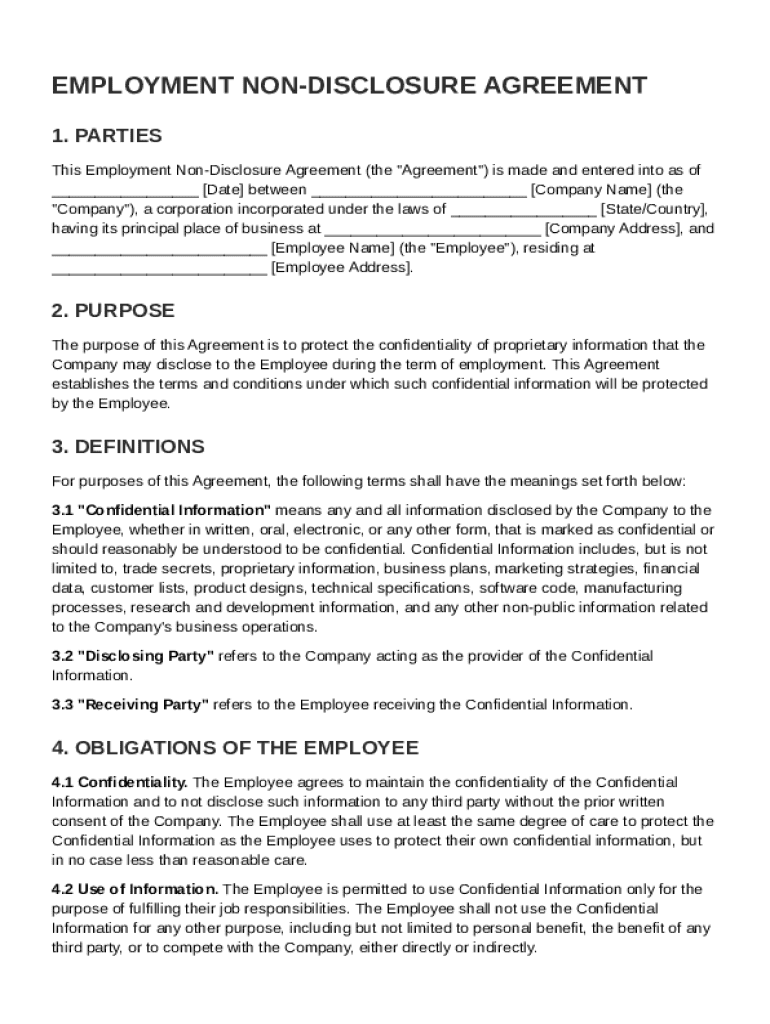
An Employment Non-Disclosure Agreement (NDA) is a legal contract between an employer and an employee that outlines the terms under which proprietary information must be kept confidential. This agreement serves to protect sensitive business information that the company deems critical to its operations and competitive position. A well-structured NDA specifies what is considered "Confidential Information," the responsibilities of the employee regarding its use and protection, and any exceptions to confidentiality. The agreement is essential for maintaining the privacy of business operations, protecting trade secrets, and ensuring that proprietary information is not shared with unauthorized parties.
Examples of Confidential Information
- Trade secrets: Formulas, practices, processes, design patterns, customer lists, and other proprietary knowledge that provide a competitive edge.
- Business strategies: Financial forecasts, marketing plans, or strategic initiatives that the company wishes to keep private.
- Research and development: Any unpublished data, prototypes, or new technology in the developmental phase.
Key Elements of the Employment Non-Disclosure Agreement Template
The Employment NDA template encompasses several critical components that ensure its efficacy and enforceability in protecting a company’s confidential information.
Recognition of Confidential Information
- Detailed description: Clearly defines what constitutes "Confidential Information" to avoid misunderstandings.
- Scope: Includes both written and oral information, specifying how information will be marked or identified as confidential.
Obligations of the Employee
- Usage limitations: Restricts use of the information solely for conducting business as outlined by the employer.
- Maintenance of confidentiality: Ensures employees take reasonable measures to prevent unauthorized access or disclosure.
Duration of Confidentiality Obligations
- Timeframe: Specifies the duration for which confidentiality obligations must be upheld, often surviving the termination of employment.
Legal Use of the Employment Non-Disclosure Agreement Template
This template provides a legally binding agreement that complies with U.S. federal laws, such as the Defend Trade Secrets Act, and applicable state laws.
State-Specific Considerations
- Variations by state: Certain states, like California, have specific restrictions on the scope and enforceability of NDAs, particularly concerning employee mobility and rights.
- Legal consultation: Employers are encouraged to consult with legal experts to adapt the NDA to comply with state-specific laws and regulations.
Steps to Complete the Employment Non-Disclosure Agreement Template
The process of completing the NDA template involves several distinct steps to ensure all relevant information is accurately reflected and legally binding.
- Prepare information: Gather all necessary details including the definition of confidential information, employee obligations, and exclusions.
- Draft terms: Customize sections of the template to reflect the specific requirements and conditions of the employment context.
- Review and revise: Conduct a thorough review to ensure clarity, completeness, and compliance with applicable laws.
Fields to Consider
- Employee details: Include full name, position, and contact information.
- Company details: Cover the official legal name and business address of the employer.
- Effective date: Clearly state the start date of the agreement.
State-by-State Differences
While the general framework of NDAs remains consistent, state-specific nuances can significantly affect how an NDA is enforced or interpreted.
Notable State Differences
- California: NDAs cannot be overly restrictive and must not violate an employee's rights to future employment.
- Texas: Allows for broader definitions and longer confidentiality periods, subject to the extent of information protected as a trade secret.
Important Terms Related to Employment Non-Disclosure Agreement Template
Essential Terminology
- Disclosing Party: The party disclosing confidential information.
- Receiving Party: The employee or entity receiving confidential information.
- Trade Secret: Information that possesses economic value and is subject to reasonable efforts to maintain its secrecy.
Who Typically Uses the Employment Non-Disclosure Agreement Template
The NDA template is widely used across various sectors to protect sensitive data integral to business success.

Common Users
- Companies: Both small enterprises and large corporations to safeguard proprietary information from unfair competition.
- Consultants: Independent professionals privy to company operations.
- Start-ups: Businesses with a strong focus on innovation requiring strict confidentiality measures.

Why Should You Use an Employment Non-Disclosure Agreement Template
Utilizing an NDA template provides a structured and efficient method for safeguarding a company’s sensitive information against public disclosure.
Benefits
- Risk mitigation: Reduces the likelihood of valuable information being disclosed to competitors or unauthorized individuals.
- Legal protection: Establishes a clear legal framework to pursue remedies in instances of breach.
- Customizability: Tailored provisions ensure that specific business needs and sensitive information are fully protected within the bounds of the law.