




01. Edit your form online
Type text, add images, blackout confidential details, add comments, highlights and more.

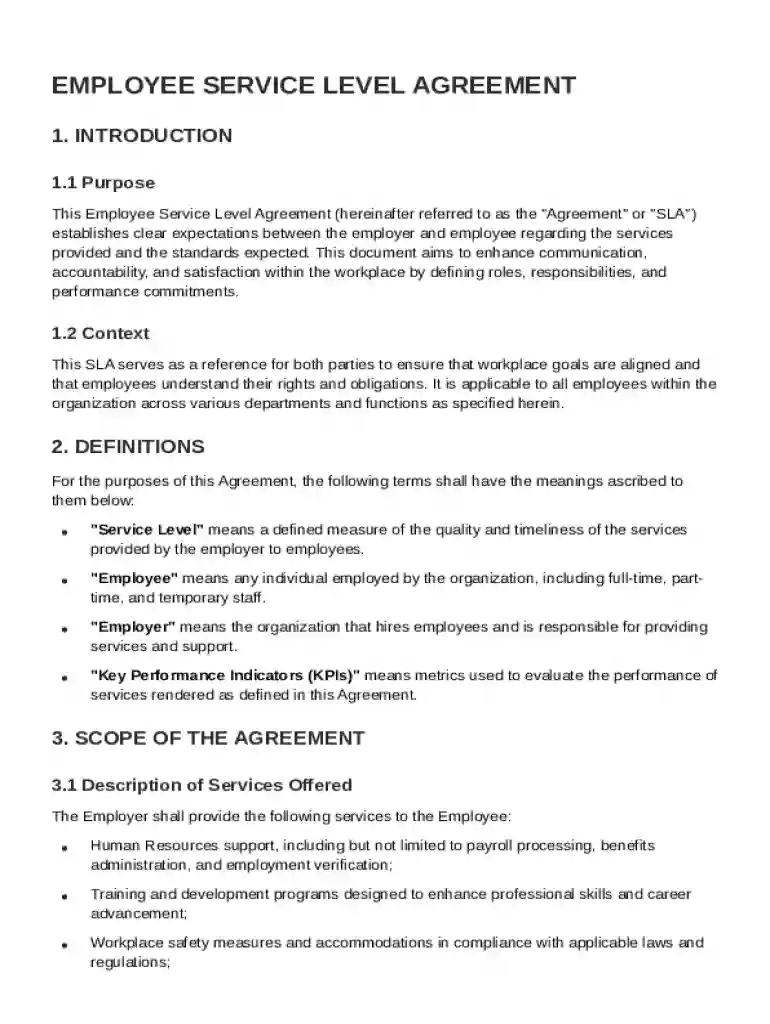
Type text, add images, blackout confidential details, add comments, highlights and more.

Draw your signature, type it, upload its image, or use your mobile device as a signature pad.

Send it via email, link, or fax. You can also download it, export it or print it out.
The Employee Service Level Agreement (SLA) Template is a formal document that outlines the mutual expectations and responsibilities between employers and employees regarding workplace services and standards. This template serves as a guide to set clear benchmarks for service delivery, aligning with both organizational goals and employee roles. It incorporates parameters such as performance metrics, service quality standards, and compliance procedures to enhance communication, accountability, and satisfaction within the workplace. By defining roles and responsibilities, it helps prevent misunderstandings and ensures that both parties are aware of their commitments.
Using the Employee SLA Template involves several key steps that focus on adaptation and customization for the specific needs of an organization. Initially, employers must review the template to ensure it aligns with their business objectives and operational standards. The next step involves customizing sections such as service quality measures, employee roles, and performance metrics to match the specific job descriptions and company policies. Once the details are tailored, the agreement should be presented to employees for review and agreement, fostering transparency and mutual understanding. Finally, the SLA should be integrated into the company's policy documents and periodic reviews should be scheduled to ensure continued relevance and compliance.
Completing the Employee SLA Template requires a systematic approach:
The Employee SLA Template includes several crucial elements designed to ensure clarity and efficiency:
In a U.S.-centric context, the legal utilization of the Employee SLA Template involves adhering to employment laws and regulations. It is important to ensure that the template complies with federal and state employment statutes, protecting both the employer's interests and employee rights. Reviewing the document with legal counsel prior to implementation can help identify any potential legal pitfalls and ensure it stands up in case of disputes. Furthermore, providing clear instructions on the steps for grievance redressal and dispute resolution within the SLA enhances its legal robustness and shields both parties against misunderstandings or conflicts.
While the Employee SLA Template offers a standardized approach, state-specific legislation may affect its contents. For instance, factors such as minimum wage laws, overtime rules, and employee rights can vary significantly across states. Employers must customize the template sections related to these aspects according to the applicable state laws to ensure compliance and avoid legal issues. Keeping abreast of changes in state employment laws and updating the SLA accordingly is crucial, and consulting with labor law experts may provide additional insights into state-specific requirements.
Practical examples of the Employee SLA in action can illustrate its versatility and utility:
Each use case highlights how the SLA serves as a critical tool for maintaining standards and managing expectations across varied operational contexts.
The Employee SLA Template is typically used by a range of organizational stakeholders, including:
In essence, the template serves as a foundational document for maintaining the balance between employee expectations and organizational goals.


At DocHub, your data security is our priority. We follow HIPAA, SOC2, GDPR, and other standards, so you can work on your documents with confidence.


Jul 1, 2026 This Service Level Agreement (SLA) is intended to identify the basic services, and any agreed upon optional services provided by RutgersRead more
THIS IS A SAMPLE! Feel free to use or modify it for your own use! The employee is responsible for securing the equipment provided to the employee
This Service Level Agreement (SLA) defines the terms of the partnership between the Business Services Center (BSC) and the agencies we host, including theRead more


