






Definition and Meaning of the Employee Intellectual Property Agreement
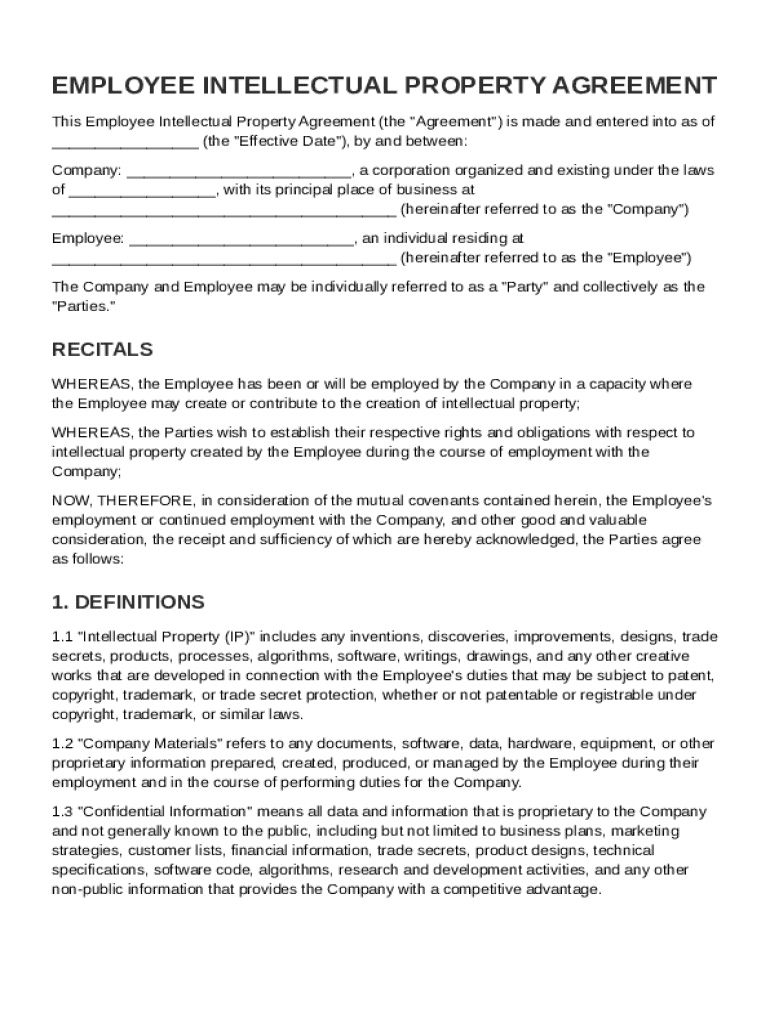
An Employee Intellectual Property Agreement is a legal document outlining the ownership and rights related to intellectual property created by an employee during their tenure with a company. This agreement clearly establishes that any creative works, inventions, or developments made by the employee in connection with their employment are the property of the employer. The agreement also encompasses confidentiality obligations, and may include non-competition and non-solicitation clauses to protect the company’s interests. It serves as a contractual understanding to prevent disputes over property rights and ensure that the company retains access to innovations that further its business objectives.
Key Elements of the Agreement
- Ownership of Intellectual Property: Specifies that all intellectual property developed in the course of employment belongs to the employer.
- Confidentiality Obligations: Details the employee's duty to keep proprietary information confidential.
- Non-Compete Clauses: May restrict the employee's ability to work with competitors for a certain period post-employment.
- Non-Solicitation Clauses: Prevents the employee from soliciting the company's clients or employees after leaving.
- Amendment Procedures: Outlines how changes to the agreement can be made.
- Governing Law: Indicates which state laws will govern the agreement.
- Severability: Ensures that if one part of the agreement is invalid, the rest remains effective.
How to Use the Employee Intellectual Property Agreement Template
Using the Employee Intellectual Property Agreement Template involves several steps to ensure it accurately reflects the interests of both the employer and the employee.
- Customize the Template: Begin by reviewing the template to ensure all sections are relevant to your company’s needs. Add or remove clauses as necessary.
- Identify Key Parties: Clearly list the employer and employee as parties to the agreement.
- Detail Intellectual Property Rights: Clearly state the scope of intellectual property that the employee creates in the course of their employment.
- Include Legal Provisions: Ensure that all essential legal components such as confidentiality, non-disclosure, and non-compete clauses are present.
- Review with Legal Counsel: It is advisable to have the agreement reviewed by a legal professional to ensure all clauses are enforceable and aligned with current laws.
- Sign and Execute: After finalizing the document, both parties should sign the agreement to make it legally binding.
Practical Examples
- Technology Companies: Tech firms use this template to secure software codes and technology patents developed by employees.
- Creative Industries: Media companies employ such agreements to retain rights to artistic works such as scripts and designs.
Key Terms Related to the Employee Intellectual Property Agreement
Understanding the key terms within the Employee Intellectual Property Agreement is crucial for both the employer and employee.
- Intellectual Property (IP): Creations of the mind, including inventions, literary works, and symbols, that are owned by the company once developed by an employee.
- Confidential Information: Sensitive company information that must not be disclosed to outsiders.
- Inventions: Any novel creations or discoveries made by an employee during employment.
- Non-Compete Agreement: A clause that limits the employee’s ability to engage in professional competition with the employer post-employment.
- Non-Disclosure Agreement (NDA): A legal contract ensuring that specific information remains confidential.
Legal Use of the Employee Intellectual Property Agreement Template
The legal relevance of an Employee Intellectual Property Agreement lies in its ability to protect intellectual assets and prevent litigation over ownership.
Components for Legal Compliance
- Clarity in Scope: Clearly defining what constitutes intellectual property within the agreement prevents future disputes.
- Validity of Clauses: All clauses must be legally enforceable under applicable laws.
- Legally Binding Signatures: Both parties must willingly sign the agreement to make it binding.
- Foresight of Legal Changes: Provisions should acknowledge any potential changes in law that might affect the agreement.
Case Study
A software development company safeguarded its proprietary code when an employee attempted to use it in a startup. The agreement, specifying the assignment of all work-related inventions to the company, was instrumental in resolving the dispute in the company’s favor.
Steps to Complete the Employee Intellectual Property Agreement Template
Filling out the Employee Intellectual Property Agreement Template requires attention to detail to ensure completeness and compliance.
- Gather Necessary Information: Collect details about the employer, employee, and specific job functions.
- Complete Template Sections: Fill out each section, including the definition of intellectual property, employee obligations, and confidentiality clauses.
- State Governing Laws: Choose the jurisdiction that will govern the agreement.
- Review Specific Clauses:
- Non-Compete: Specify any geographic or temporal restrictions.
- Non-Solicitation and Confidentiality: Clarify the scope and duration of these clauses.
- Legal Review: Have a legal professional vet the document for any discrepancies.
- Finalize and Sign: Both parties should agree on the terms and sign to formalize the agreement.
Important Terms Related to the Employee Intellectual Property Agreement
The Employee Intellectual Property Agreement contains several terms that are vital for its interpretation and enforcement.
- Assignor: The party transferring their rights (typically the employee).
- Assignee: The party receiving the rights (typically the company).
- Proprietary Information: Special, valuable information regarding the company, often trade secrets.
- Derivative Work: A work based upon one or more pre-existing works, modified or adapted by the employee.
- Competing Business: Any business operation that runs in direct competition with the employer’s business.
Edge Cases
- Pre-Existing IP: Intellectual property created by the employee prior to employment needs clear delineation to prevent ownership disputes.
- Remote Work Scenarios: Considerations for work completed outside company premises, making the definition of “during employment” critical.
By comprehensively covering these sections, the Employee Intellectual Property Agreement ensures clarity and protection for both parties involved, maintaining a secure intellectual property environment.