






Definition and Purpose of the Asset Loan Agreement Template
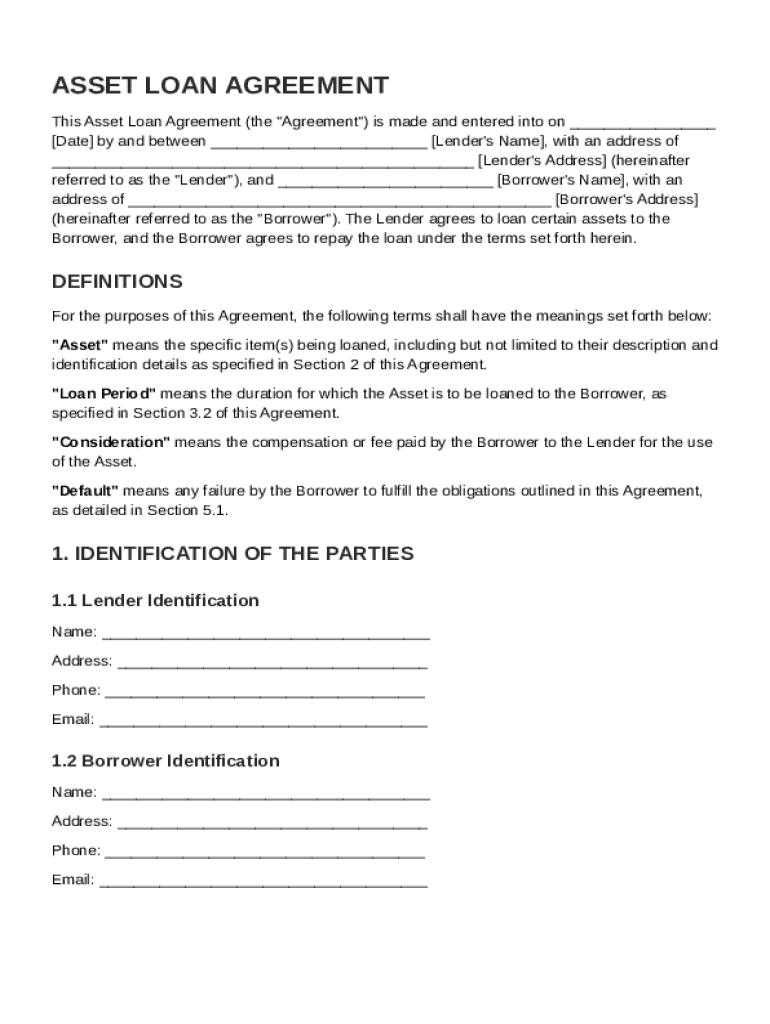
An Asset Loan Agreement Template serves as a standardized framework outlining the terms and conditions under which a lender loans specific assets to a borrower. This legally binding document ensures clarity and agreement between both parties regarding key terms, asset description, and borrower obligations. The primary aims include safeguarding lender interests, outlining borrower responsibilities for asset care, and detailing loan terms such as duration, repayment, and potential consequences for defaulting on the agreement.
Essential Components
- Parties Involved: Identifies the lender and borrower, ensuring both parties' details are clearly specified.
- Asset Description: Precise details of the assets being loaned, including quantity, condition, and any unique identifiers.
- Loan Terms: Includes specifics about loan duration, repayment schedules, and interest rates if applicable.
- Borrower Obligations: Details responsibilities for maintaining, insuring, and returning the assets in their original condition.
- Default and Remedies: Outlines the consequences and remedies available to the lender if the borrower defaults on the agreement.
Steps to Complete the Asset Loan Agreement Template
Completing an Asset Loan Agreement Template involves several key steps that ensure all terms are legally binding and understood by both parties. Here's a comprehensive breakdown of each stage in the process:
-
Gather Required Information:
- Obtain full names, contact details, and addresses of both the lender and borrower.
- Prepare a detailed description of the assets, including serial numbers where applicable.
-
Fill Out Loan Terms and Conditions:
- Specify the loan amount, repayment schedule, and interest rate.
- Clearly outline start and end dates for the loan duration.
-
Define Borrower Responsibilities:
- Detail the care, maintenance, and insurance requirements the borrower must adhere to.
- Clarify procedures for returning the assets at the loan's conclusion.
-
Outline Default and Penalty Clauses:
- State the conditions under which a default is determined.
- Explain the penalties and legal recourse available to the lender in case of default.
-
Include Signature and Date Fields:
- Leave space for both parties to sign and date the agreement, finalizing its legality.
-
Legal Review and Compliance:
- Have a legal expert review the agreement to ensure it adheres to applicable state and federal laws.
Key Elements to Consider
The Asset Loan Agreement Template encompasses several critical elements essential for its integrity and effectiveness. Here’s a closer look at each:
- Definitions and Interpretations: Clarifies key terms within the agreement, ensuring both parties have a unified understanding.
- Interest Provisions (if applicable): Provides details on the calculation and payment of interest on the loaned amount.
- Amendments and Waivers: Specifies conditions under which agreements can be modified, emphasizing written and mutual consent.
Additional Considerations
- Governing Law: Declares which state’s laws will govern the agreement.
- Dispute Resolution: Offers mechanisms such as mediation or arbitration to resolve conflicts.
- Record Keeping: Both parties are advised to maintain copies of the agreement and any amendments for their records.
Legal Use and Implications
The Asset Loan Agreement Template complies with legal standards applicable within the United States. Its design ensures that the loan transaction is formalized within a legal framework, protecting both parties and detailing their rights and obligations comprehensively.
Compliance with U.S. Laws
- ESIGN Act Compliance: Ensures electronic signatures are legally binding.
- State Variations: Recognizes that while the template is broadly applicable, some states may have specific requirements or modifications necessary for compliance.
Who Typically Uses the Asset Loan Agreement Template
An Asset Loan Agreement Template is versatile, used by various individuals and entities across different sectors. Here’s a look at the typical users:
- Financial Institutions: Banks and credit unions often use these templates to manage asset-based lending.
- Private Lenders: Individuals lending assets to businesses or individuals utilize this agreement to enforce terms.
- Corporate Entities: Companies borrowing or lending equipment or goods for operational purposes.
- Educational Institutions: Schools and universities loaning equipment to faculty or students for research purposes.


Case Studies
- Case Study 1: A real estate company uses the template to loan construction equipment to a contractor, ensuring all terms are outlined and agreed upon.
- Case Study 2: A university employs the agreement to lend laboratory equipment to researchers, with specific clauses about usage and liability.
Software Compatibility and Digital vs. Paper Versions
The Asset Loan Agreement Template is accessible in both digital and paper formats, each offering unique benefits:
Digital Version
- Software Compatibility: Editable and compatible with programs such as Microsoft Word, PDF editors, and cloud-based platforms like DocHub, ensuring flexibility and ease of use.
- Ease of Sharing and Storage: Allows for easy electronic distribution and storage, reducing physical paperwork.
Paper Version
- Traditional Use: Preferred in scenarios where digital access is limited, ensuring the agreement remains accessible to all parties.
- Original Signatures: Ideal for parties who require traditional ink signatures on physical documents.
Each format serves specific needs and offers distinct advantages depending on user preferences and technological capabilities.