






Definition and Meaning of the Proprietary Information Agreement Template
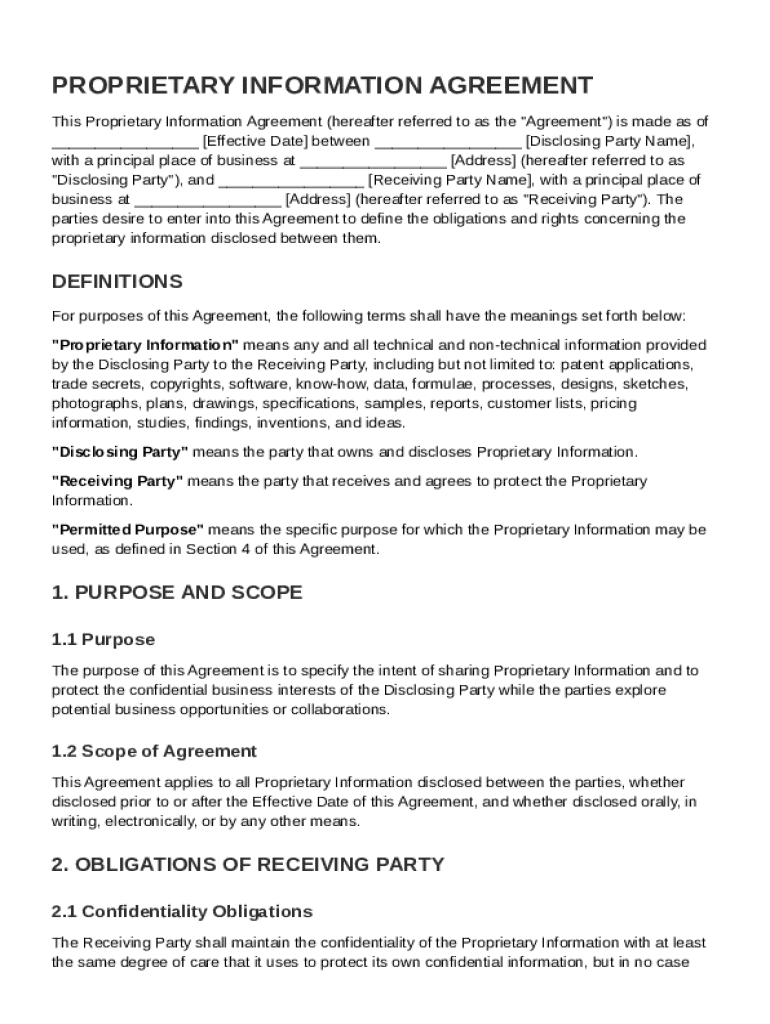
A Proprietary Information Agreement is designed to safeguard confidential information exchanged between parties. Typically, this involves a Disclosing Party sharing sensitive business information with a Receiving Party. The agreement legally binds the Receiving Party to confidentiality obligations and outlines the permitted uses of the information. It also elaborates on ownership rights, ensuring that proprietary data remains protected. Key provisions may include the terms for termination, indemnification clauses, governing law preferences, and any amendments essential for refining the agreement to suit specific needs.
How to Use the Proprietary Information Agreement Template
Leveraging the Proprietary Information Agreement Template involves several considered steps. Initiate by identifying and clearly defining the parties involved—the Disclosing Party and the Receiving Party. Subsequently, outline the confidential information to be protected. Detail the scope of confidentiality obligations and restrictions that the Receiving Party must adhere to. The template should allow for customization to specify permitted information usage and establish the time frame for which confidentiality must be maintained. Consider including sections that clarify ownership rights of the information exchanged for further clarity.
Steps to Complete the Proprietary Information Agreement Template
- Identify Parties: Clearly denote the Disclosing and Receiving Parties.
- Define Confidentiality: Enumerate the types of information considered confidential.
- Specify Obligations: Detail obligations and permitted uses of the information.
- Draft Ownership Clauses: Establish who retains control of information rights.
- Include Legal Provisions: Address prerequisites for amendments, termination terms, and indemnity clauses.
- Consent and Signatures: Provide space for both parties to acknowledge and sign the agreement, ensuring it's legally binding.
Key Elements of the Proprietary Information Agreement Template
- Parties Involved: Names and roles of the Disclosing and Receiving Parties.
- Definition of Confidential Information: Specifically outline what constitutes confidential data.
- Confidentiality Obligations: Clear terms detailing the Receiving Party's responsibilities in safeguarding information.
- Ownership and Usage Rights: Specify control and ownership of the proprietary data.
- Legal Provisions: Include termination conditions, indemnification, and applicable governing laws.
- Signature Sections: Allocate space for signatures to validate the agreement.
Legal Use of the Proprietary Information Agreement Template
The Proprietary Information Agreement must be used in compliance with established legal standards. It should adhere to the jurisdiction’s governing laws, ensuring that obligations and rights align with the legal frameworks. This involves ensuring that the agreement acknowledges the ESIGN Act standards if digital signatures are used. It is crucial to consult legal expertise to amend any standard clauses that might affect enforceability.
Examples of Using the Proprietary Information Agreement Template
- Business Collaboration: Protecting technical specifications while working with a vendor.
- Merger and Acquisition Discussions: Safeguarding sensitive financial details during negotiation phases.
- Employee Onboarding: Ensuring employees don't disclose trade secrets during and post-employment.
- Research and Development: Sharing proprietary processes with research partners under confidentiality terms.
Important Terms Related to the Proprietary Information Agreement Template
- Non-Disclosure Agreement (NDA): Similar agreements that ensure confidential handling of information.
- Confidentiality Clause: Specific provisions within contracts focused on information safeguarding.
- Termination Clause: Provisions detailing agreement dissolution terms.
- Indemnification: Obligations to compensate the other party for damages under specific circumstances.
Digital vs. Paper Version
Digital versions of the Proprietary Information Agreement Template offer enhanced flexibility and security. Users can employ electronic signatures, track agreement modifications, and integrate the document into cloud-based storage for ease of access and collaboration. Paper versions may necessitate additional logistical considerations such as safe storage and physical transfer among parties. The choice between digital and paper should align with the operational preferences and capacities of involved parties.