






Definition & Meaning
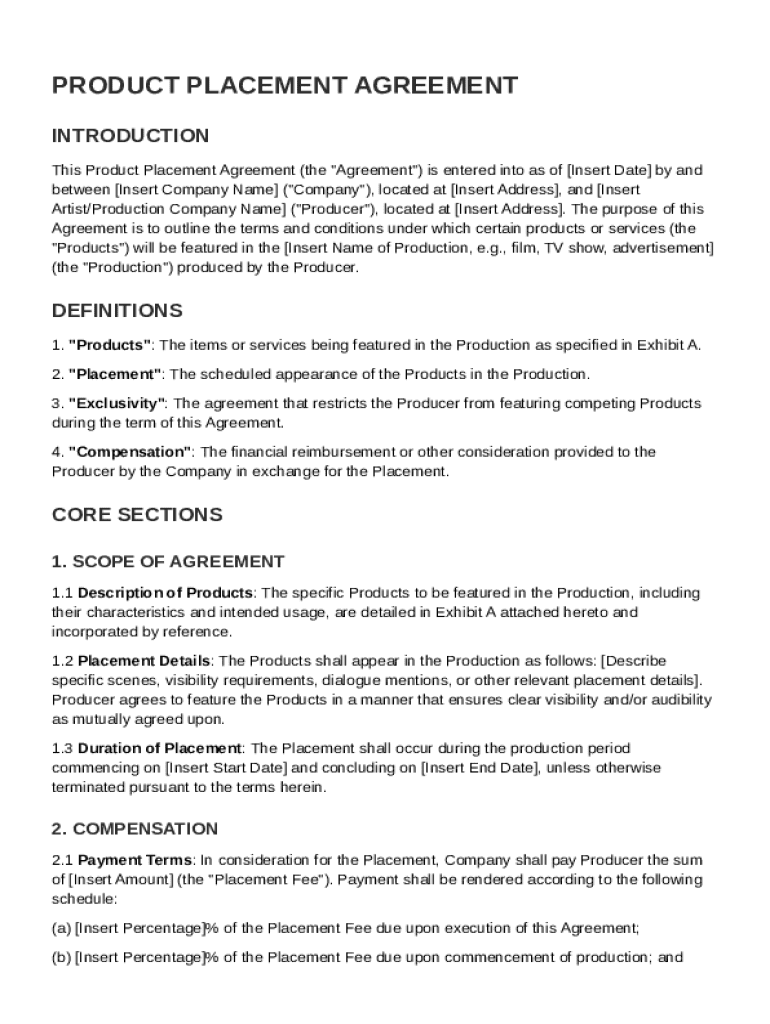
A Product Placement Agreement Template is a legal document that establishes the terms and conditions under which a company's products will be featured in a production, such as a film, television show, or other media. This agreement is pivotal as it outlines the rights and obligations of both the company and the producer, ensuring that the product is portrayed in a manner that is consistent with the brand's image and marketing goals. Notably, the agreement will detail the nature and extent of the product's exposure, compensation, and other critical aspects of the collaboration.
Key Elements of the Product Placement Agreement Template
Product Placement Details
Within the agreement, clear specifications regarding how the product will be incorporated into the production are crucial. This may include stipulations on screen time, context of use, and any specific scenarios in which the product should or should not appear. This section is vital to ensure that the product's appearance aligns with the marketing strategy of the company.
Compensation Structure
The agreement will outline the financial aspects, detailing how the company will compensate the producer for including its products. This can take various forms, such as a flat fee, a percentage of media sales, or other arrangements like product exchanges. It is essential that both parties agree on a fair financial arrangement reflective of the anticipated benefits.
Responsibilities and Obligations
Both parties' responsibilities must be delineated within the agreement. For instance, the company might be responsible for providing the required number of products, while the producer ensures they are placed as agreed. This section prevents misunderstandings and ensures a smooth workflow throughout the production process.
Important Terms Related to Product Placement Agreement Template
Definitions and Key Terms
To avoid ambiguity, the agreement should define key terms associated with the arrangement. Examples include what constitutes a "placement," "brand integration," or "product exposure." Clearly defined terms help ensure that all parties have a mutual understanding of the agreement's specifics.
Ownership Rights and Usage
The agreement will address ownership matters, asserting who holds intellectual property rights over the product and its related branding. It may also stipulate how the product or its likeness can be used beyond the agreed production, safeguarding the company's intellectual property against potential misuse.
How to Use the Product Placement Agreement Template
Step-by-Step Completion
-
Review the Template: Familiarize yourself with all sections of the template to understand its comprehensive requirements.
-
Input Essential Information: Fill in the details specific to the agreement, including company identification, product details, and production specifics.
-
Tailor Clauses: Modify clauses to align with the specific needs of your collaboration, ensuring that both parties' interests are adequately protected.
-
Review by Legal Counsel: Prior to signing, have the agreement reviewed by legal professionals to confirm compliance with relevant laws and protection of rights.
-
Final Agreement: After mutual consent, finalize the document with signatures from authorized representatives of both parties.
Use Cases and Scenarios
The template is versatile and can be adapted to various scenarios ranging from featuring a new tech gadget in a science fiction film to integrating a beverage brand into a daytime drama. Each use case may require tailored sections to address unique conditions and market strategies.
State-Specific Rules for the Product Placement Agreement Template
Compliance with Local Laws
Depending on the state where the production occurs, specific legal requirements might affect the product placement agreement. This might include considerations of commercial rights, promotional legislation, or broadcasting regulations that must be adhered to. Reviewing state laws is an important step in the drafting process to predetermine any local compliance issues or supplementary permits required.
Legal Use of the Product Placement Agreement Template
Ensuring Compliance and Protection
Documenting a product placement agreement in writing provides a structured way to assert legal rights and obligations, minimizing disputes, and ensuring compliance with industry standards. It serves as a safeguarding measure for both parties against breach of contract or misrepresentation.
Examples of Using the Product Placement Agreement Template
Real-World Implementation
Consider a fashion brand engaging with a television network to feature its latest line of apparel on a hit series. The agreement specifies the number of episodes, the types of scenes in which the clothing appears, and how the brand will be credited in the show's promotional materials. Another example might involve a tech firm partnering with a film producer to showcase a groundbreaking gadget in a blockbuster movie, stipulating when and how the technology is highlighted to ensure a positive portrayal.
Versions or Alternatives to the Product Placement Agreement Template
Variability and Customization
While a standard product placement agreement template provides a good starting point, some businesses may require different versions or additional clauses tailored for international productions, specific media types, or unique marketing campaigns. Exploring these alternatives can better match the needs of different business models or creative visions.
Quick Facts
- Primary Purpose: To outline terms related to product exposure in media productions.
- Key Components: Product placement specifics, compensation, responsibilities, ownership rights, and termination conditions.
- Legal Standing: Provides a contractually binding framework for product placement.
- Typical Users: Companies across industries and media producers at various scales.
- Benefits: Enhances brand visibility, aligns promotional efforts, and protects interests legally.