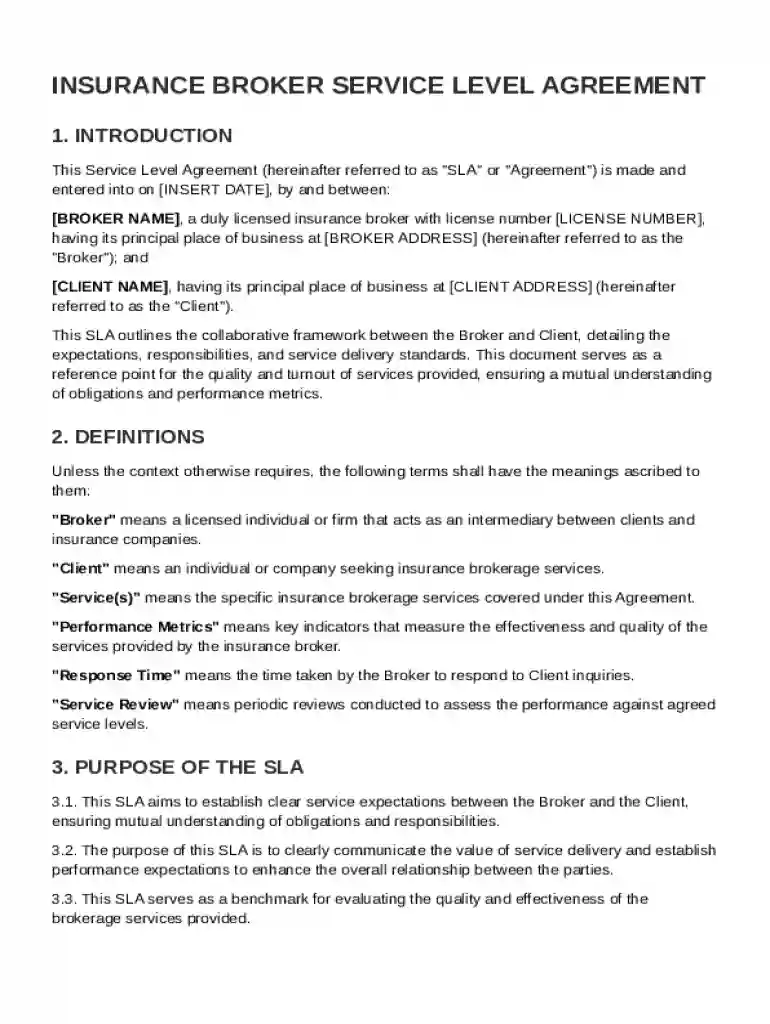
Key Elements of the Insurance Broker Service Level Agreement Template
The Insurance Broker Service Level Agreement Template serves as a critical tool for formalizing the relationship between an insurance broker and their client. Key elements typically included are:
- Scope of Services: Details the specific insurance services the broker will provide to the client, ensuring both parties have a clear understanding of the service boundaries.
- Service Level Objectives: Establishes measurable performance criteria, such as response times and service uptime, to ensure service quality.
- Issue Resolution Process: Outlines the steps for addressing disputes or problems that may arise, facilitating a systematic approach to conflict management.
- Confidentiality Obligations: Defines the expectations for protecting sensitive client information, essential for maintaining trust.
How to Use the Insurance Broker Service Level Agreement Template
Using the Insurance Broker Service Level Agreement Template involves several steps to ensure it meets both legal and practical needs:
- Customize the Template: Begin by tailoring the template to reflect the specific services and expectations of your brokerage relationship.
- Identify Key Terms: Ensure all terms and conditions are clearly defined to avoid ambiguity, particularly those that pertain to responsibilities and service standards.
- Review with All Parties: Share the draft agreement with all parties involved (broker and client) for feedback and confirmation.
- Legal Consultation: Engage a legal professional to review the finalized document for compliance with local laws and industry standards.
Definition & Meaning
An Insurance Broker Service Level Agreement (SLA) acts as a formal document that defines the expectations and responsibilities between an insurance broker and their client. It sets out clear guidelines for how insurance services will be delivered, measured, and assessed over time. This agreement ensures both parties are aligned and understand their obligations, reducing the potential for misunderstandings and disputes.
Steps to Complete the Insurance Broker Service Level Agreement Template
Completing the SLA template involves a series of methodical steps to capture all necessary details accurately:
- Gather Information: Collect all relevant information about the services offered, client expectations, and performance metrics.
- Fill Out Core Sections: Populate the template with specific data, focusing on service descriptions, performance objectives, and client requirements.
- Assign Responsibilities: Clearly outline the roles of both parties, noting who is responsible for what aspects of the service delivery.
- Finalize the Document: Ensure all sections are completed, reviewed, and agreed upon before any signatures are applied.
Legal Use of the Insurance Broker Service Level Agreement Template
The legal use of the SLA template involves several considerations:
- Regulatory Compliance: Ensuring the agreement adheres to state and federal insurance regulations.
- Binding Commitments: Recognizing that the SLA is a legally binding document that may be enforced in a court of law.
- Protection Mechanisms: Utilizing confidentiality clauses and indemnity provisions to protect both parties' interests.
Important Terms Related to the Insurance Broker Service Level Agreement Template
Understanding specific terms related to the SLA is essential:
- Performance Metrics: Quantifiable indicators used to measure service efficacy.
- Client Obligations: Duties and responsibilities expected of the client, often detailed alongside broker obligations.
- Termination Clause: Conditions under which the agreement may be ended by either party, ensuring flexibility and accountability.
Business Types that Benefit Most from the Insurance Broker Service Level Agreement Template
Certain business types gain particular advantage from utilizing an SLA:
- Small to Mid-Sized Enterprises (SMEs): Seeking structured service agreements to manage insurance brokerage relationships effectively.
- Corporates with Diverse Global Operations: Needing standardized agreements across different regions to manage risk and service uniformity.
- Specialized Insurance Brokers: Providing niche insurance products that require explicit service levels and obligations.
Versions or Alternatives to the Insurance Broker Service Level Agreement Template
While the template provides a standard framework, various versions or alternatives may be available:
- Industry-Specific SLAs: Modified templates catering to specific sectors, such as healthcare or technology, with unique insurance needs.
- Digitally Enhanced SLAs: Utilizing platforms like DocHub for creating dynamic agreements that support electronic modifications and signings.
Examples of Using the Insurance Broker Service Level Agreement Template
Practical examples of leveraging the SLA in real-world contexts include:
- Corporate Risk Management: A large corporation entering into an SLA with a broker to outline risk mitigation strategies and insurance service levels.
- Small Business Coverage: A small business uses an SLA to formalize service expectations with a local insurance broker ensuring tailored policy support.
- Client Dispute Resolution: Employing the SLA to resolve issues where service delivery falls short, using pre-defined escalation procedures.