






Definition and Purpose of the Payment Terms Agreement Template
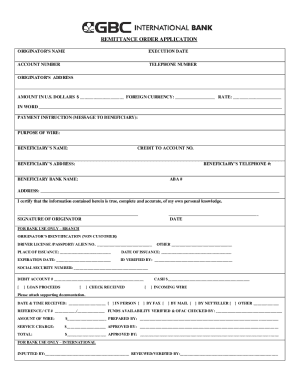
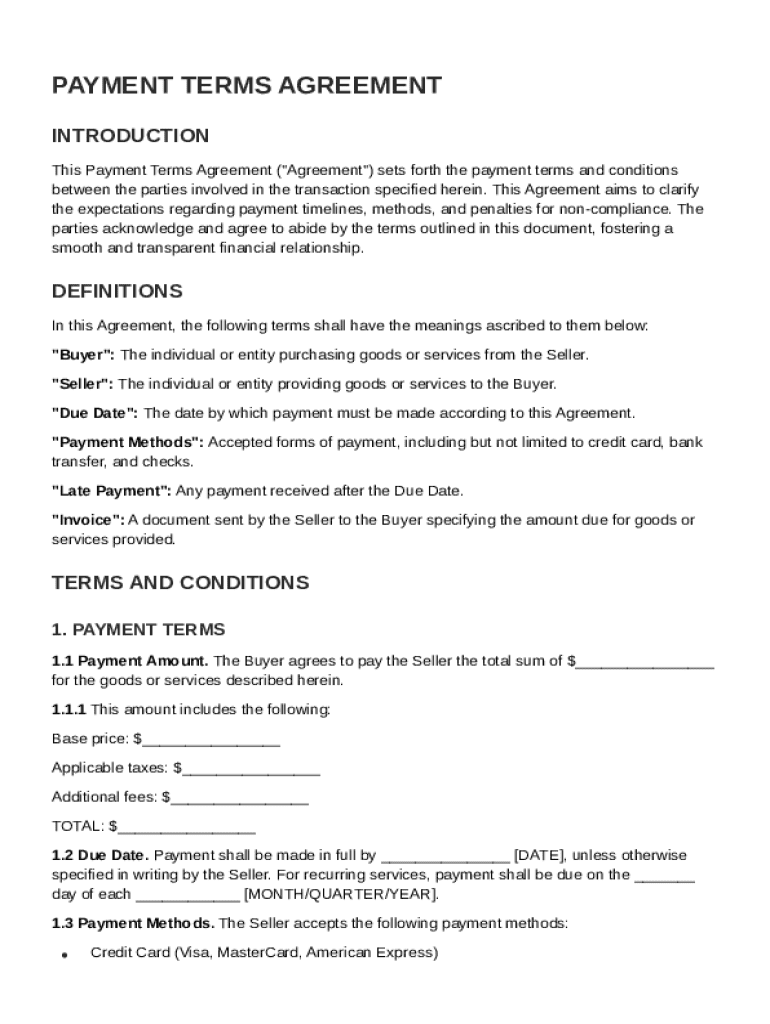
The Payment Terms Agreement Template outlines the financial arrangement between a buyer and a seller. This document specifies the conditions under which payments are to be made, including amounts, due dates, and accepted payment methods. It is designed to ensure clarity and prevent misunderstandings by setting clear expectations for financial transactions. By defining invoicing procedures, penalties for late payments, and dispute resolution processes, it helps maintain a smooth relationship between the parties involved. This standardized template aids in negotiating and documenting the payment terms, thereby providing legal protection and operational consistency in business dealings.
How to Use the Payment Terms Agreement Template
Using the Payment Terms Agreement Template involves several key steps to ensure the document serves its intended purpose. First, customize the template's generic clauses to fit the specific details of the transaction, such as payment amounts and due dates. Then, ensure that all relevant parties review the template to confirm agreement. Include any additional clauses that might be pertinent to the transaction or industry, such as early payment discounts or interest on late payments. Finally, have both parties sign the document to make it legally binding, confirming that both have read and understood their obligations as outlined in the agreement.
Key Elements of the Payment Terms Agreement Template
The Payment Terms Agreement Template contains several critical components that need careful consideration.
- Payment Schedule: Defines when payments are due and establishes the payment timeline.
- Accepted Payment Methods: Lists the forms of payment the seller accepts, such as checks, bank transfers, or credit cards.
- Invoice Details: Outlines how and when invoices will be issued and what information they will include.
- Late Payment Penalties: Details any penalties, such as interest or fees, applicable to late payments to encourage timely payment.
- Dispute Resolution: Provides a framework for resolving disputes, whether through mediation, arbitration, or legal action.
- Governing Law: Specifies the jurisdiction’s law under which the agreement is enforced, typically aligning with the seller’s location.
Each section is crucial to ensure comprehensive coverage of potential scenarios that may affect the financial aspect of the agreement.
Legal Considerations and Compliance
When drafting and using a Payment Terms Agreement Template, legal compliance is paramount. The template should align with relevant local, state, and federal laws in the United States, as non-compliance can render agreements unenforceable. It's important for the agreement to include legally required clauses, such as notice periods for payment changes or cancellation terms. If a business operates in multiple states, it might need to adapt the template to each state’s specific legal requirements. Seeking legal counsel to review the template can provide additional reassurance that the document is thoroughly compliant and tailored to the business's needs.
State-Specific Rules for the Payment Terms Agreement Template
Different states may impose specific regulations that affect how a Payment Terms Agreement is structured and enforced. For instance, some states have usury laws that limit the interest rates that can be applied to late payments. Others might have specific requirements for notice periods before changing payment terms or for including clauses related to dispute resolutions within the state. Businesses operating in multiple states must adapt their agreements to comply with each state's unique regulations, ensuring that all mandatory provisions are incorporated into the template.
Step-by-Step Guide to Completing the Template
Completing the Payment Terms Agreement Template involves a series of methodical steps to ensure clarity and legality:
- Customize Details: Input specific transaction information, such as parties' names, payment amounts, and schedules.
- Select Payment Methods: Define which payment methods will be accepted.
- Detail Invoicing Procedures: Outline how the invoices will be formatted, delivered, and what information they will contain.
- Set Penalties for Late Payment: Clearly state the consequences for late payments, including any interest rates or fees.
- Include Dispute Resolution Terms: Specify the method for resolving any disagreements that may arise.
- State Governing Law: Include the applicable jurisdiction’s law for governance of the agreement.
- Review and Sign: Ensure both parties thoroughly review the document and agree to all parts before signing.
Each step should be completed meticulously to avoid future disputes and ensure that the agreement serves its intended purpose.
Practical Scenarios and Examples
Payment Terms Agreements are versatile and function in various business contexts. For example, a small retail business might use it to formalize payment terms with its suppliers, specifying net-30 payment terms on delivered goods. A freelance consultant could draft the agreement to establish service fees, due dates, and methods of dispute resolution with clients. In each scenario, the template helps clarify expectations upfront, reducing the potential for financial disputes, and ensuring both parties are aware of their rights and responsibilities.
Types of Businesses that Benefit from the Payment Terms Agreement Template
Different types of businesses benefit from using a Payment Terms Agreement Template, with notable examples including:
- Small Retailers: Establish clear payment expectations with suppliers to manage cash flow effectively.
- Service Providers: Consultants and freelancers use them to ensure clients adhere to agreed-upon fee schedules.
- Manufacturers: Define payment terms with distributors and retailers to streamline accounts receivable processes.
- E-commerce Businesses: Utilize templates to handle multi-state sales and payment agreements efficiently.
These businesses leverage the template to foster transparency and reliability in financial dealings, ultimately contributing to operational success and client satisfaction.