






Definition and Purpose of Contractor Employment Agreement Template
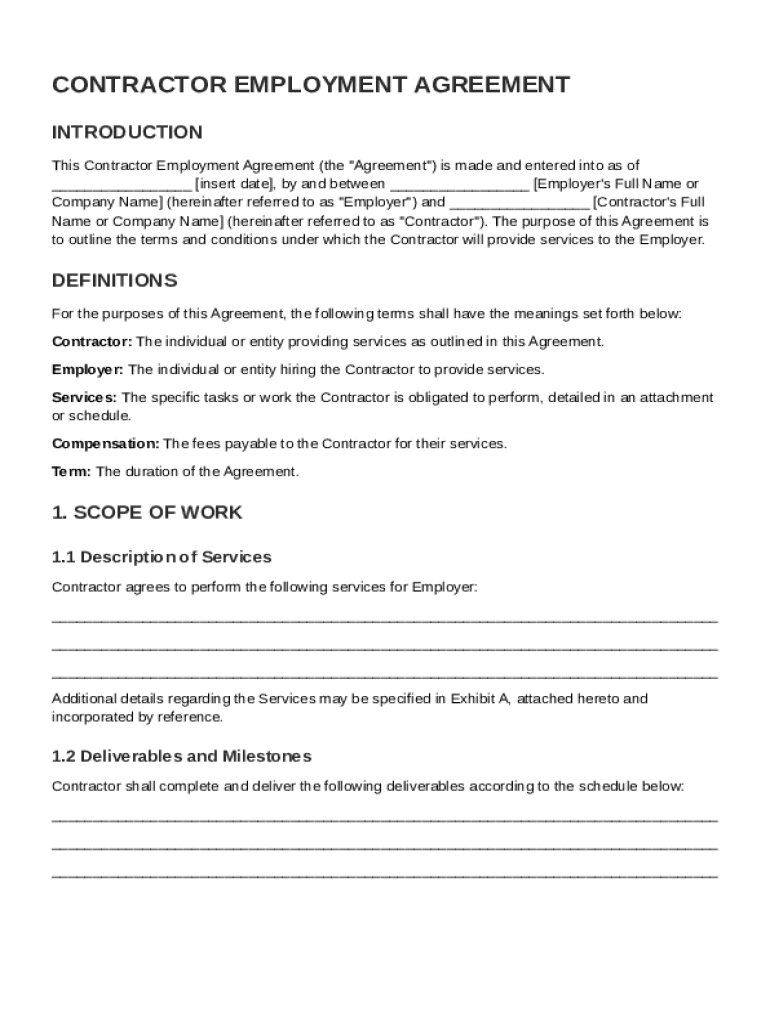
The Contractor Employment Agreement Template is a crucial document that outlines the rights and responsibilities between an independent contractor and a hiring entity. This agreement specifies the scope of work, compensation terms, confidentiality requirements, and other essential details governing the relationship. Understanding its purpose is vital as it defines the independent nature of the contractor's role, differentiating it from employee status. By clearly delineating duties and obligations, this document protects both parties legally and ensures compliance with U.S. labor laws.
Examples include a freelancer providing marketing services to a tech company, where the agreement would detail project deliverables, payment schedules, and intellectual property rights. Another scenario might involve a consultant drafting strategic plans for a business, necessitating stringent confidentiality clauses to protect corporate information.
How to Effectively Use the Contractor Employment Agreement Template
Utilizing the Contractor Employment Agreement Template effectively involves customizing it to reflect the unique aspects of the contractor-client relationship. Here are steps to guide users:
- Gather Necessary Information: Obtain all relevant personal details of the contractor and hiring entity, including names, contact information, and role descriptions.
- Define Scope of Work: Clearly describe the tasks to be performed, expected outcomes, and the timeline for project completion.
- Specify Compensation: Detail the payment terms, frequency, and method of compensation. Consider including provisions for expenses or bonuses.
- Address Legal and Compliance Requirements: Ensure that sections covering confidentiality, non-compete clauses, and intellectual property rights comply with legal standards and align with project needs.
- Review with Legal Aid: It is advisable to have the agreement reviewed by a legal professional to ensure all clauses are lawful and defendable in case of disputes.
- Final Signature and Storage: Both parties should sign the document using legally binding electronic signatures through platforms like DocHub, which also provides security features and easy storage options.
These steps aid in creating an unambiguous and comprehensive agreement, minimizing the risk of misunderstandings and potential legal issues.
Key Elements of a Contractor Employment Agreement Template
Certain elements are fundamental to the Contractor Employment Agreement Template to ensure clarity and enforceability:
- Definitions: Precise definitions of terms used throughout the document to avoid ambiguity.
- Scope of Work: Detailed description of the services the contractor will provide.
- Compensation Details: Comprehensive outline of payment terms, including hourly rates or project-based fees, and reimbursement for expenses.
- Confidentiality Obligations: Clauses that protect sensitive information shared between the contractor and hiring entity.
- Intellectual Property Rights: Specifications about ownership of work product and usage rights.
- Indemnification: Provisions where parties agree to protect each other from certain damages or liabilities.
- Governing Law: Identification of the jurisdiction under which the agreement will be interpreted.
These components form the foundation of the agreement, ensuring that both parties understand their rights and duties.
State-Specific Rules and Differences
While there is a general framework for contractor agreements, states may impose specific laws that affect how these contracts are drafted and enforced. Understanding these variations is particularly important:
- California AB5 Legislation: This law significantly impacts the classification of contractors versus employees, requiring additional scrutiny and criteria to maintain independent contractor status.
- New York Freelancers Law: Mandates written contracts for work over a certain value and imposes penalties for non-payment.
- Texas Regulations: Offers more flexibility in defining contractor relationships but necessitates specific contract provisions to preclude employee status.
Each state's legal landscape can alter the agreement's structure; thus, tailoring the template to meet local requirements is crucial for validity and compliance.
Important Legal Terms in Contractor Agreements
Comprehending the legal terminology within a Contractor Employment Agreement Template is essential for both parties. Key terms include:
- Non-Compete Clause: A provision that restricts the contractor from engaging with competitors during or after the term of the contract.
- Termination Clause: Conditions under which the agreement may be prematurely ended by either party.
- Severability: Ensures that if part of the contract is deemed invalid, the remainder still applies.
- Non-Solicitation Clause: Prevents the contractor from soliciting the hiring entity's clients or employees.
These terms safeguard business interests and delineate the boundaries of contractor engagement.
Steps to Complete the Contractor Employment Agreement Template
Completing the Contractor Employment Agreement Template involves several steps to ensure accuracy and thoroughness:
- Standard Information Insertion: Begin by filling in the personal details of both the contractor and client.
- Customization of Terms: Modify general terms to reflect specific agreements regarding work scope, payment, and confidentiality.
- Legal Review: Engage a legal expert to review the draft for compliance and enforceability.
- Final Agreement: Make necessary amendments based on legal advice and facilitate both parties' approval through electronic signature tools.
- Record Maintenance: Store the final signed document securely for reference and future audits.
Following these steps minimizes errors and enhances clarity between the contracting parties.
Business Entities that Benefit from Contractor Agreements
Several types of business entities regularly use Contractor Employment Agreement Templates:
- Startups: Often rely on contractors for expertise they lack in-house, such as marketing or software development.
- Freelancers and Consultants: Use these templates to formalize their working terms with clients.
- Corporations: Engage contractors for short-term projects requiring specialized skills.
- Non-Profit Organizations: Utilize contractors for fundraising efforts, event planning, or other specific initiatives.
Each entity type and its projects may necessitate different contract terms, thus requiring tailored agreements.
Digital vs. Paper Versions of Contractor Agreements
Comparing digital and paper versions of the Contractor Employment Agreement Template reveals significant differences:
- Digital Format: Offers convenience, as agreements can be completed, signed, and stored electronically. Platforms like DocHub provide secure digital environments, real-time collaboration, and ease of access from anywhere.
- Paper Format: Although traditional, it is less efficient due to the need for physical storage, mailing, and potential for loss or damage.
Digital agreements provide a modern, efficient solution, promoting quicker processing times and accessibility while catering to modern business needs.