






Definition and Meaning
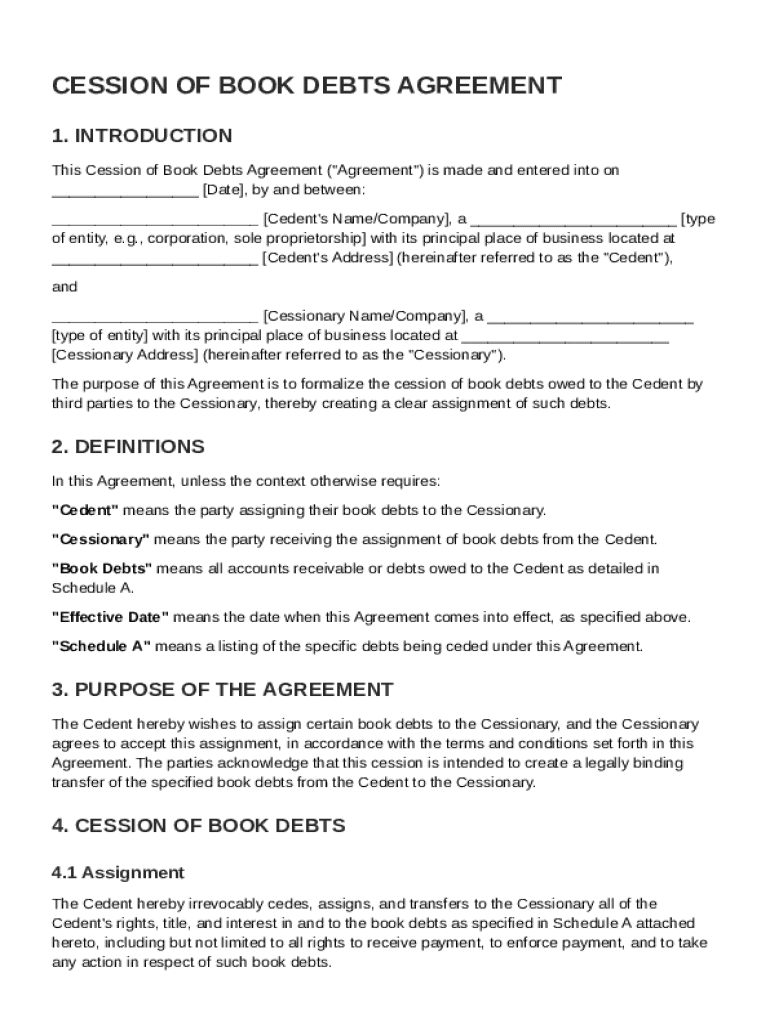
A Cession of Book Debts Agreement Template is a legal document used to formalize the transfer of a company's book debts, or accounts receivable, from one party (the Cedent) to another (the Cessionary). This agreement specifies the terms under which the debts are assigned, detailing the rights and obligations of both parties regarding the collection and management of the specified debts. Typically, it includes key components such as definitions, representations, payment terms, confidentiality clauses, and provisions for amendments and notices. An essential aspect of the agreement is that it creates a legally binding assignment of specified accounts receivable as outlined in a document such as Schedule A.
How to Use the Cession of Book Debts Agreement Template
Utilizing the Cession of Book Debts Agreement Template involves several strategic steps to ensure correct application. Begin by reviewing all sections of the template thoroughly to understand each provision. Next, populate the template with accurate data, such as the specific debts being assigned, the identities of the Cedent and Cessionary, and any terms agreed upon by the parties. Incorporate any additional clauses that align with the particular needs of the situation. It's advisable to enlist the help of a legal professional to ensure all legal obligations are fulfilled. Finally, all parties involved should review and sign the agreement to formalize the transfer.
Steps to Complete the Cession of Book Debts Agreement Template
- Review the Template: Carefully examine each section of the template to ensure understanding of its components.
- Fill in Required Information: Enter all necessary information, such as names, specific debts, and conditions for the cession.
- Customize the Template: Modify any clauses or add new ones as necessary to accommodate specific circumstances or laws.
- Seek Legal Advice: Consult with a legal expert to verify the integrity and enforceability of the completed document.
- Sign the Agreement: Arrange for all parties, including witnesses if required, to sign the document.
Key Elements of the Cession of Book Debts Agreement Template
- Definitions and Interpretations: Outline relevant terms and conditions, ensuring all parties have a mutual understanding of the agreement.
- Representations and Warranties: Include assertions from both the Cedent and Cessionary about the validity and condition of the debts.
- Payment and Collection Terms: Detail how debts will be collected, the responsibilities of each party, and any financial transactions that will take place.
- Confidentiality Clauses: Protect sensitive information and maintain privacy between parties.
- Amendments and Notices: Clearly articulate how any changes to the agreement will be managed and how notifications between parties should be communicated.
Legal Use of the Cession of Book Debts Agreement Template
In the U.S., the Cession of Book Debts Agreement Template serves as a legal contract, ensuring the predictable and lawful transfer of receivables. It's vital to comply with state-specific laws, particularly regarding assignments and creditor rights, to uphold the enforceability of such an agreement. Parties should ensure full compliance with the Uniform Commercial Code (UCC) provisions relevant to assigning receivables, which govern most transactional aspects surrounding the sale or transfer of accounts receivable.
Who Typically Uses the Cession of Book Debts Agreement Template
This template is commonly used by businesses that need to assign accounts receivable to another entity, such as a factoring company, financier, or business associate. It's prevalent among businesses looking to improve liquidity by converting receivables into immediate capital. Additionally, companies undergoing restructuring or divestment processes might use this agreement to allocate assets differently.


Important Terms Related to Cession of Book Debts Agreement Template
- Cedent: The original holder and assignor of the book debts.
- Cessionary: The recipient or assignee who gains the rights to the debts.
- Accounts Receivable: Monies owed to a business by its clients/customers for sold goods or services.
- Assignment: The process of transferring rights or interests in the receivables from one party to another.
- Schedule A: An annexure typically listing the specific receivables being transferred.
State-Specific Rules for the Cession of Book Debts Agreement Template
The legal enforceability of a Cession of Book Debts Agreement can vary based on state-specific regulations. For example, certain states may have unique requirements regarding notice to creditors or additional documentation for the validity of the cession. Businesses operating in multiple states should consult with legal professionals to understand these nuances and ensure that their agreements comply with all relevant jurisdictions.
Examples of Using the Cession of Book Debts Agreement Template
Consider a manufacturing company looking to improve cash flow by selling its accounts receivable related to a large order. Using the Cession of Book Debts Agreement, the company can effectively assign these debts to a factoring firm, who becomes responsible for collecting them. Another scenario could involve a financial restructuring, where a company assigns non-critical receivables to a partner to focus resources on higher-priority operations or pay down higher-cost debt.