






Definition & Meaning
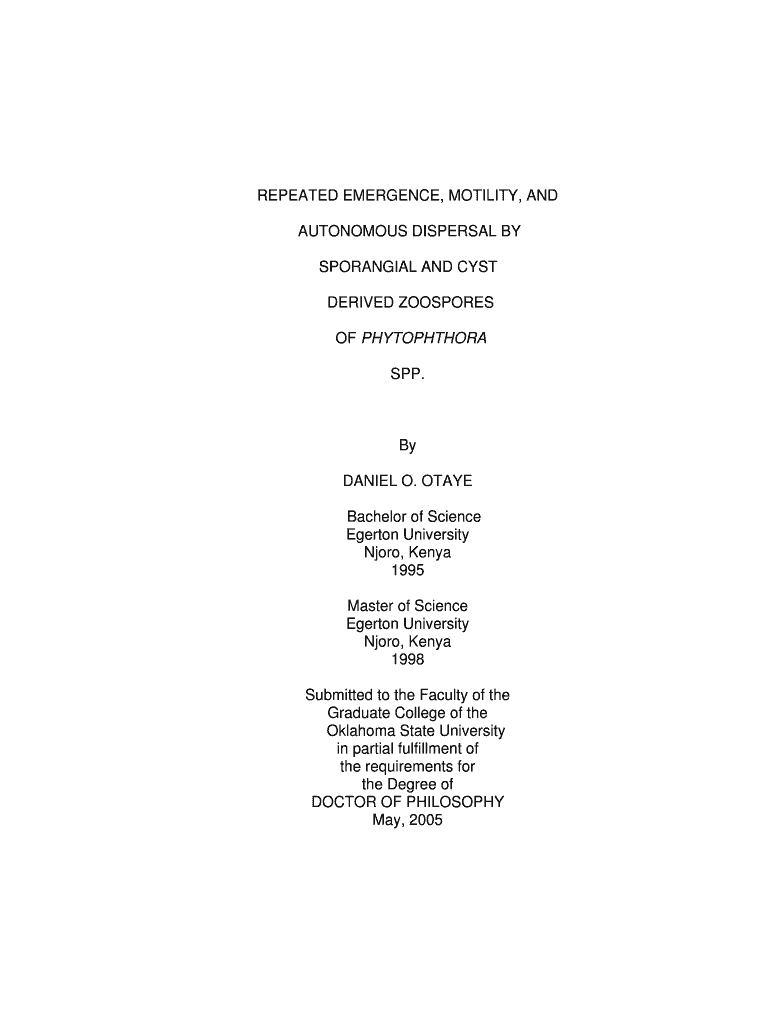
The "REPEATED EMERGENCE, MOTILITY, AND AUTONOMOUS - digital library okstate" is an academic resource that provides a comprehensive analysis of zoospores' behavior and survival mechanisms. It is rooted in the doctoral thesis by Daniel O. Otaye, which delves into how Phytophthora species adapt and thrive in various conditions. This resource offers valuable insights into the asexual life cycles of plant pathogens and their ecological impacts, particularly relevant in agriculture.
How to Use the Digital Library
To effectively utilize the digital library, users should navigate its database to access information on Phytophthora species, including their lifecycle, dispersion methods, and environmental adaptations. Researchers and students can employ these resources to support their studies or projects related to plant pathology, emphasizing the real-world implications of ecological roles in disease control. Users can search by keywords, author names, or specific study topics to locate desired documents efficiently.
How to Obtain Access
Access to the digital library at Oklahoma State University typically requires an affiliation with the institution. Students, faculty, and staff can log in using their institution-provided credentials, while external researchers may need to arrange access through inter-library loans or special permissions. It's crucial to check if the digital library provides remote access options, which may be facilitated via a VPN or specific resource-sharing networks.
Steps to Complete Research Using the Digital Library
- Log in to the Platform: Ensure you have valid credentials to access the digital library’s resources.
- Conduct a Keyword Search: Enter relevant terms such as "zoospore motility" or "Phytophthora lifecycle" to find targeted materials.
- Evaluate Source Credibility: Ensure the documents are authored by reputable researchers or organizations.
- Download Required Materials: Use the digital library's tools to download or save important documents for offline review.
- Analyze and Synthesize Information: Integrate the findings from various documents to form a comprehensive understanding of the topic.
- Cite Appropriately: Adhere to academic standards when citing the resources in your work.
Key Elements of the Resource
- Lifecycle Analysis: Detailed examination of the developmental phases of zoospores.
- Motility Mechanisms: Insights into how waterborne pathogens move and spread in their environments.
- Environmental Impact Studies: Explore how external factors like temperature affect pathogen behavior.
- Data Collection Methods: Describes the experimental setup and methodologies used in studies.
Who Typically Uses This Resource
The primary users of the digital library’s resources include:
- Academics: Professors and lecturers incorporating case studies into curriculum.
- Researchers: Individuals investigating plant pathology or related fields.
- Students: Those enrolled in courses on plant biology, ecology, or agriculture.
Legal Use of the Resource
Users must respect copyright laws and institutional guidelines when accessing and using digital library resources. Material should not be redistributed unlawfully or used for commercial purposes without appropriate permissions. The digital library typically outlines terms of use that define how materials can be used in research, publications, or educational settings.
Examples of Using the Resource in Research
- Case Study Analysis: A student might use the resources to conduct a case study on the impact of zoospore motility on crop disease spread.
- Ecological Modeling: Researchers could employ data to model ecological interactions of Phytophthora species within specific ecosystems.
- Thesis Development: Doctoral candidates might reference the materials to support hypotheses or provide context to experimental findings.
State-Specific Rules for Utilization
While the digital library at Oklahoma State University is general in its applicability, users must consider state-specific agricultural policies when applying findings. For example, certain states may have different regulations affecting environmental studies or agricultural practices. Users should verify any regional variances in regulations or applicability to ensure compliance and relevance to localized settings.