




Definition and Meaning of Subpoena Documents
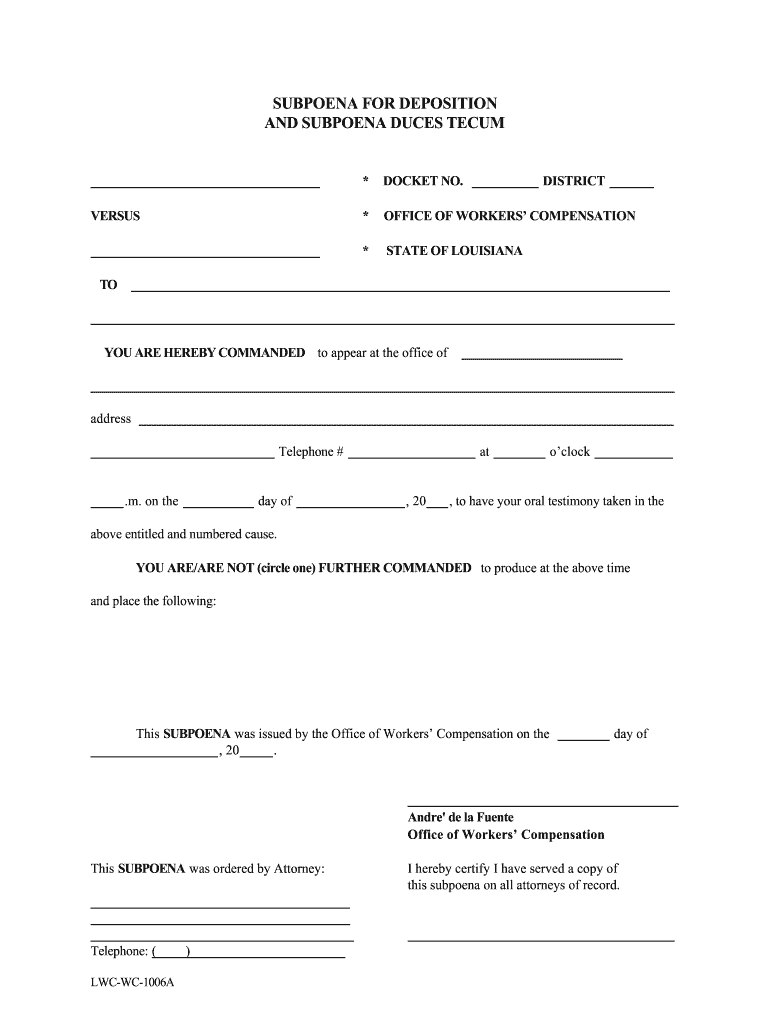
A subpoena is a legal document that commands an individual or entity to appear in court or produce evidence, such as documents, for a legal proceeding. The term "subpoena documents" specifically refers to the materials or evidence requested by such orders. These documents must be relevant to a case and can include contracts, emails, reports, and any other materials that may help establish facts in legal disputes.
- Types of Subpoena:
- Subpoena ad testificandum: Requires a witness to testify before the court.
- Subpoena duces tecum: Requires the production of documents as evidence.
Understanding the purpose of subpoenas is crucial in legal contexts, as non-compliance can result in penalties, including fines or contempt of court. Legal professionals often rely on these documents to gather necessary information for cases, thereby highlighting their importance in the judicial process.
Steps to Complete the Subpoena Documents
Completing a subpoena document involves several important steps to ensure its validity and compliance with legal standards. Failure to adhere to these steps may lead to challenges or enforcement issues.
-
Identify the Information Needed:
- Determine exactly what documents or testimony are required for your case.
-
Draft the Subpoena:
- Use a standard subpoena template or form to draft the document. Include the jurisdiction, case number, and contact information of the parties involved.
-
Specify the Documents:
- Clearly describe the documents you are requesting. This can include dates, types of files, and specific subjects to avoid ambiguity.
-
Serve the Subpoena:
- Deliver the subpoena to the individual or entity legally. This can be done through personal service, certified mail, or via a process server.
-
Await Compliance:
- After serving the subpoena, you must allow the recipient a specific period to respond, typically outlined in the document itself.
-
File with the Court:
- In some cases, you may need to file the subpoena with the court to provide a record of the request.
By following these steps diligently, parties can effectively utilize subpoena documents in their legal proceedings.
Legal Use of the Subpoena Documents
Subpoena documents hold significant legal weight and are used in various contexts within the judicial system. Their proper use is critical to ensuring that legal proceedings adhere to established guidelines and standards.
-
Civil and Criminal Cases: Subpoenas are utilized in both civil and criminal litigation for gathering evidence.
-
Administrative Hearings: Regulatory agencies may issue subpoenas to enforce compliance with laws and regulations.
-
Deposition Orders: During depositions, subpoena documents can compel individuals to produce records that are relevant to witness testimony.
Legal practitioners need to understand the specific requirements and enforceability of these documents, including limitations on scope and how to respond appropriately if a subpoena is issued against them.
Important Terms Related to Subpoena Documents
Understanding the terminology related to subpoena documents is essential for effective navigation of legal processes. Here are key terms associated with subpoenas:
-
Compliant: A term describing the act of responding appropriately to a subpoena.
-
Quashing a Subpoena: The process of legally challenging a subpoena’s validity, often due to overreach or irrelevance.
-
Witness Fee: Compensation mandated for witnesses who are compelled to attend court under a subpoena.
-
Legal Counsel: Attorneys who provide guidance on the issuance and compliance of subpoenas, ensuring that they meet all legal requirements.
Familiarity with these terms helps stakeholders understand their rights and responsibilities when dealing with subpoena documents.
Examples of Using the Subpoena Documents
Utilizing subpoena documents in real cases illustrates their function and importance in the legal landscape. Here are some examples:
-
Corporate Litigation: A company involved in a lawsuit may subpoena financial documents from a former employee to support its claims.
-
Divorce Proceedings: Subpoenas can be used to obtain records of assets, expenditures, or communications to determine a fair settlement.
-
Criminal Investigations: Law enforcement agencies use subpoenas to gather evidence from businesses, such as transaction records and customer data during fraud investigations.
These practical applications highlight the versatility of subpoena documents across various legal situations.
Filing Deadlines / Important Dates
Accurate timing is crucial when handling subpoena documents. Understanding deadlines can affect a case's progress and compliance.
-
Response Time: Typically, recipients must comply with a subpoena within a specific window, often between five to ten days.
-
Court Appearances: If the subpoena requires testimony, it will specify the date and time to appear. Missing this deadline can result in legal repercussions.
-
Extensions: Parties may request an extension to comply with a subpoena, but this must be done formally and typically requires approval from the issuing party or the court.
Being aware of these timelines ensures that all parties are prepared and compliant, thereby minimizing the chance of penalties or further legal complications.
State-Specific Rules for the Subpoena Documents
Legal processes often vary by jurisdiction, which is significant when dealing with subpoena documents. Here are key considerations for state-specific regulations:
-
Format Requirements: Each state may have a standard format that must be adhered to when drafting a subpoena.
-
Service Methods: Different states have unique requirements governing how subpoenas can be served, including who may serve them and the method of delivery (e.g., personal service, mail).
-
Enforcement and Penalties: States often have specific guidelines concerning penalties for non-compliance. Some may impose monetary fines, while others impose contempt charges.
Familiarity with these state-specific rules is essential for legal professionals and individuals involved in any legal proceedings requiring subpoena documents.