




01. Edit your cardiac clearance online
Type text, add images, blackout confidential details, add comments, highlights and more.

Type text, add images, blackout confidential details, add comments, highlights and more.

Draw your signature, type it, upload its image, or use your mobile device as a signature pad.

Send cardiac clearance form via email, link, or fax. You can also download it, export it or print it out.
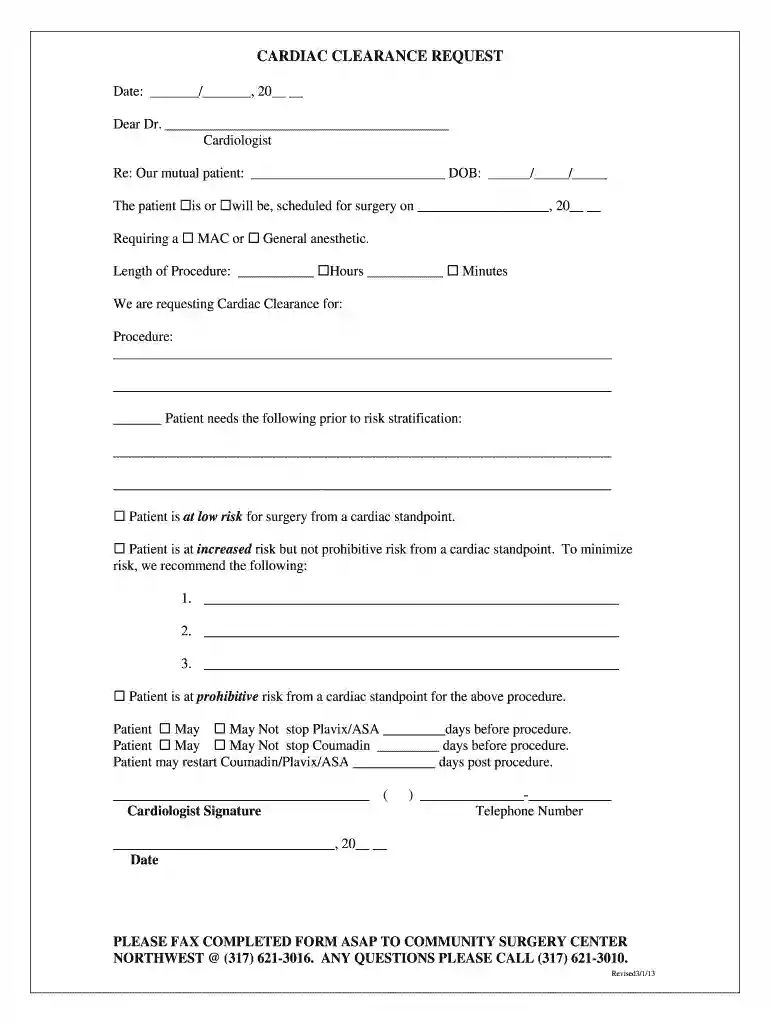
A cardiac clearance form is a medical document used to assess a patient's heart health before undergoing high-risk procedures, particularly surgeries requiring anesthesia. The primary purpose of the form is to ensure that patients do not have underlying cardiac issues that could complicate their recovery or lead to serious complications during and after the procedure. This evaluation is critical, especially for patients with pre-existing conditions such as coronary artery disease, hypertension, or arrhythmias.
In the context of surgery or other medical interventions, cardiologists evaluate the risk associated with the procedure. This evaluation considers the patient's medical history, current medications, and any necessary tests, such as an electrocardiogram (ECG) or echocardiogram. Based on the findings, the cardiologist will either provide clearance, which indicates that it is safe for the patient to proceed, or they may recommend further testing or modifications to the treatment plan.
The cardiac clearance request form encompasses various critical components, each designed to facilitate the evaluation process. Below are the primary sections found on these forms:
This detailed structure ensures thorough evaluation and facilitates effective communication among healthcare providers.
The process of completing a cardiac clearance form typically involves several key steps. Each step is crucial to ensure accurate and timely clearance.
Gather Patient Information:
Document Current Medications:
Assess Cardiac Health:
Make Recommendations:
Submit the Form:
Conducting these steps diligently will help ensure that the patient is appropriately cleared for their medical procedure, leading to better outcomes.
The cardiac clearance form is utilized across various medical scenarios, each aimed at ensuring patient safety and readiness for different types of procedures.
Each of these contexts helps bridge the gap between various healthcare specialties, ensuring comprehensive patient management.
Understanding practical scenarios where a cardiac clearance form is necessary provides essential insights into its application in healthcare.
These scenarios illustrate the importance of tailored medical evaluations prior to various procedures, ensuring that patients are safely managed according to their unique health profiles.
We've got more versions of the cardiac clearance form. Select the right cardiac clearance version from the list and start editing it straight away!
| Versions | Form popularity | Fillable & printable |
|---|---|---|
| 2013 | 4.9 Satisfied (57 Votes) |
At DocHub, your data security is our priority. We follow HIPAA, SOC2, GDPR, and other standards, so you can work on your documents with confidence.




CLASS I. Patients with cardiac disease but without resulting limitations of physical activity. Ordinary physical activity does not cause fatigue, palpitation,Read more
DENTAL CLEARANCE FOR CARDIAC SURGICAL. AND CATHETERIZATION PROCEDURES. Please complete this form and fax or email to: Cardiac Intake Center. Fax: 215-590-6820.Read more
May 12, 2021 Public reporting burden of this collection of information is estimated to average 12 minutes per response, including the time for reviewingRead more


