







Definition & Meaning
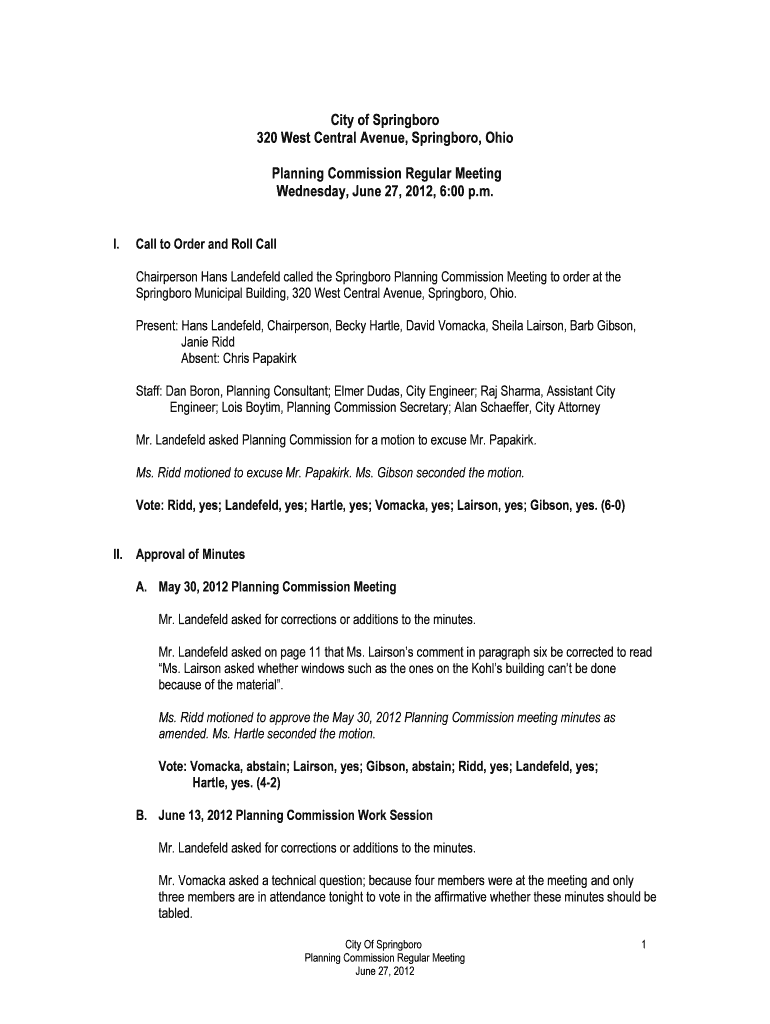
The "June 27, 2012 Formal Meeting - Springboro, Ohio" refers to the City of Springboro Planning Commission Regular Meeting. This gathering was an official assembly for the city's planning commission, where key topics such as site plan reviews and zoning code amendments were discussed. Meetings like these are significant for community planning and development efforts, bringing together local officials and stakeholders to deliberate on urban design and policy decisions.
Key Elements of the June 27, 2012 Meeting
- Call to Order and Attendance: The meeting commenced with a formal call to order, where attendance was recorded. Understanding who was present is crucial for ensuring that a quorum is met and that decisions made during the meeting are valid.
- Approval of Previous Minutes: Reviewing and approving the minutes from prior meetings ensures continuity in discussions and actions taken by the commission.
- Old and New Business: Topics under this section included site plan reviews, amendments to planning and zoning codes, and other related urban planning matters.
- Ex-Parte Communications: Presentations on this topic were conducted to maintain transparency and integrity of the planning process.
- Landscaping Plans for Grismer Tires and Minds in Motion: Specific projects were examined, and recommendations for approval and further discussions were laid out.
Steps to Complete Document-Based Processes
- Document Review: Thoroughly read through the entire meeting minutes. Understanding the content is critical for making informed decisions or conducting further analysis.
- Note Taking: Highlight key decisions, action items, and discussions for easy reference.
- Follow-Up on Action Items: If specific tasks or responsibilities were assigned during the meeting, ensure they are tracked and completed.
- Archiving: Store the final approved minutes in a secure, easily accessible location for future reference or audits.
Why Should You Review These Documents?
Reviewing these meeting minutes is important for several reasons:
- Accountability and Transparency: Ensuring public officials and committees adhere to their stated plans and actions.
- Historical Record: Meeting minutes serve as an official record of decisions that impact local development, zoning, and community projects.
- Participation in Civic Processes: Understanding these minutes empowers citizens to engage more effectively in community planning activities.
Who Typically Uses These Minutes?
- Local Government Officials: Utilize these minutes to inform policy decisions and city planning.
- Community Stakeholders: Businesses, residents, and interest groups reference the minutes to track developments and understand city decisions.
- Researchers and Analysts: Those studying urban development or local governance use these documents as primary data sources.


Legal Use and Compliance
These minutes must adhere to legal standards that govern public meetings, including:
- Open Meetings Laws: Ensuring public access to government meetings and records.
- Accuracy and Integrity: Minutes must accurately reflect discussions and decisions to be legally and ethically valid.
- Archival Law Compliance: Proper storage and archiving of meeting minutes are required for ongoing legal compliance.
Important Terms Related to the Meeting
- Quorum: The minimum number of members needed to make the proceedings of the meeting valid.
- Zoning Codes: Regulations governing land use, building size, and placement within the municipality.
- Site Plan Review: The process by which proposed developments are evaluated based on their potential impact on the surrounding environment.
State-Specific Rules for Meeting Minutes
- Recording Requirements: In Ohio, like many states, minutes must capture the essence of discussions and decisions without being verbatim.
- Public Accessibility: Once approved, minutes should be accessible to the public, maintaining transparency about local government actions.
Digital vs. Paper Version
- Advantages of Digital Versions: Simplifies storage, is easily searchable, and can be quickly disseminated to interested parties.
- Paper Copies: Necessary for formal records and may be required for compliance with specific state archival rules.
Examples of Using the Meeting Minutes
- Urban Development Projects: Companies might use the minutes to understand upcoming zoning changes that impact future developments.
- Community Initiatives: Local groups can track the status of community projects and ensure that commitments are being met by municipal officials.
- Legal Proceedings: Lawyers may use meeting minutes in cases where city planning decisions are contested.
This structure provides a comprehensive overview of the "June 27, 2012 Formal Meeting - Springboro, Ohio" minutes, addressing essential components and their implications for various stakeholders.




