






Definition & Meaning
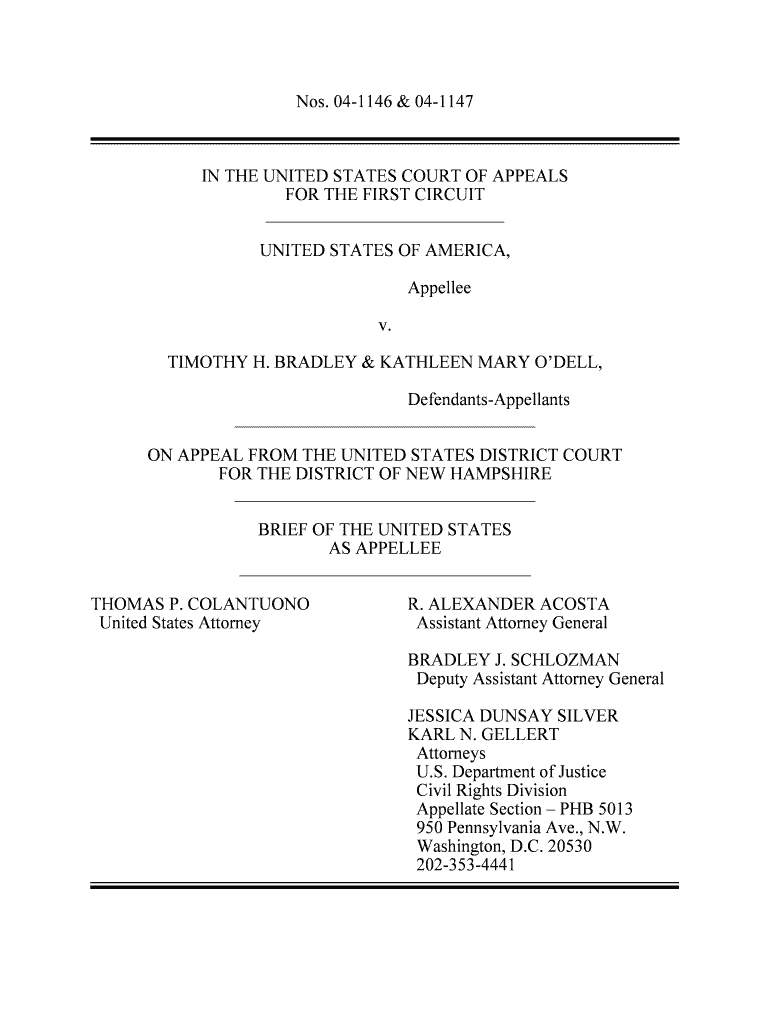
The legal brief "United States v Bradley and O'Dell - US Department of Justice" refers to an appellate case in which the U.S. government is involved as a plaintiff. The brief details the appeals process concerning the convictions of Timothy H. Bradley and Kathleen Mary O'Dell. These individuals were found guilty on multiple charges, including forced labor and wire fraud. The case analysis includes specifics on jurisdiction, the issues at stake, and a complete narrative of the circumstances, outlining the defendants' actions, particularly their exploitation of Jamaican workers. The brief seeks to uphold previous court decisions, highlighting the legal reasoning behind upholding these convictions.
How to Use the Brief
When engaging with the "United States v Bradley and O'Dell - US Department of Justice" brief, it’s crucial to understand its components and how they apply within the legal framework.
- Jurisdiction Analysis: Examine how the court’s authority and the applicable federal laws are justified in this case.
- Case Details Review: Analyze the defendants’ recruitment practices and treatment of Jamaican workers, focusing on ethical and legal breaches.
- Legal Arguments Consideration: Evaluate the perspectives provided on jury instructions and admissibility of evidence, which are pivotal in underpinning the government’s stance.
- Reference for Similar Cases: Use insights gained from this brief to inform on similar legal matters concerning labor exploitation and wire fraud.
Steps to Complete Legal Analysis
Studying the brief involves several steps to ensure a comprehensive understanding of the case's nuances:
- Read the Statement of Facts: Understand the sequence of events and the specific actions of Bradley and O'Dell.
- Identify Key Legal Issues: Focus on aspects like forced labor and wire fraud, which form the core of the legal argument.
- Examine Jury Instruction Procedures: Assess if the jury instructions were standard and just, according to federal guidelines.
- Evaluate Sentencing Steps: Analyze how sentencing guidelines were applied and if they align with federal statutes.
- Cross-Reference with Similar Cases: Compare the legal strategies and outcomes with other related cases to contextualize the findings.
- Draw Conclusions: Formulate an informed opinion on whether the convictions should be upheld.
Who Typically Uses the Brief
The "United States v Bradley and O'Dell - US Department of Justice" brief serves multiple audiences within the legal field:
- Lawyers and Legal Scholars: These professionals use the brief for research and to better understand the intricacies of labor law and federal jurisdiction.
- Students: Law students might examine this case while studying case law and judicial processes involving exploitation and conspiracy.
- Policy Makers: Government officials tasked with drafting laws related to labor rights might refer to these details to ensure legal protections align with justice system precedents.
- Advocacy Groups: Civil rights organizations could use the information to highlight systemic issues in labor treatments and push for reforms.


Important Terms Related to the Case
Understanding certain terms helps clarify the legal nuances of the "United States v Bradley and O'Dell":
- Forced Labor: Involves exploiting individuals by coercing them into work, often under toxic conditions.
- Wire Fraud: Engages deceit via communication platforms to gain advantage, usually financial.
- Jury Instructions: Legal guidelines provided to jurors outlining their duties and the legal standards applicable in arriving at a verdict.
- Sentencing Guidelines: Criteria established federally to ensure consistent sentencing across similar cases.
Legal Use and Compliance
The brief shows the importance of abiding by federal laws concerning labor and fraudulent activities. Legal compliance involves:
- Understanding Legal Obligations: Employers and corporations learning their duties under federal labor laws.
- Proactively Preventing Violations: Implementing policies and training to avoid practices that could lead to forced labor allegations.
- Seeking Legal Counsel When Needed: Consulting attorneys for complex situations that might approach legal boundaries.
Examples of Using the Brief
The "United States v Bradley and O'Dell" can provide real-world applications in several scenarios:
- Legal Defense Preparation: Defending clients against similar charges may involve using the insights from this brief to highlight procedural missteps.
- Educational Case Study: Law schools could employ this case as an instance of how labor rights arguments unfold in appellate courts.
- Public Policymaking: Informing policies or reforms aimed at preventing labor exploitation.
Versions or Alternatives to the Brief
This case is part of a broader context of legal documentation:
- Related Case Briefs: Other legal analyses involving forced labor or wire fraud that offer additional perspectives.
- Amicus Briefs: Documents submitted by non-litigants with strong interest in the case, providing additional arguments or expertise.
Penalties for Non-Compliance
Understanding the penalties associated with non-compliance, as outlined in the brief, is vital:
- Criminal Consequences: Convictions for forced labor and wire fraud can lead to significant fines and imprisonment.
- Reputational Damage: Involvement of corporations or individuals in such cases often results in loss of public trust and professional repercussions.