






Definition & Meaning
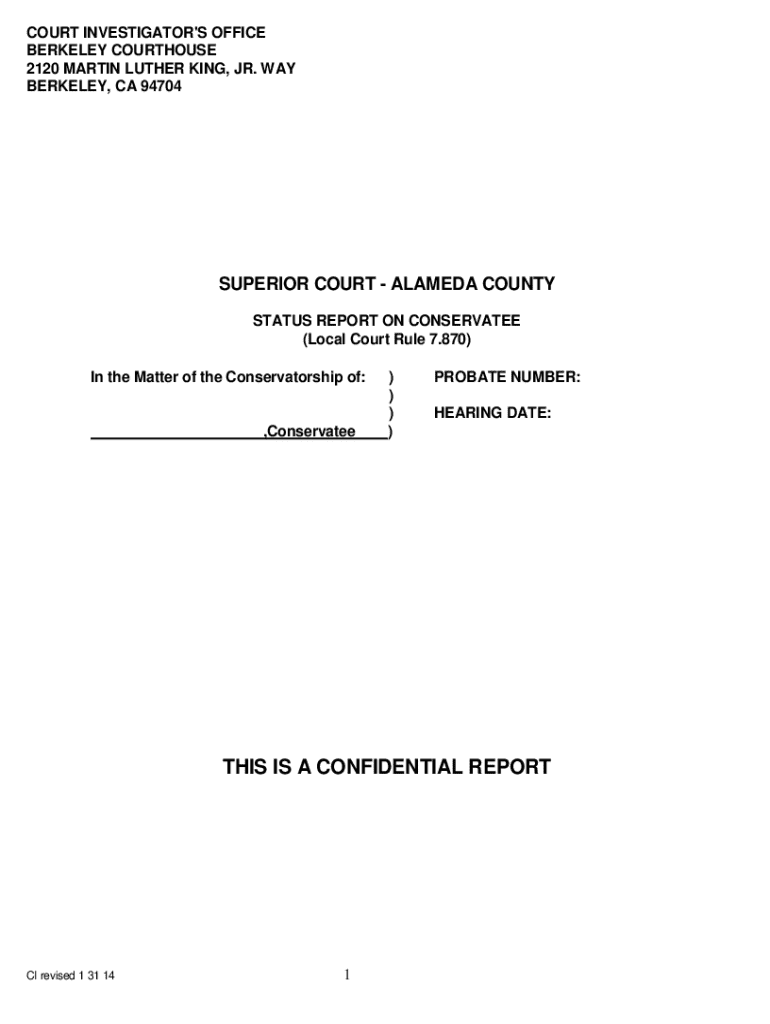
The "Fillable Online Alameda Courts CA Status Report" is a form used by the Superior Court of Alameda County to monitor the condition of a conservatee. This confidential report collects comprehensive details about the conservatee's health, functional abilities, general well-being, and estate. It serves as an authoritative source for the court to assess changes in the conservatee's status since the last evaluation.
Key Elements of the Report
This status report is composed of several vital elements. These elements ensure that the court receives a complete picture of the conservatee's situation:
- Health Status: Details about the conservatee's current physical and mental health, including any medical conditions or diagnoses.
- Functional Abilities: Assessment of the conservatee's ability to perform daily living tasks and any assistance required.
- General Well-Being: Information on the conservatee's overall happiness, social interactions, and quality of life.
- Estate Situation: Overview of the conservatee’s financial status, assets, liabilities, and any significant changes.
- Conservator's Comments: Notes and observations from the conservator, offering personal insights into the conservatee's circumstances.
Steps to Complete the Form
Filling out the Alameda Courts CA Status Report involves several steps to ensure accuracy and completeness:
- Gather Relevant Information: Collect all necessary data concerning the conservatee's health, functional abilities, and estate.
- Complete Health and Functional Sections: Detail the conservatee's health conditions and capability to manage daily activities.
- Evaluate General Well-Being: Provide insights into the conservatee's emotional and social status.
- Document Estate Details: Include all pertinent financial information, recent changes, and potential concerns.
- Incorporate Conservator's Comments: Add observations and any additional information that supports the conservatee's wellbeing.
- Review and Submit: Carefully review all entries for accuracy before submitting the form to the court by the designated deadline.
Why You Should Use This Report
Utilizing the Alameda Courts CA Status Report is crucial for several reasons:
- Legal Obligation: Fulfilling the requirement for regular reporting to the court ensures compliance with legal responsibilities.
- Informed Decision-Making: Provides judges and relevant authorities with the necessary data to make informed decisions regarding the conservatee's care.
- Documentation: Serves as an official record of the conservatee's status, which can be referenced in future proceedings or disputes.
Who Typically Uses the Report
This form is primarily used by:
- Conservators: Responsible for managing the affairs of the conservatee and reporting to the court.
- Court Investigators: Officials who review the status reports to ensure the conservatee's wellbeing and estate management are adequately monitored.
- Judicial Officers: Judges or magistrates who rely on these reports to make informed judicial decisions related to conservatorship cases.


Legal Use of the Report
The status report is recognized as a legal document within the jurisdiction of the Superior Court of Alameda County and must be handled with confidentiality and integrity. Accuracy in reporting is essential to uphold legal standards and responsibilities associated with conservatorship.
State-Specific Rules
In California, specific regulations govern the use and submission of conservatee status reports:
- Frequency of Reporting: Reports are generally required on a regular basis as determined by the courts.
- Confidentiality Requirements: Legal provisions ensure the privacy of the conservatee's information.
- Compliance with State Laws: Adherence to state conservatorship laws and guidelines when completing and submitting the report.
Examples of Use
Consider these scenarios to understand how the report is applied:
- Routine Monitoring: A conservator completes a status report annually, detailing the conservatee’s ongoing medical treatment and cognitive abilities.
- Change in Health: A conservatee experiences a significant health event, prompting an interim status report to inform the court of new care requirements.
- Estate Fluctuations: Wealth management changes or new financial threats are documented and submitted in a special report to highlight emerging risks.
Filing Deadlines / Important Dates
Timely submission is critical:
- Regular annual or quarterly deadlines as indicated by the court’s schedule.
- Extensions or special reporting requirements might arise following significant life events or court orders.
Penalties for Non-Compliance
Failure to submit accurate and timely reports may result in:
- Legal Consequences: Possible penalties include fines or sanctions against the conservator.
- Loss of Management Privileges: In severe cases, the court may remove a conservator deemed negligent in their duties.
Software Compatibility
For ease of use, many conservators utilize document management software compatible with platforms like DocHub, offering:
- Online Editing: Real-time updates and collaboration.
- Seamless Integration: Direct import/export capabilities with cloud storage services.
- Security Features: Ensuring confidentiality and data integrity during submission processes.
By leveraging such a comprehensive toolset, conservators can maintain an efficient and organized workflow when managing and reporting on conservatorship duties.