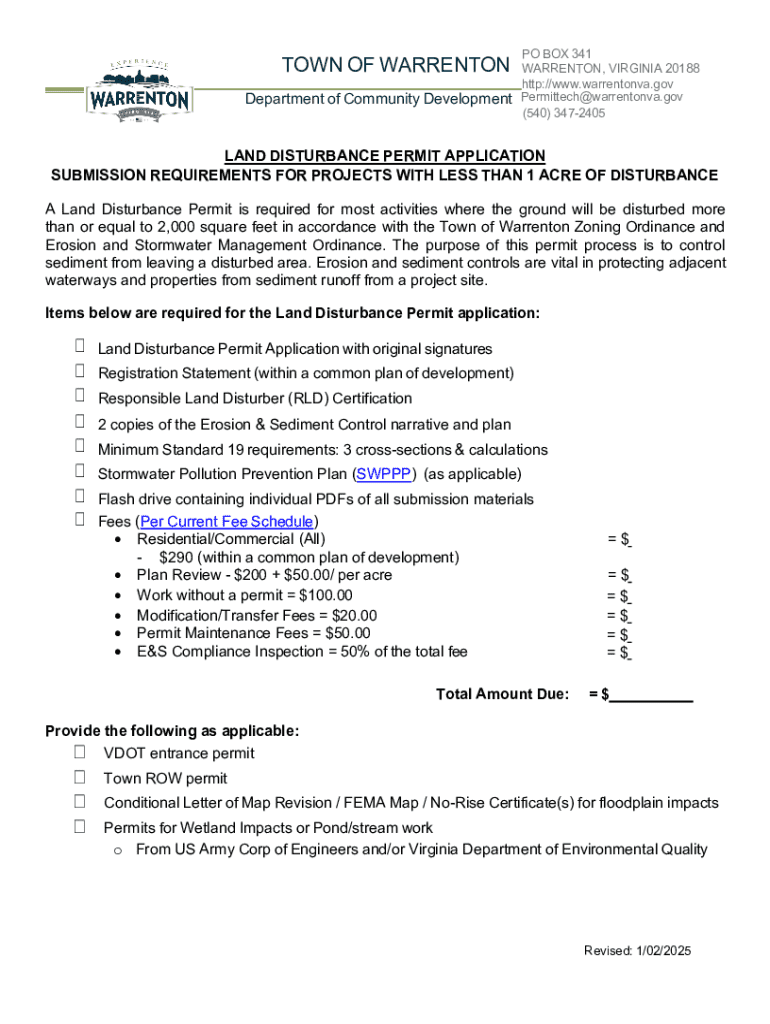







Definition and Purpose of the Land Disturbance Permit Application
A Land Disturbance Permit Application is a formal request submitted to obtain authorization for construction or development activities that involve altering the land's surface. This permit is essential for ensuring that land-disturbing activities comply with local and federal regulations aimed at preventing negative environmental impacts such as erosion and sedimentation. The application aids municipal authorities in monitoring and enforcing practices that protect water quality and adjacent properties from sediment runoff.
How to Obtain the Land Disturbance Permit Application
Securing the Land Disturbance Permit Application can be approached in several ways. Many local government websites offer downloadable forms, accessible through their planning or environmental departments. Alternatively, applicants may visit a government office in person to pick up a physical copy. It is crucial to understand the specific requirements of the jurisdiction where the project is located, as procedures and standards can vary.
Steps to Complete the Land Disturbance Permit Application
-
Gather Required Documentation:
- Site plans detailing the proposed disturbance.
- Erosion and sediment control plans.
- Zoning compliance documentation.
-
Complete the Application Form:
- Provide detailed information about the project, including scope, timeline, and responsible parties.
- Include contact details and relevant qualifications of those overseeing the project.
-
Review Compliance Standards:
- Ensure that the project adheres to local erosion and sediment control ordinances.
- Implement necessary protective measures to minimize environmental impacts.
-
Submit the Application:
- Check for submission deadlines or specific times for in-person applications.
- Pay any associated permit fees as required.
-
Await Approval:
- The reviewing authority may request additional information or modifications to the plans.
Key Elements of the Land Disturbance Permit Application
The application includes several critical components that applicants must address:
- Project Description: A comprehensive overview of the planned activities, including objectives and methodologies.
- Site Plan: Diagrams highlighting the area of disturbance and proposed erosion control measures.
- Supporting Studies: Environmental assessments that demonstrate minimal impact on local ecosystems.
- Compliance Assurance: Certifications that the project meets all legal and environmental standards.
Who Typically Uses the Land Disturbance Permit Application
The primary users are developers and contractors involved in construction and land alteration projects. Municipalities and property owners planning significant modifications to their land engage with this permit process to ensure lawful development practices. Environmental consultants and engineers also frequently interact with land disturbance permits due to their specialized knowledge in crafting and implementing compliant plans.


Required Documents for Submission
A successful permit application hinges on including several essential documents:
- Environmental Impact Assessment: Evaluates potential ecological consequences of the proposed activities.
- Insurance and Liability Forms: Demonstrate coverage for any potential damages arising from the project.
- Contractor Licenses: Confirms the legitimacy and expertise of those performing the land disturbance work.
- Fee Payment Receipts: Proof of payment for any application processing fees.
Penalties for Non-Compliance
Ignoring the necessity for a Land Disturbance Permit can result in significant repercussions:
- Fines and Penalties: Monetary penalties levied against violating parties.
- Legal Action: Potential injunctions or lawsuits stemming from non-compliance.
- Project Halt: Municipal orders for ceasing all activities until compliance is achieved.
- Reputational Damage: Negative perception among regulatory bodies and stakeholders.
Application Process and Approval Time
The time from submission to approval varies based on several factors:
- Complexity and Scale of the Project: Larger projects may require more extensive review.
- Local Government Efficiency: Some jurisdictions have streamlined processes for expedited reviews.
- Completeness of Application: Incomplete or erroneous submissions can delay approval times.
Typically, after a thorough review of the completed application, authorities may take several weeks to render a decision, with faster decisions possible in jurisdictions equipped with efficient review processes.