





Definition and Meaning
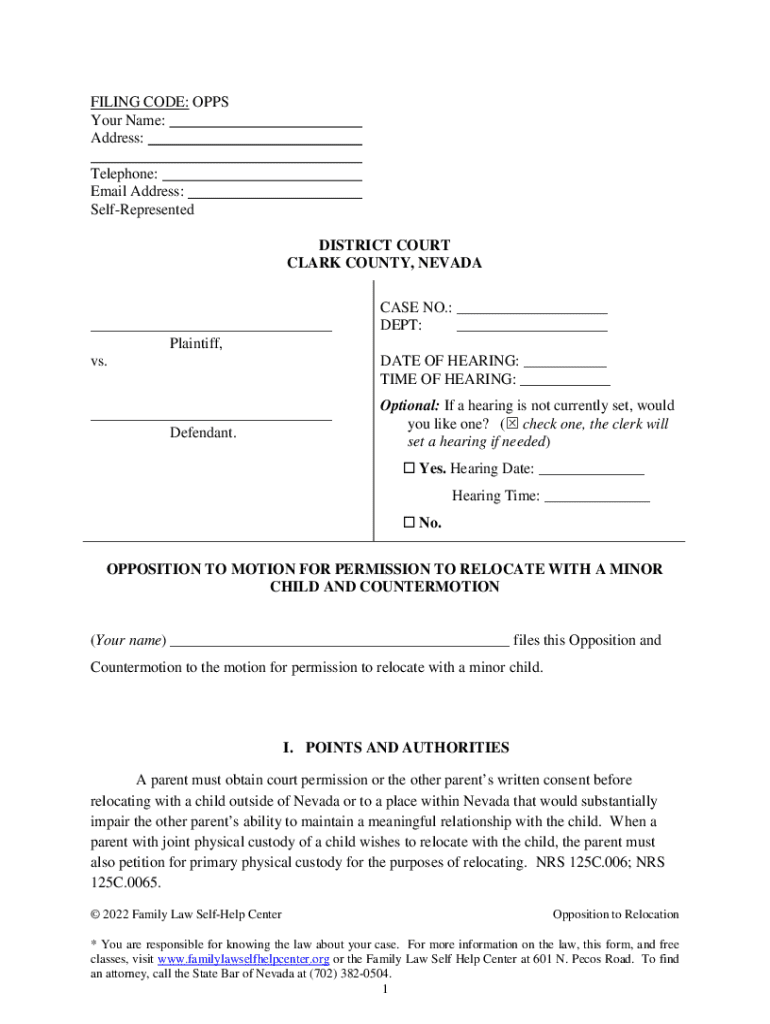
The Opposition to Motion for Permission to Relocate With a Minor Child is a legal form used to formally object to a request made by one parent to relocate with a minor child. This form is part of the family law process in the United States and is typically filed in family court. The main purpose of this document is to present arguments and evidence against the proposed relocation, demonstrating how it may affect the best interests of the child involved. The opposition may include various reasons, such as the impact on the child's relationship with the non-relocating parent, educational opportunities, and community ties.
How to Use the Opposition to Motion for Permission to Relocate With a Minor Child
To use this form effectively, it's crucial to understand the legal framework surrounding child relocation in your jurisdiction. The process involves filling out the form with personal information, outlining objections, and providing evidence to support those objections. Steps typically include:
- Reviewing the relocation request thoroughly.
- Consulting with a family law attorney to understand your rights and obligations.
- Filling out the form with details of your opposition, including any supporting documents.
- Submitting the form to the appropriate family court within the specified deadline.
- Preparing to present your case in court, if a hearing is called.
Steps to Complete the Opposition to Motion
Filling out the Opposition to Motion accurately is essential for its success. Follow these steps to complete the form:
-
Gather Necessary Information: Collect all relevant documents, including the original motion, custody agreements, and any evidence supporting your opposition.
-
Fill Out Personal Information: Enter personal and contact details for both parents and the child/children involved.
-
State Your Objections: Clearly outline your reasons for opposing the relocation. Use detailed explanations and provide any relevant evidence.
-
Request for Custody Modification (If Applicable): If the relocation significantly impacts custody arrangements, include a request for modification.
-
Attach Supporting Documents: Provide any evidence supporting your stance, such as letters from the child's school, witness statements, or expert evaluations.
-
Review and Sign the Form: Ensure all information is accurate before signing. Some jurisdictions may require notarization.
-
Submit the Form: File the completed form with the court and serve copies to the other party involved.
Legal Use of the Opposition to Motion
This opposition form has several important legal implications:
-
Custody Determination: The court uses this form, along with other evidence, to determine whether the proposed relocation serves the child's best interests.
-
Decision Influences: Arguments presented can influence custody and visitation arrangements, ensuring they remain fair and practical.
-
Court Hearings: Filing this form can lead to a court hearing where both parties present their cases regarding the proposed relocation.
The court evaluates factors such as the child's needs, parental relationships, and impact on the child's stability.
Key Elements of the Opposition
The form comprises several crucial components:
-
Personal Information Section: Details about the parents, child, and existing custody arrangements.
-
Objection Details: A comprehensive section outlining the respondent's arguments against the relocation.
-
Custody and Visitation Requests: Provisions for modifying custody or visitation based on the relocation impact.
-
Supporting Evidence: Attachments that bolster the arguments against the move, such as educational data, community ties, and testimonies.
-
Date and Signature Fields: Mandatory fields to validate the document's authenticity and comply with legal requirements.
Who Typically Uses the Opposition Form
This form is commonly used by:
-
Non-Relocating Parents: A parent wishing to contest the relocation to maintain current custody arrangements or visitation rights.
-
Family Law Attorneys: Legal professionals representing non-relocating parents in family court proceedings.
-
Guardian ad Litem: Court-appointed representatives for the child who might file on behalf of the child's best interests.
The document becomes a critical part of custody and relocation disputes, impacting parents, children, and extended family.


Required Documents
Accompanying the form, several documents are often required:
-
Existing Custody Agreement: To provide context and current legal standings.
-
Child's Educational Records: Highlighting the impact of relocation on the child's education.
-
Witness Statements: Affidavits from individuals familiar with the child's circumstances.
-
Relocation Impact Analysis: Professional assessments detailing how the move may affect the child's well-being.
Submitting comprehensive documentation enhances the form's effectiveness during the legal proceedings.
State-Specific Rules
Different states may have unique requirements regarding relocation:
-
Notification Periods: Varying deadlines for notifying the other parent of the relocation intent.
-
Factors Considered in Relocation: States may prioritize different factors, such as the child's existing community ties or the relocation rationale.
-
Burden of Proof: The relocation request's or opposition's burden may differ based on jurisdictional laws.
Being aware of specific state rules ensures adherence to legal standards and improves the chance of a favorable outcome in court.