






Definition and Meaning of Asthma Action Plan
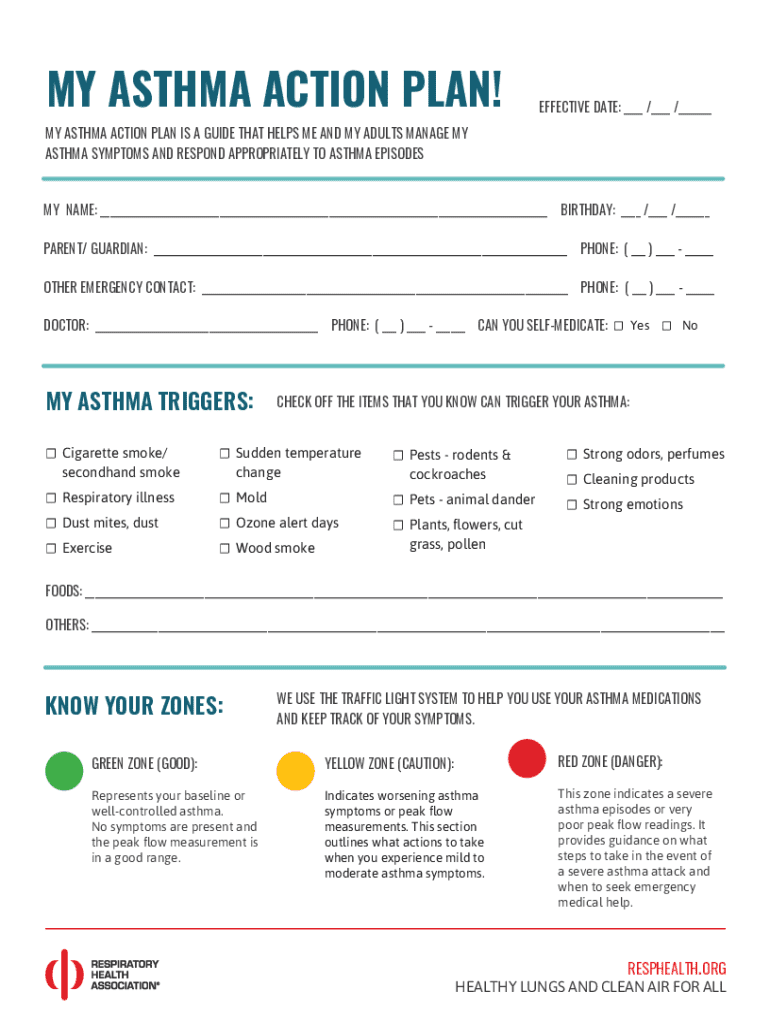
An Asthma Action Plan is a personalized, detailed guideline designed to help individuals manage and control their asthma symptoms effectively. It is structured as a step-by-step plan that provides instructions for preventing and handling asthma attacks. The plan typically includes personal information, a list of known asthma triggers, and a traffic light system to monitor symptoms and guide medication use based on symptom severity. This tool aims to empower asthma patients and their caregivers by equipping them with the knowledge and strategies needed to manage asthma confidently and avert severe episodes.
Key Components of the Traffic Light System
- Green Zone: Indicates that asthma is under control, with no symptoms present. Individuals can continue using their routine preventive medication.
- Yellow Zone: Signals caution. This implies experiencing mild symptoms, such as coughing or shortness of breath. Adjustments to medication as specified in the plan are recommended.
- Red Zone: Represents a medical alert. Severe symptoms, such as significant breathing difficulties or persistent coughing, require immediate medical attention and adherence to emergency instructions in the plan.
How to Use the Asthma Action Plan
Utilizing an Asthma Action Plan involves understanding the guidelines provided for each symptom zone and acting accordingly. It’s crucial for individuals and caregivers to familiarize themselves with each section of the plan to respond promptly during an asthma flare-up.
Daily Management
- Baseline Medication: Continue prescribed routine medications when in the Green Zone.
- Symptom Monitoring: Regularly assess symptom status using peak flow measurements or personal observations.
Responding to Emergency Situations
- Yellow Zone Interventions: Increase medication dosage or frequency as indicated, and monitor for improvement.
- Red Zone Emergency Actions: Follow the plan's emergency instructions promptly and seek emergency medical assistance if symptoms do not improve.
Steps to Complete the Asthma Action Plan
Completing an Asthma Action Plan requires careful preparation and consultation with a healthcare provider. This process ensures that the plan accurately reflects the individual’s medical needs.
- Schedule a Medical Review: Meet with a healthcare provider to discuss current asthma control and medication.
- Identify Asthma Triggers: Work with a medical professional to compile a list of known triggers.
- Develop Custom Guidelines: Outline specific management strategies tailored to personal symptom patterns and triggers.
- Review and Update Regularly: Keep the plan current by reviewing it at least semi-annually or following significant changes to health or medication.
Who Typically Uses the Asthma Action Plan
The Asthma Action Plan is suitable for anyone diagnosed with asthma, ranging from children to adults. It’s particularly beneficial for:
- Young children: Guardians can follow the prescribed instructions to manage symptoms.
- Chronic patients: Individuals with frequently occurring symptoms benefit from structured management.
- School settings: Teachers and school nurses use the plan to support children with asthma during school hours.


Involvement of Caregivers and Family Members
- Engaging family members and caregivers provides additional support in executing the plan, making it a collaborative effort in managing asthma effectively.
Key Elements of the Asthma Action Plan
The Asthma Action Plan is comprised of several critical sections that guide users through each aspect of asthma management:
- Personal Information: Includes the individual’s name, emergency contacts, and physician information.
- Medication Schedule: Details regular and emergency medications, dosages, and usage instructions.
- Asthma Triggers: Lists specific environmental or situational triggers known to cause symptoms.
- Symptom Management: Contains detailed instructions for each zone in the traffic light system, including medication adjustments and actions required.
Legal Use of the Asthma Action Plan
In the United States, the Asthma Action Plan serves as a valuable legal document that can be used in various contexts. It is recognized by schools, workplaces, and healthcare facilities as a credible management tool.
Compliance with Healthcare Protocols
- Legal Protection: The plan helps ensure lawful accommodation in educational and workplace settings.
- Medical Record Integration: It can be incorporated into official medical records, aiding continuity of care across healthcare providers.
Software Compatibility and Integration
While primarily a manual document, the Asthma Action Plan can be supported by various digital tools for better accessibility and organization:
- Compatibility with Online Tools: Users can store and manage their plan using platforms like DocHub, Google Drive, and other document management software.
- App Integrations: Certain mobile apps facilitate daily symptom tracking, offering reminders and alerts based on current health data recorded digitally.
State-by-State Differences
The Asthma Action Plan can be affected by varying regional healthcare policies across states in the U.S. Awareness of state-specific legislation ensures that patients receive all entitled support.
Regional Healthcare Support
- Insurance Coverage Variance: Some states offer additional insurance benefits and services for asthma management.
- School-specific Policies: States may have distinct protocols for managing asthma in schools that influence how plans are implemented.
In conclusion, while the Asthma Action Plan is a widely used tool in asthma management, the tailored nature of its contents demands a deep understanding of each user’s unique needs and circumstances. This makes the preparation and usage of the plan a collaborative effort between patients, caregivers, and healthcare providers to ensure optimum asthma control.