




Definition and Purpose of the Automobile Insurance Policy Form of Quebec (F.P.Q. No 1)
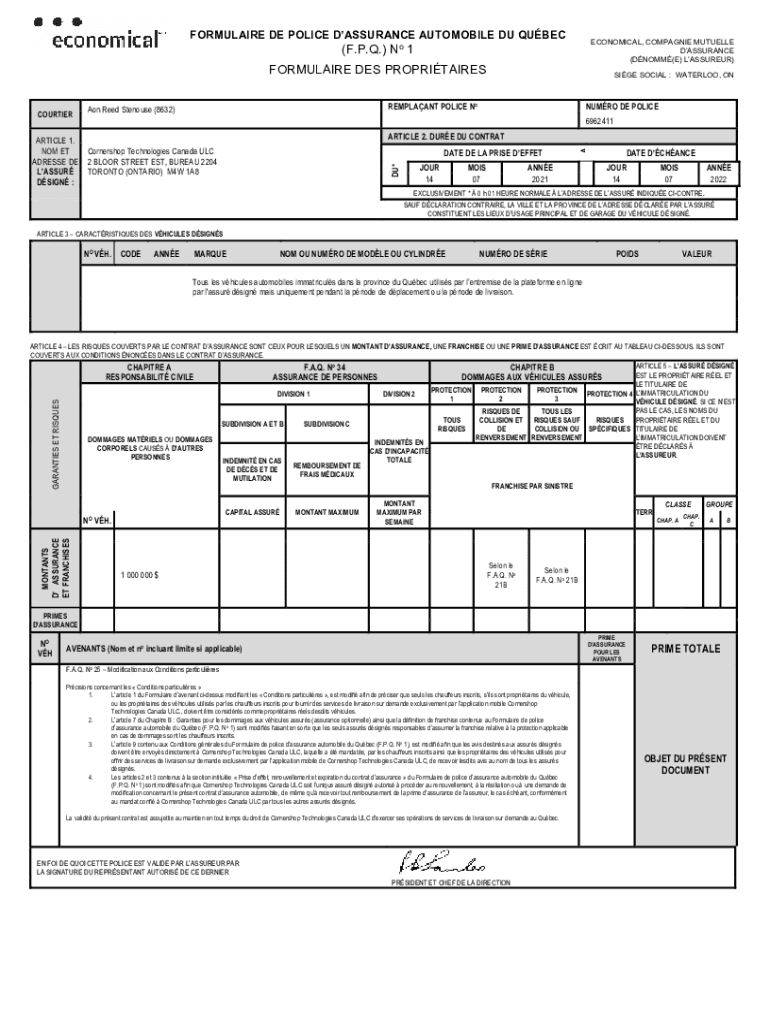
The Automobile Insurance Policy Form of Quebec, also known as F.P.Q. No 1, is a standardized document issued by Economical Mutual Insurance Company. This form serves as a legal contract providing comprehensive insurance coverage for automobiles. It outlines essential information regarding liability protection, damage coverage, and specific conditions under which the insurance applies. The form is specifically designed to ensure that the insured party understands their obligations, the coverage provided, and the procedures for making claims. This standardization helps streamline the insurance process, reducing confusion and ensuring consistency in the protections offered across policyholders.
Steps to Complete the Automobile Insurance Policy Form
-
Provide Personal Information: Begin by filling in your personal details, such as your full name, address, and contact information. This section ensures that the policy is accurately attributed to you.
-
Vehicle Details: Enter specific information about the vehicle being insured. This includes the make, model, year, and vehicle identification number (VIN). Accurate details are crucial for determining the insurance risk and calculating premiums.
-
Coverage Options: Select your desired coverage options. F.P.Q. No 1 allows customization of coverage to include aspects like theft, fire, collision, and comprehensive protection. It’s important to choose coverage that aligns with your needs.
-
Acknowledgement of Terms: Review all terms and conditions detailed in the policy. Ensure you understand the various inclusions, exclusions, and any obligations you have as an insured party. Confirming your acceptance by signing this section is mandatory.
-
Submit Documents: Gather any required documentation such as proof of vehicle ownership, previous insurance records, or driving history. Attach these documents as required by the insurer.
Key Elements of the Automobile Insurance Policy Form
-
Liability Coverage: Protects against claims if you are at fault in an accident that causes bodily injury or property damage to others.
-
Physical Damage Coverage: Includes both collision and comprehensive coverage, providing protection against damage to your car in various scenarios.
-
Uninsured Motorist Protection: Offers compensation in the event of an accident with a driver who lacks adequate insurance.
-
Accident Benefits: Covers medical expenses, funeral costs, and income replacement following an injury.
-
Exclusions: Each policy outlines specific situations not covered by the insurance, such as use of the vehicle for illegal purposes. Understanding these exclusions is critical to avoid unexpected denials.
Legal Use and Compliance
The form is structured in adherence to legal requirements in Quebec, ensuring policyholders adhere to provincial regulations. This includes compliance with minimum liability limits and the provision of accident benefits. Non-compliance with these terms may lead to fines or legal penalties. The form’s legal design also ensures that both insurer and insured individual abide by the established guidelines, fostering mutual accountability and trust.
Important Terms Related to Automobile Insurance
-
Premium: The payment amount required to keep the insurance policy active. It is typically paid monthly, quarterly, or annually.
-
Deductible: An agreed amount the insured party must pay out-of-pocket before insurance coverage takes over for any loss.
-
Endorsement: A modification to the original insurance policy which can add, remove, or modify coverage according to specific needs or circumstances.
Who Typically Uses the Form
Businesses such as Cornershop Technologies Canada ULC, as well as individuals owning vehicles, utilize the F.P.Q. No 1. Companies typically leverage this form to protect fleets or individual vehicles used for commercial purposes. Similarly, individual vehicle owners use it to ensure their personal vehicles are adequately covered against potential incidents.

Requirements and Submission Methods
-
Required Documents: Comply with documentation requirements by providing vehicle registration, proof of previous insurance, and any safety inspection reports if applicable.
-
Submission Methods: This form is available for completion via mail, in-person at an insurance office, or through digital platforms allowing an online submission, streamlining the process for tech-savvy users.
Differences Between Digital and Paper Versions
While both digital and paper formats carry identical legal standing, digital versions offer convenience in terms of rapid submission and ease of access. Digital platforms often provide prompt updates, reminders, and the ability to store copies electronically, all of which contribute to enhanced customer experience and satisfaction.