






Definition and Purpose of DD Form 3230
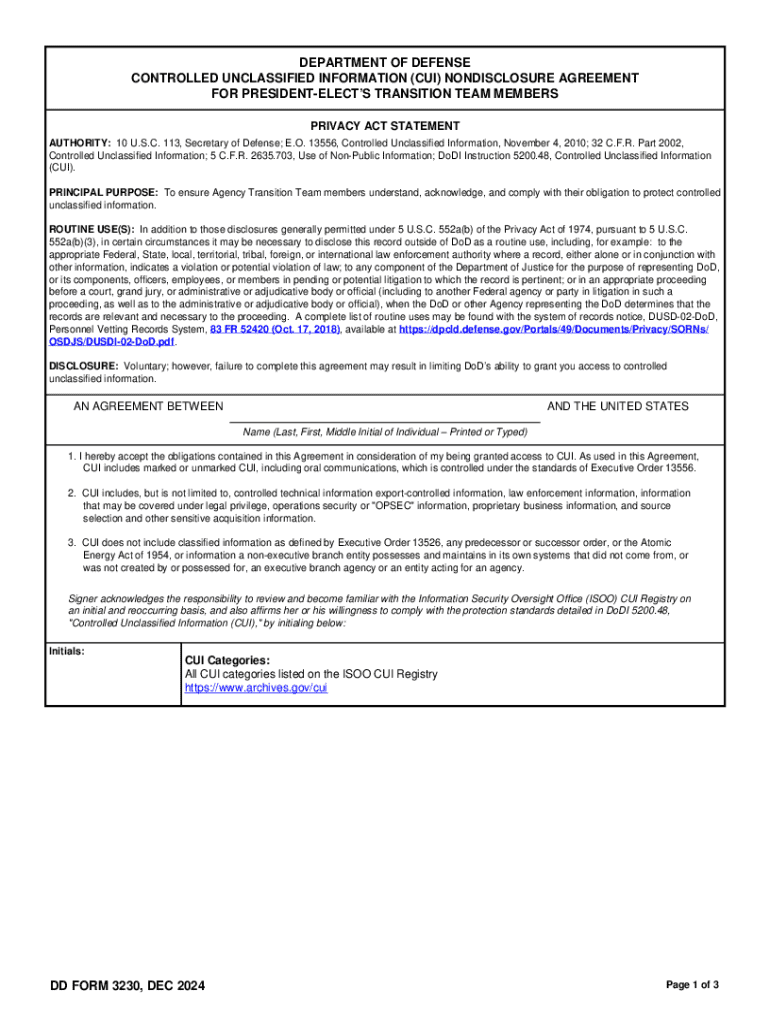
DD Form 3230, known as the Department of Defense Controlled Unclassified Information (CUI) Nondisclosure Agreement, is a legal document utilized by the Department of Defense (DoD) to secure commitments from individuals regarding the protection of sensitive information that, while not classified, requires safeguarding to protect national interests. The form outlines the terms under which access to CUI is granted and the obligations of parties to prevent unauthorized dissemination. This agreement ensures all signers fully understand their legal responsibilities in handling CUI, thereby supporting national security protocols.
How to Obtain DD Form 3230
To acquire the DD Form 3230, individuals typically need to contact the Department of Defense directly. Forms are accessible through DoD’s official website or through specific DoD offices related to defense contracting or operations if you are a member of defense-related teams or transitioning government personnel. It’s crucial to ensure the version obtained is up-to-date, reflecting the latest requirements and standards set forth by the DoD.
Steps to Complete DD Form 3230
-
Identify Information: Clearly print your full legal name, official position, and department affiliation. Ensure all identification details match official records.
-
Read the Agreement: Thoroughly review the terms outlined within the form, paying special attention to obligations regarding the handling, dissemination, and safeguarding of CUI.
-
Acknowledge Responsibilities: Signify understanding and agreement by initialing specific clauses that denote critical responsibilities, such as data protection measures and reporting protocols for breaches.
-
Signature Verification: Provide a signature to formally recognize compliance. A witness or official verifier may also need to sign to authenticate the process.
-
Submission: Submit the completed form to the relevant DoD office or authority designated to manage CUI agreements. Retain a copy for personal records.
Why You Should Use DD Form 3230
DD Form 3230 is essential for anyone involved in roles with potential access to controlled unclassified information. Utilizing this form ensures that all legal and security commitments toward managing CUI are understood and agreed upon. This not only complies with federal regulations but also reinforces the individual’s accountability in protecting national defense interests.
Key Elements of DD Form 3230
- Personal Information: Requires the individual’s identifying information including name and role.
- Legal Obligations: Outlines the specific duties related to information handling and legal repercussions of non-compliance.
- Confidentiality Terms: Details the stipulations for maintaining confidentiality and the security measures required.
- Signatory Acknowledgment: Signature section confirming understanding and acceptance of responsibilities.
Legal Use of DD Form 3230
The legal foundation of DD Form 3230 is built upon federal statutes governing the handling of Controlled Unclassified Information. It legally binds signatories to the nondisclosure and proper management of CUI under U.S. legal frameworks. Adhering to this agreement is part of maintaining compliance with the National Security Act and other relevant legislation.
Penalties for Non-Compliance
Failure to adhere to the terms of DD Form 3230 can result in severe repercussions including administrative actions, termination of security clearance, or legal prosecution. Violations could potentially compromise national security, leading to penalties defined under federal criminal codes.
Digital vs. Paper Version
The DD Form 3230 is available in both digital and paper formats. The digital version offers convenience and easy integration within digital workflows, ensuring faster submission processes and record maintenance. The paper form, while traditional, serves as a backup or preferred medium for certain official channels. Both formats maintain legal validity as long as properly filled and submitted.
Examples of Using DD Form 3230
Various scenarios necessitate the use of DD Form 3230:
- Transition Team Members: Members of a presidential transition team must sign the form to receive sensitive briefings.
- Contractors: Defense contractors working on sensitive projects utilize the form to pledge nondisclosure of project-related CUI.
- Defense Personnel: Military and civilian DoD employees may need to sign upon assignment to roles involving CUI.
These examples illustrate the form’s broad applicability in contexts demanding the highest standard of information protection.