






Definition & Meaning
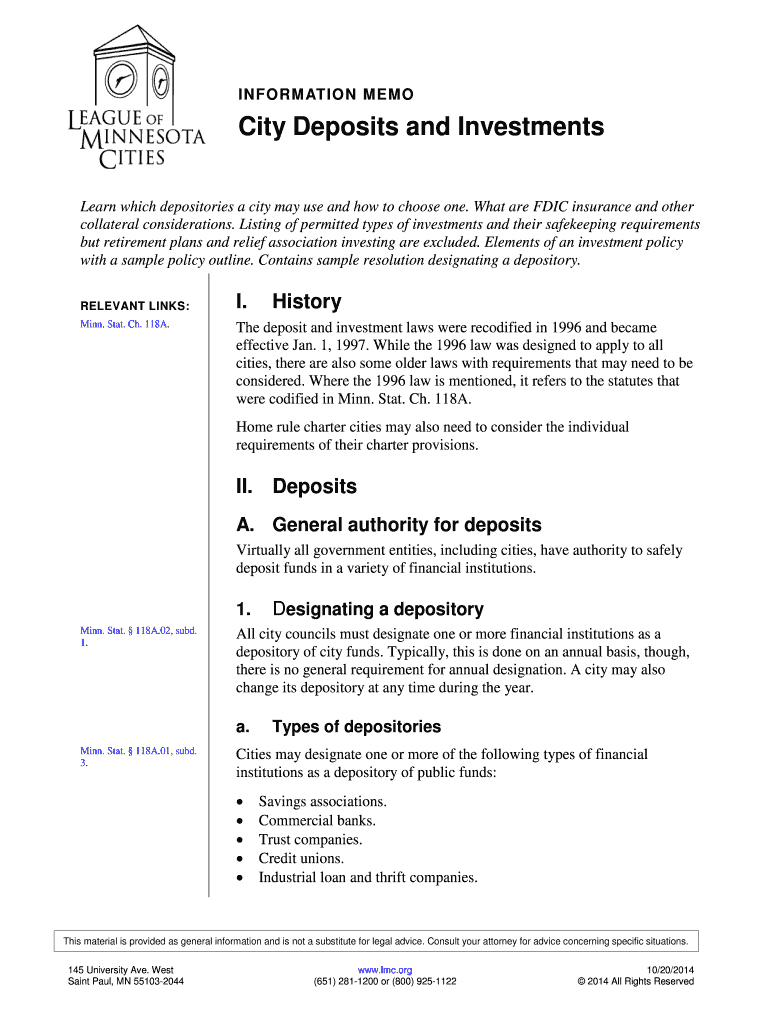
City Deposits and Investments (pdf) - League of Minnesota Cities serves as a comprehensive guide detailing regulations and guidelines associated with the management of city deposits and investments within Minnesota. It provides municipal officials with crucial insights into the criteria for selecting financial institutions as depositories, along with the nuances of investment practices. The document encompasses the principles of safety, liquidity, diversification, and yield — essential elements for developing sound investment policies. This guide ensures cities adhere to state laws while optimizing their financial operations.
Key Elements of City Deposits and Investments
The document outlines several critical components that form the backbone of city investment and deposit strategies. These include:
- Selection of Depositories: Guidelines for choosing financial institutions where city funds are deposited.
- FDIC Insurance Requirements: Assurance that city funds are protected through federal insurance.
- Collateralization: Measures to secure city investments with adequate collateral to mitigate risk.
- Investment Types: A list of permissible investment vehicles that align with Minnesota state law.
- Investment Policy Objectives: Emphasis on balancing safety, liquidity, and optimal yield.
Steps to Complete the City Deposits and Investments (pdf)
To effectively utilize the City Deposits and Investments form, follow these steps:
- Review Eligibility Criteria: Ensure that your city aligns with the state-specific guidelines for designating depositories and making investments.
- Select Financial Institutions: Based on the outlined criteria, identify appropriate depositories and ensure compliance with FDIC insurance requirements.
- Develop Investment Policies: Craft policies that prioritize safety, liquidity, and yield within state compliance.
- Approval Process: Secure necessary approvals from city councils and relevant authorities before finalizing investments.
- Documentation and Compliance: Maintain thorough records of all decisions and ensure ongoing compliance with outlined guidelines.
Legal Use of the City Deposits and Investments (pdf)
This document serves as a legal framework for cities in Minnesota, guiding them through the complexities of managing public funds:
- State Compliance: It provides detailed instructions to ensure that all investment activities adhere to Minnesota state laws.
- Legal Safeguards: Establishes legal precedents and safeguards to protect city officials and financial managers from potential liabilities.
- Resolution Templates: Offers model resolutions for the designation of depositories, ensuring legal formality in decision-making processes.
State-Specific Rules for City Deposits and Investments
Minnesota has its own set of rules for managing city funds, distinguishing it from other states:
- Statutory Regulations: The state mandates specific statutory requirements for the management of public funds, dictating approved investment types and collateralization strategies.
- State Agency Oversight: Minnesota’s Department of Commerce oversees adherence to these rules, providing an additional layer of regulatory compliance.
- Local Government Consultations: Cities are encouraged to consult local legal advisors to navigate these state guidelines effectively.
Who Typically Uses the City Deposits and Investments (pdf)
The document is primarily utilized by:
- City Treasurers and Financial Officers: Responsible for managing the city’s funds in compliance with state regulations.
- Municipal Officials: City council members and other officials involved in the designation of depositories and investment strategizing.
- Legal Advisors: Attorneys who support cities in drafting legal documents and ensuring adherence to state laws.


Important Terms Related to City Deposits and Investments
Understanding specific terminology is crucial to effectively leveraging the document:
- Depository: A financial institution designated to hold city funds.
- Collateralization: An arrangement to secure city deposits with additional assets or securities.
- Liquidity: The ability to convert investments into cash quickly without losing value.
- Yield: The income returned on investments, considering the funds’ safety and liquidity.
- FDIC Insurance: Federal protection of deposits, ensuring the safety of city funds.
Examples of Using the City Deposits and Investments
Real-world scenarios illustrate the document’s practical applications:
- City of Bloomington: Utilized the guide to revise investment policies, enhancing liquidity while ensuring compliance with updated state laws.
- City of Duluth: Applied the resolution template provided in the document to formally designate a new depository, streamlining their financial operations.
- City of Rochester: Leveraged the guide to educate council members on investment risks and collateralization strategies.
Penalties for Non-Compliance
Non-compliance with the guidelines can lead to significant penalties:
- Legal Liabilities: Cities may face lawsuits or legal actions if funds are mismanaged or invested irresponsibly.
- Financial Penalties: Potential fines or state-level sanctions could be imposed on officials responsible for deviations from set regulations.
- Reputational Damage: Non-adherence can lead to a loss of public trust and accountability issues within the municipal administration.