






Definition and Meaning
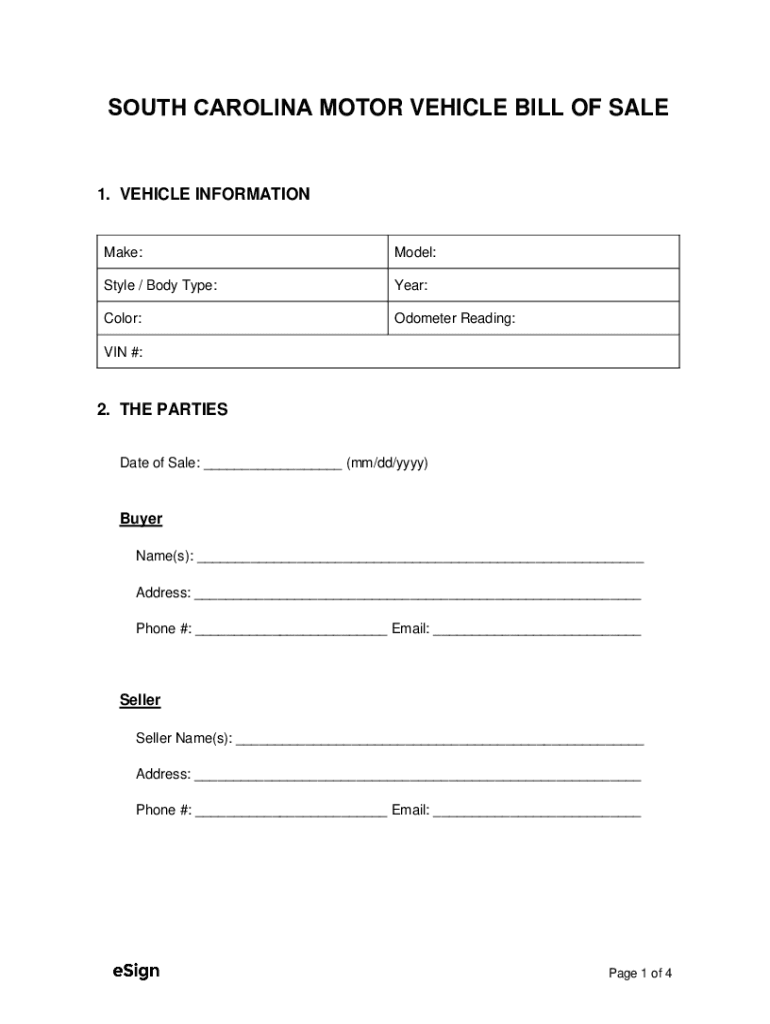
The South Carolina Motor Vehicle Bill of Sale is an official document used to record the sale of a motor vehicle between a seller and a buyer in South Carolina. It provides a detailed description of the transaction, serving as a legal proof of purchase. This document typically includes information about the vehicle sold, such as make, model, year, VIN (Vehicle Identification Number), and the agreed-upon purchase price. Additionally, it includes details about the buyer and seller, ensuring that both parties have a clear understanding of their responsibilities and rights.
The document is crucial because it protects both the buyer and the seller by clearly stating the terms of the sale. For sellers, it releases them from liability once the vehicle is in the buyer's possession. For buyers, it serves as proof of ownership until they can officially register the vehicle with the South Carolina Department of Motor Vehicles (DMV).
Key Elements of the South Carolina Motor Vehicle Bill of Sale
- Vehicle Information: Includes specifics about the car, such as the make, model, year, and VIN. This information is critical as it uniquely identifies the vehicle involved in the transaction.
- Buyer and Seller Details: Contains the names, addresses, and contact information of both parties. This ensures accountability and provides a point of reference for both the buyer's and seller’s records.
- Purchase Price and Payment Method: States the total amount agreed upon for the sale and outlines how the payment was or will be made, such as in cash, check, or through trade-in.
- Odometer Disclosure Statement: Required by federal law, this section records the vehicle’s mileage at the time of sale, helping to prevent odometer fraud.
- Signatures and Notarization: Both parties must sign the Bill of Sale, and notarization may be required to add a layer of certification and authentication to the transaction.
Steps to Complete the South Carolina Motor Vehicle Bill of Sale
- Gather Required Information: Before filling out the form, both parties should have their personal information, vehicle details, and the agreed-upon sale terms ready.
- Fill Out Vehicle Details: Enter precise vehicle information including the make, model, year, and VIN, ensuring there are no errors for clarity and accuracy.
- Input Buyer and Seller Information: Clearly write out the full names, addresses, and contact information for both parties involved in the sale.
- State the Purchase Price: Clearly specify the purchase price, and any payment methods or trade-ins as part of the agreement.
- Odometer Reading: Record the current mileage of the vehicle in the odometer disclosure section, ensuring compliance with legal requirements.
- Review and Sign the Document: Both parties should thoroughly review the completed form for accuracy. Once verified, both the buyer and seller sign the document in the presence of a notary if required.
- Obtain Notarization: If notarization is required, present valid identification and sign the document in the presence of a notary public for official acknowledgment.
Legal Use of the South Carolina Motor Vehicle Bill of Sale
The form is legally binding, protecting both buyer and seller by clearly documenting the transfer of ownership. In South Carolina, the Bill of Sale acts as a safeguard against disputes or legal issues concerning the vehicle sale. It establishes the buyer's right to fully own, use, and resell the vehicle, while also ensuring that the seller is no longer liable for any incidents or obligations tied to the vehicle post-sale.
This document should be maintained by the buyer until they can officially register and title the vehicle in their name. Sellers are advised to retain a copy as evidence that the vehicle's ownership has been legally transferred, absolving them from further responsibility or liability related to that vehicle.
State-Specific Rules for the South Carolina Motor Vehicle Bill of Sale
South Carolina has specific requirements that must be met for the vehicle Bill of Sale to be valid and legally enforceable. These include:
- Odometer Disclosure Compliance: In adherence with the Truth in Mileage Act, the odometer disclosure must be accurate for vehicles less than 20 years old.
- Notary Requirement: While notarization isn’t always mandated, it's commonly recommended to enhance the document's authenticity.
- Additional Forms: Depending on the engine type or weight, additional disclosures or forms might be necessary, such as for heavy vehicles, which can include additional tax documentation or inspections.
Who Typically Uses the South Carolina Motor Vehicle Bill of Sale
This form is primarily used by individuals and entities involved in selling or purchasing vehicles in South Carolina. It is vital for:
- Individuals Selling a Used Car: As it officially documents the transaction, protecting them against future claims regarding the vehicle.
- Car Dealerships: For maintaining clear records and protecting both the buyer and the dealership with a formal transaction history.
- Buyers: To prove ownership and establish a chain of title for registration and titling purposes.


Important Terms Related to the South Carolina Motor Vehicle Bill of Sale
- VIN (Vehicle Identification Number): A unique code that identifies the vehicle, providing critical information about its manufacturing details.
- Odometer Reading: Records the number of miles driven to prevent fraud associated with misreported mileage.
- Notarization: A legal process to certify the document, often enhancing its legitimacy and acceptance by state authorities.
- Purchase Agreement: Details the specific terms and conditions agreed upon by the buyer and seller related to the vehicle sale.
Examples of Using the South Carolina Motor Vehicle Bill of Sale
Consider a situation where John is selling his 2015 Ford Mustang to Sarah. A South Carolina Motor Vehicle Bill of Sale would be filled out, listing the Ford Mustang's details, both parties' information, the purchase price of $15,000, and the current mileage reading of 50,000 miles. Both John and Sarah would sign the form in front of a notary, who would then notarize it, making the transaction official and the document legally binding. Sarah would keep the original Bill of Sale for her records and vehicle registration, while John maintains a copy to confirm the sale was completed.