




01. Edit your form online
Type text, add images, blackout confidential details, add comments, highlights and more.

Type text, add images, blackout confidential details, add comments, highlights and more.

Draw your signature, type it, upload its image, or use your mobile device as a signature pad.

Send it via email, link, or fax. You can also download it, export it or print it out.
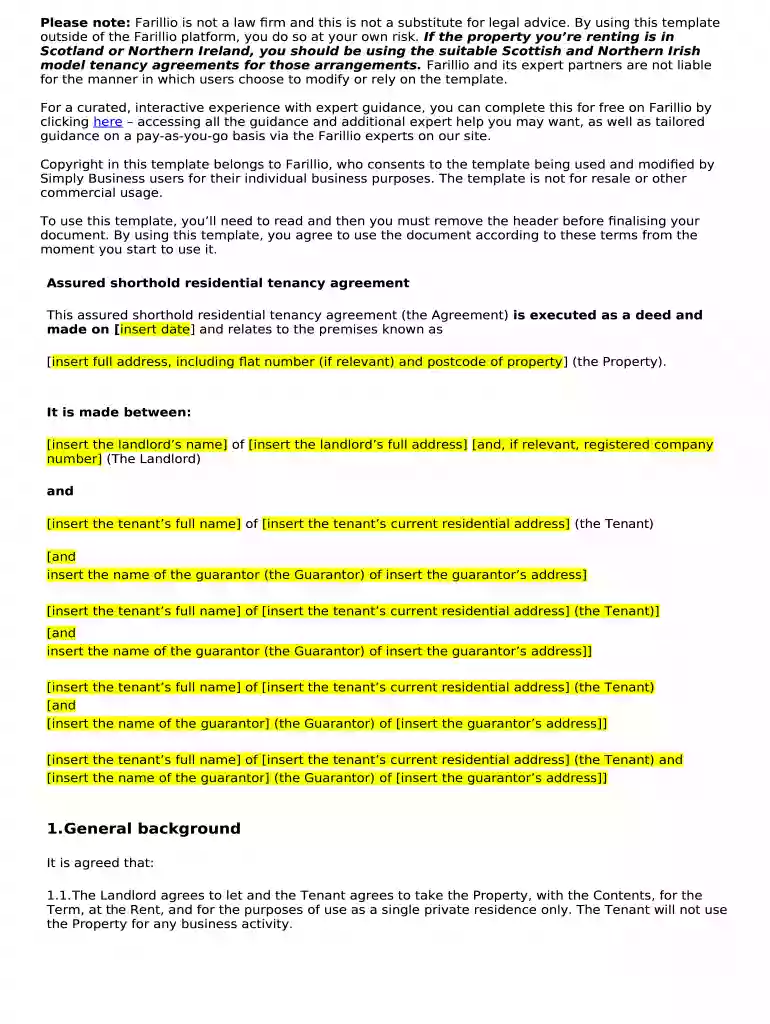
The Assured Shorthold Tenancy Agreement (AST) is a legal contract that establishes the terms under which a residential property is rented from a landlord to a tenant in the United States. Its primary function is to set forth the responsibilities and obligations of both parties, ensuring clarity and preventing disputes during the tenancy. The agreement outlines crucial details such as rental payment schedules, property maintenance responsibilities, and conduct expectations. Additionally, while ASTs are widely used, they emphasize that they should not replace personalized legal advice, as they include disclaimers about liability and legal coverage.
An AST is used by filling in specific details about the tenancy, including the names and contact information of both the landlord and tenant, the rental property address, and the rent amount and due dates. Landlords should provide clear instructions on tenant obligations regarding property upkeep and rental terms. Tenants should review these sections carefully before signing to ensure they understand their commitments. The agreement is legally binding once signed by both parties, and it functions as a reference for resolving potential disputes.
A critical element of the AST is the specification of the rent amount, payment frequency, and due dates. This section ensures that the tenant is aware of their financial commitments and reduces the likelihood of disputes over payments.
The agreement details the maintenance obligations of both the tenant and the landlord. The tenant is typically responsible for basic upkeep, while the landlord handles significant repairs and maintenance.
Understanding the terminology used within an AST is crucial for both parties. Some key terms include:
The legal standing of electronic signatures is affirmed by the ESIGN Act, making them as valid as handwritten ones. This allows tenants and landlords to sign the AST digitally, streamlining the signing process. DocHub provides tools to capture digital signatures, ensuring compliance and security.
Using DocHub, users can create an interactive form of the AST that allows digital completion and submission. This feature aids in collecting the necessary information without printing and manually filling out the document.
It's important to recognize that property rental laws can vary significantly across U.S. states. Consequently, an AST should be reviewed or modified by a legal professional to ensure it complies with state-specific legislation.
ASTs are used in various scenarios depending on the nature of the rental arrangement. Examples reflect different needs of tenants and landlords:
By thoroughly understanding the utility of an AST, both landlords and tenants can ensure a smooth and transparent rental process.
At DocHub, your data security is our priority. We follow HIPAA, SOC2, GDPR, and other standards, so you can work on your documents with confidence.





Mar 31, 2026 A rental agreement is a legally binding contract between a landlord and tenant a few of the most common types are described below. Explore theRead more
Nov 15, 2025 A lease provides the security of a long-term tenancy at a fixed rent, while a rental agreement allows for greater freedom to end or alter the
Short-Term Rentals Tenant. Tenants must be given a minimum of 30 days to review the proposed assumes the rental term to be month-to-month.


