






Definition and Meaning
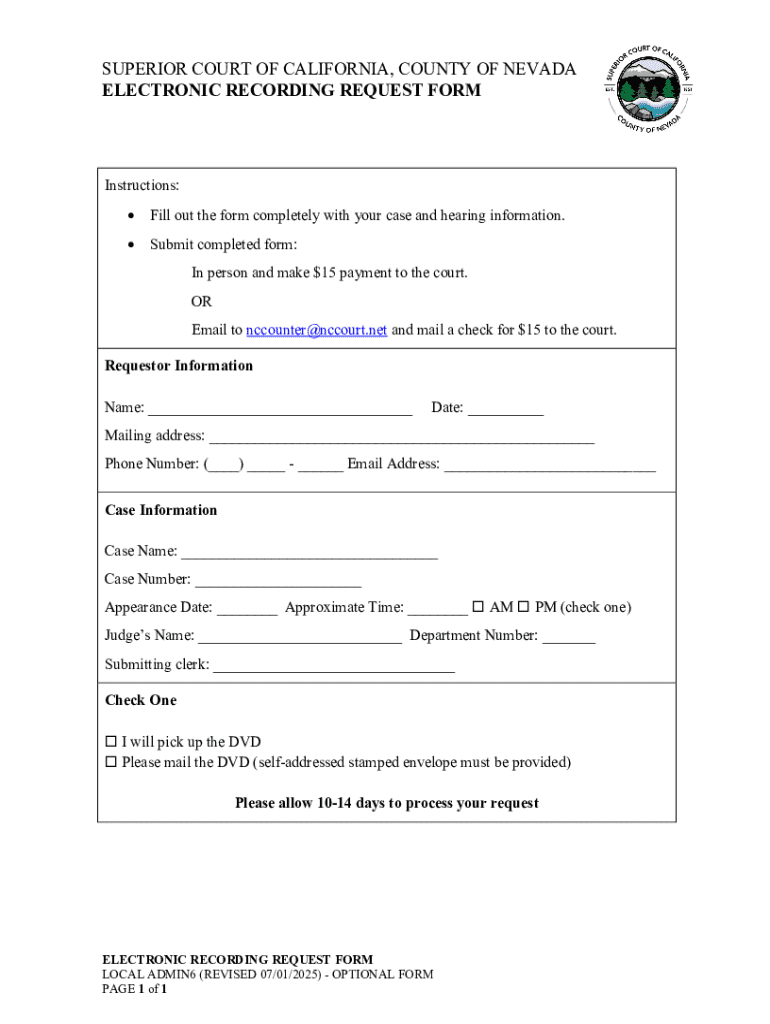
The Electronic Recording Request Form is a formal document designed for the Superior Court of California, County of Nevada. This form serves as a means for individuals to request electronic recordings of court hearings. The primary purpose is to enable interested parties to obtain official records of proceedings, which might be necessary for legal purposes, personal records, or review. This form plays an essential role in ensuring transparency and access to judicial processes, allowing the public and involved parties to efficiently request and obtain recordings of interest.
How to Obtain the Electronic Recording Request Form
To access the Electronic Recording Request Form, individuals can visit the official website of the Superior Court of California, County of Nevada. Typically, a dedicated section on the site will guide users through the process of obtaining and downloading the form. It's crucial to ensure that you are using the most recent version of the form to avoid any procedural discrepancies. If online access is unavailable, you may also request the form in person at the court's clerk office, where staff can assist you with the necessary documentation.
Steps to Complete the Electronic Recording Request Form
- Personal Information: Begin by entering your full name, address, and contact information. Ensure accuracy to prevent delays in processing.
- Case Details: Provide specific information about the case, including the case number, names of the parties involved, and the date and time of the hearing you wish to obtain a recording for.
- Request Specification: Indicate the type of recording format you prefer, such as digital file or CD, and specify any particular segments of the hearing if applicable.
- Signature and Date: Conclude by signing and dating the form, verifying that all information you have provided is accurate and complete.
Key Elements of the Electronic Recording Request Form
- Contact Information: Precise contact details ensure prompt communication for any follow-up actions or notifications regarding the processing status.
- Case Information: Accurate data about the case, including the involved parties and hearing dates, facilitates swift retrieval of the requested recordings.
- Recording Preferences: Selection of the desired format ensures the recording meets the requester’s technological capabilities and needs.
State-Specific Rules for the Electronic Recording Request Form
In California, specific statutes govern the dissemination of court recordings, emphasizing the protection of confidential information. Not all hearings are eligible for recording requests; some may be restricted by law or court order. It's crucial to familiarize yourself with state-specific regulations, as this ensures compliance and prevents potential legal repercussions. Additionally, fees associated with processing the recording requests may vary, and understanding these costs is vital for planning.
Form Submission Methods
There are multiple ways to submit the Electronic Recording Request Form:
- Online Submissions: Some courts may offer an online portal where you can submit the form electronically, ensuring quicker processing times and convenience.
- Mail Submissions: Alternatively, completed forms can be mailed to the courthouse along with any required fees, allowing for a more traditional submission method.
- In-Person Submissions: Visiting the courthouse to hand over the form in person allows you to clarify any immediate queries and ensure all necessary documents accompany the request.
Who Typically Uses the Electronic Recording Request Form
This form is commonly utilized by attorneys, court-appointed representatives, and parties directly involved in a case who need access to recordings for legal review or record-keeping. In addition, members of the public or media personnel who are following court cases may also file requests, provided they respect legal provisions regarding access rights and confidentiality.


Legal Use of the Electronic Recording Request Form
The primary legal benefit of using this form is to retrieve official and accurate recordings of court proceedings. These recordings can serve as critical pieces of evidence in further legal actions or appeals, aiding in precise analysis and discussions. The form respects privacy and confidentiality norms by designating specific rules on accessing sensitive or sealed hearings, ensuring that all requests align with the legal framework established by California's judicial system.
Application Process and Approval Time
Once the form submission is completed, processing times may vary depending on the court's workload and the specifics of the case. Generally, you can expect a response or update within a few weeks. Should your request be approved, you will receive instructions on how to collect the recordings. If the form is incomplete or incorrect, additional time might be needed to rectify issues, highlighting the importance of detailed and accurate submissions.
Penalties for Non-Compliance
Failing to follow the stipulated guidelines for obtaining court recordings can result in denied requests or, in some cases, legal penalties. Misusing recordings, such as unauthorized distribution or modification, breaches legal codes and can lead to legal actions against the offender. It is imperative to adhere to all terms and conditions outlined in the form to avoid potential legal consequences.
Digital vs. Paper Version
While requesting recordings, individuals can opt for either a digital version or a traditional CD format. The choice often depends on personal convenience and technological accessibility. Digital files offer ease of use and storage, while CDs might be preferred for their tangible nature. Understanding your technological setup and needs can influence the decision, ensuring you select the most suitable format for your circumstances.