






Definition and Purpose of a Certificate of Occupancy
A Certificate of Occupancy (CO) is an important document indicating that a building complies with local building codes and is safe for occupancy. In the United States, this certificate is typically required before any new structure or significant alterations to an existing structure can be legally occupied. The application process for this certificate involves an extensive review to ensure that the property meets all health, safety, and zoning requirements as mandated by local ordinances.
- Purpose: A CO confirms that the building follows all applicable building codes, laws, and requirements. This document is crucial for protecting the safety and welfare of the public, ensuring that structures are safe for use and occupancy.
How to Use the Application for Certificate of Occupancy
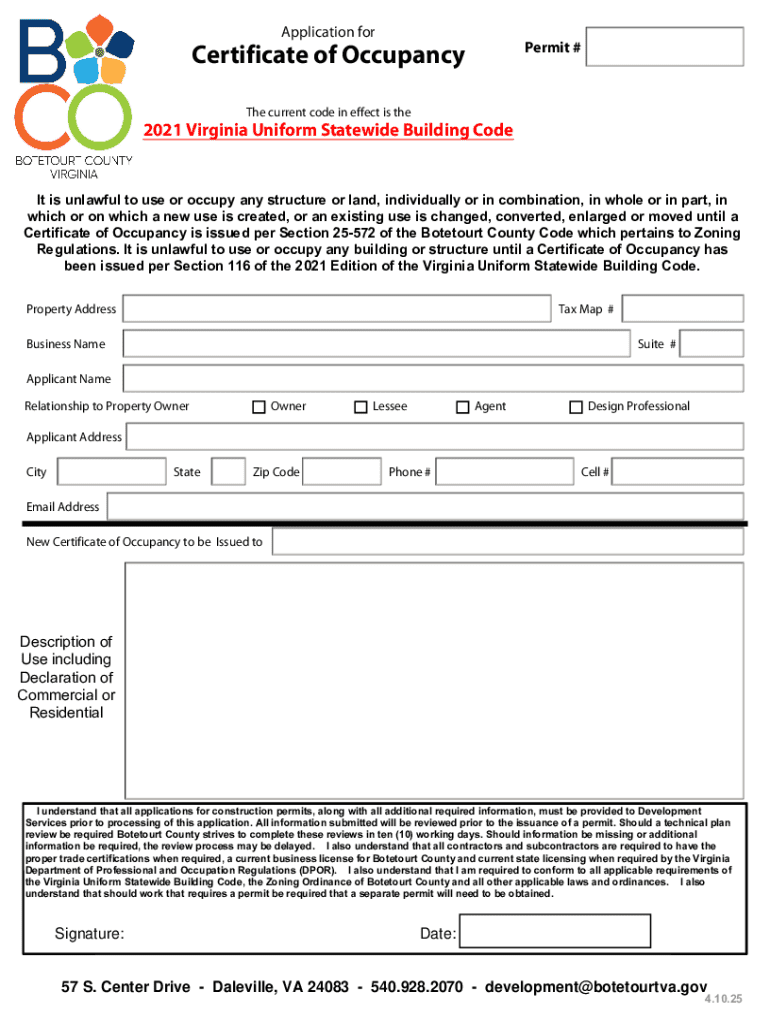
The application for a Certificate of Occupancy is used by property owners, builders, and developers to request certification that their building is fit for occupancy. When using this application, it is essential to provide comprehensive information about the property and its intended use. This ensures the approving authorities receive all necessary details to conduct a proper assessment.
- Who Should Apply: Any individual or entity responsible for the construction, renovation, or change in use of a property should submit an application. This includes real estate developers, homeowners, and commercial property managers.
Key Elements of the Application for Certificate of Occupancy
When completing the Certificate of Occupancy application, it is important to include critical information that authorities will review during the approval process.
- Applicant Information: This section requires detailed contact information for the person or entity applying for the CO.
- Property Details: Essential information about the location, dimensions, and zoning classification of the property.
- Building Construction: Details regarding the type of construction, materials used, and the timeline for completion.
- Intended Use: A clear description of how the property will be utilized, such as residential, commercial, or industrial purposes.
Steps to Complete the Application for Certificate of Occupancy
Completing the Certificate of Occupancy application involves several necessary steps to ensure thorough and accurate submission.
- Collect Required Information: Gather all pertinent details about the property, including ownership documentation, building plans, and construction permits.
- Fill Out the Application Form: Provide all required information accurately, ensuring that each section is completed.
- Submit for Review: Submit the application to the appropriate local government agency, often the building department or zoning office.
- Inspection Scheduling: Cooperate with local authorities to schedule inspections that confirm compliance with building codes.
- Obtain Certificate upon Approval: If the inspection is successful, the certificate is issued, allowing legal occupancy of the property.
Who Typically Uses the Application for Certificate of Occupancy
This application is utilized by a variety of individuals and organizations involved in the property development process.
- Developers and Builders: Individuals or companies overseeing the construction of new buildings or renovations.
- Real Estate Investors: Parties involved in acquiring properties for leasing or resale.
- Homeowners: Individuals responsible for significant home renovations that alter the structure or usage of their property.


Legal Use of the Certificate of Occupancy
A Certificate of Occupancy serves as legal proof that a building complies with local regulations and is safe for occupancy. While primarily a compliance tool, it also protects property owners from legal liabilities and potential fines.
- Legal Compliance: Provides assurance that a property adheres to zoning laws, building codes, and safety regulations.
- Risk Mitigation: Essential for reducing liability if safety issues arise during occupancy.
State-Specific Rules for the Application for Certificate of Occupancy
Regulations governing Certificates of Occupancy vary across states in the U.S., comprising specific local requirements that must be followed.
- Virginia Example: Under the 2021 Virginia Uniform Statewide Building Code, it is crucial for applications to meet local zoning laws and obtain necessary permits.
- Customary Differences: Considerations can include different safety standards, inspection processes, and documentation requirements specific to each state.
State-by-State Differences
Understanding the interplay of regulations between states can be crucial for businesses or individuals operating in multiple jurisdictions.
- Local Building Codes: Each state may impose unique building standards that alter CO requirements.
- Zoning Variations: Zoning laws can differ significantly, affecting the use and occupancy classification of buildings.