




01. Edit your form online
Type text, add images, blackout confidential details, add comments, highlights and more.

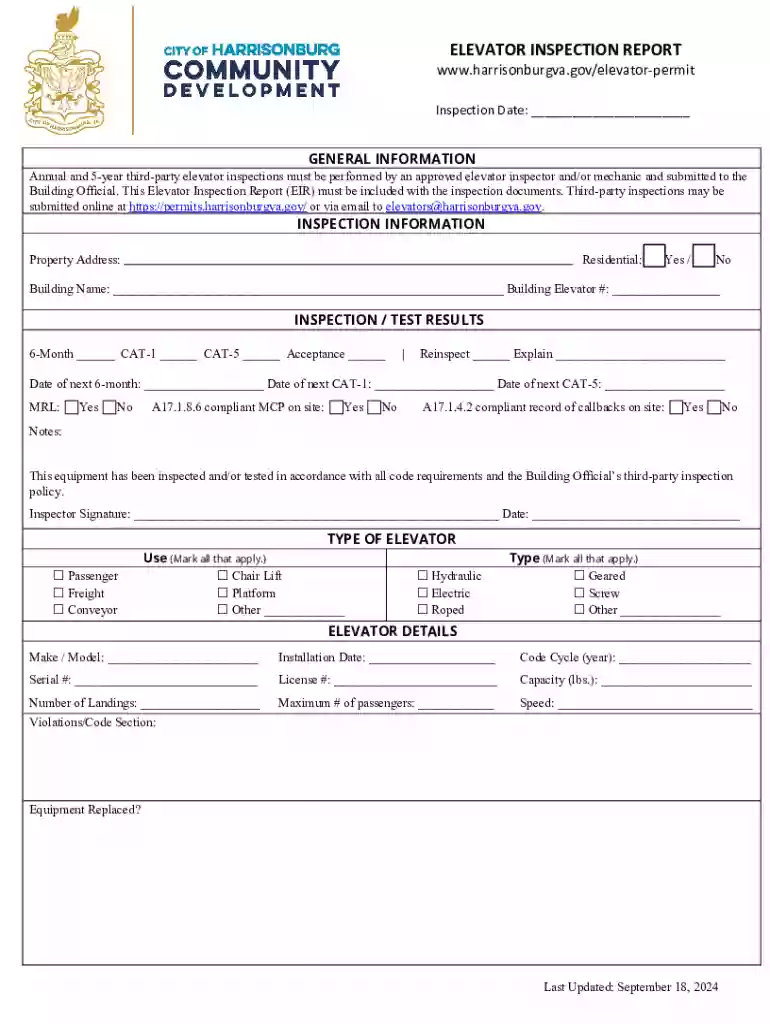
Type text, add images, blackout confidential details, add comments, highlights and more.

Draw your signature, type it, upload its image, or use your mobile device as a signature pad.

Send it via email, link, or fax. You can also download it, export it or print it out.
The Elevator Inspection Report serves as a comprehensive document that outlines the mandatory requirements for the periodic inspection of elevators. These inspections are crucial for ensuring the safe operation and compliance of elevators with established safety codes. The report provides detailed sections that cover general information about the elevator, the inspection results, the specifications of the elevator, and the contact information of the owner and inspector.
Completing the Elevator Inspection Report involves a series of methodical steps to ensure all necessary information is accurately captured.
The Elevator Inspection Report includes several critical components necessary for a comprehensive review.
These elements ensure transparency and help maintain high safety standards.
The Elevator Inspection Report is a legally critical document that ensures elevators meet safety standards. Non-compliance with inspection requirements can lead to severe penalties, including fines and liability in the event of accidents.
The Elevator Inspection Report is utilized by a range of stakeholders, including:
Elevator inspection requirements can vary significantly from state to state. It is essential to understand the specific rules applicable in your jurisdiction to maintain compliance.
Compliance with these state-specific regulations is crucial to avoid potential penalties.
Obtaining the Elevator Inspection Report typically involves coordinating with a certified elevator inspector.
Understanding practical applications of the Elevator Inspection Report can provide clarity on its importance.
These examples underscore the significance of regular elevator inspections to safeguard users.
Failing to comply with elevator inspection requirements can lead to significant legal and financial repercussions.
Ensuring compliance is not only a regulatory duty but also critical for safety and operational integrity.
We've got more versions of the Elevator Inspection Report form. Select the right Elevator Inspection Report version from the list and start editing it straight away!
| Versions | Form popularity | Fillable & printable |
|---|---|---|
| 2024 | 4.6 Satisfied (28 Votes) |
At DocHub, your data security is our priority. We follow HIPAA, SOC2, GDPR, and other standards, so you can work on your documents with confidence.


Esta pgina muestra toda la informacin relacionada con imgenes, archivos disponibles para descargar, la capacidad de mostrarlo en el mapa si existen
8 days ago If your apartment lift has no current safety certificate or licence, or the licence has expired, this is a real safety risk you can act on.Read more


