
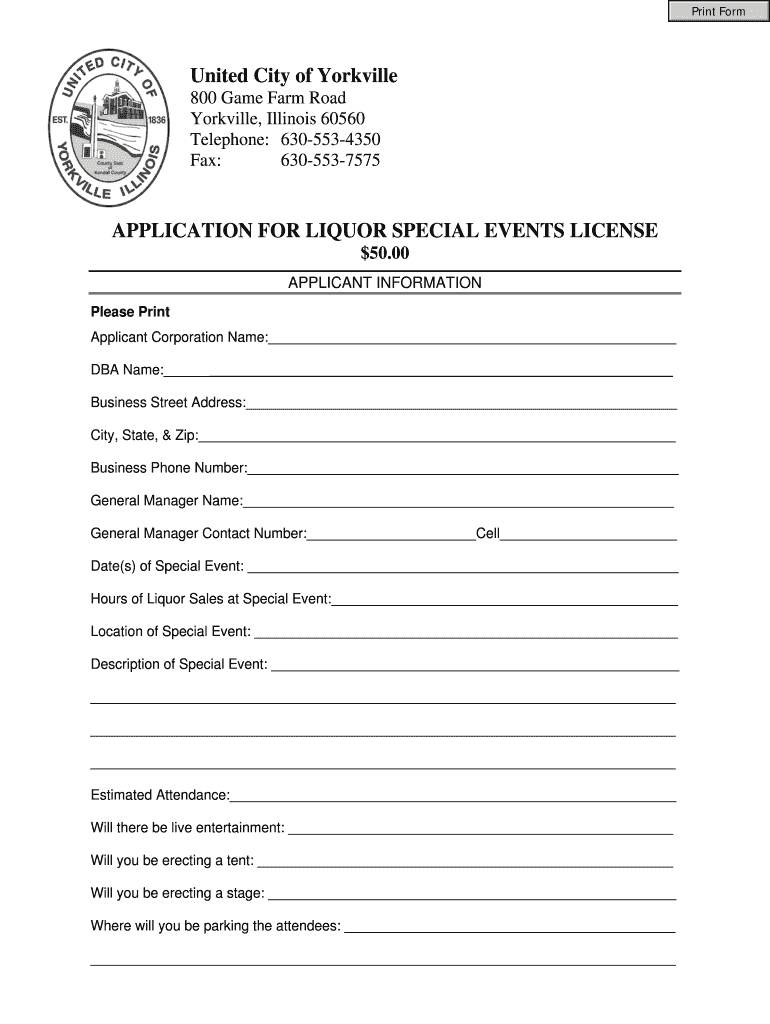







Definition and Meaning of Liquor Special Events License
A Liquor Special Events License allows event organizers to legally serve or sell alcoholic beverages during a special event. This type of license is essential for temporary occasions such as festivals, fundraisers, or private parties where alcohol is to be consumed. The license ensures that the serving of alcohol is in compliance with state and local laws, maintaining public safety and order during events. It typically requires the applicant to specify event details, including dates, location, and expected attendance, to evaluate suitability for alcohol service.
How to Use the Application for Liquor Special Events License
To properly use the application for a Liquor Special Events License, thoroughly review the form instructions to understand the necessary information and documentation. Begin by completing all sections of the application with details about the event, such as dates, venue, and anticipated crowd size. Clearly outline features of the event that may require additional permits, like live music or temporary infrastructures such as tents. Ensure all city and state guidelines are adhered to when filling out the application to avoid delays in processing or refusal of the license.
Steps to Complete the Application for Liquor Special Events License
- Gather Information: Collect all pertinent details about your event, including the name, date, location, and a description of the activities planned.
- Fill Out the Form: Enter basic information in the form fields. Ensure accuracy to prevent any application errors.
- Check Required Documents: Prepare any necessary documentation that must accompany the application, such as proof of insurance or venue agreements.
- Acquire Approvals: If required, obtain approvals from city officials or other regulatory bodies before submission.
- Submit Your Application: Follow the instructions provided for submitting the completed application. This may involve mailing it, submitting it online, or handing it in person.
Key Elements of the Application
- Event Details: Information including the event name, organizer, location, and specific dates.
- Alcohol Service Plan: A detailed plan outlining how alcohol will be served and managed during the event.
- Estimated Attendance: Provide an accurate estimate of how many people are expected to attend.
- Event Features: Indicate any additional features such as food service, entertainment, or promotional activities.
- Required Approvals: Checklist of required permits and approvals from relevant authorities.
Legal Use of the Liquor Special Events License
The legal use of a Liquor Special Events License is to ensure alcohol consumption during events complies with relevant laws and regulations. License holders must adhere to serving time restrictions, and age verification processes, and manage consumption levels responsibly. Violations can result in fines or revocation of the license. Event planners should also be aware of restrictions on serving locations and safety requirements to maintain the legal standing of the event.
Required Documents for the Application
- Proof of Event Insurance: Demonstrates coverage for liabilities during the event.
- Site Plan: A layout of the event space showing alcohol service areas.
- Venue Agreement: Written consent from the property owner to hold the event if the location is not owned by the organizer.
- Approvals from Local Authorities: Documentation showing permission from local regulatory bodies.
Who Issues the Liquor Special Events License
Typically, a Liquor Special Events License is issued by the local city or municipal authority responsible for overseeing alcohol sales and consumption within the area of the event. In some cases, state-level liquor control boards may also be involved in the approval process. It is important for applicants to understand which government body they need to apply to, ensuring they are complying with the correct jurisdiction's laws and guidelines.
Form Submission Methods
- Online Submission: Many localities offer online portals for submitting applications, making it a convenient option for organizers.
- Mail Submission: Sending applications via mail is an option where electronic submission is not available.
- In-Person Submission: Hand-delivering the application to the designated department ensures confirmation of receipt and may expedite processing.
Penalties for Non-Compliance
Failure to comply with the regulations associated with a Liquor Special Events License can lead to significant penalties, including fines, event shutdowns, or bans on future licenses. Non-compliance includes serving alcohol without a license, violating serving time restrictions, or allowing underage drinking. It is crucial for organizers to train staff adequately on compliance requirements to prevent such issues.
By understanding the application process and maintaining compliance with legal requirements, event organizers can ensure a successful and lawful event.




