




01. Edit your mortgage statement template online
Type text, add images, blackout confidential details, add comments, highlights and more.

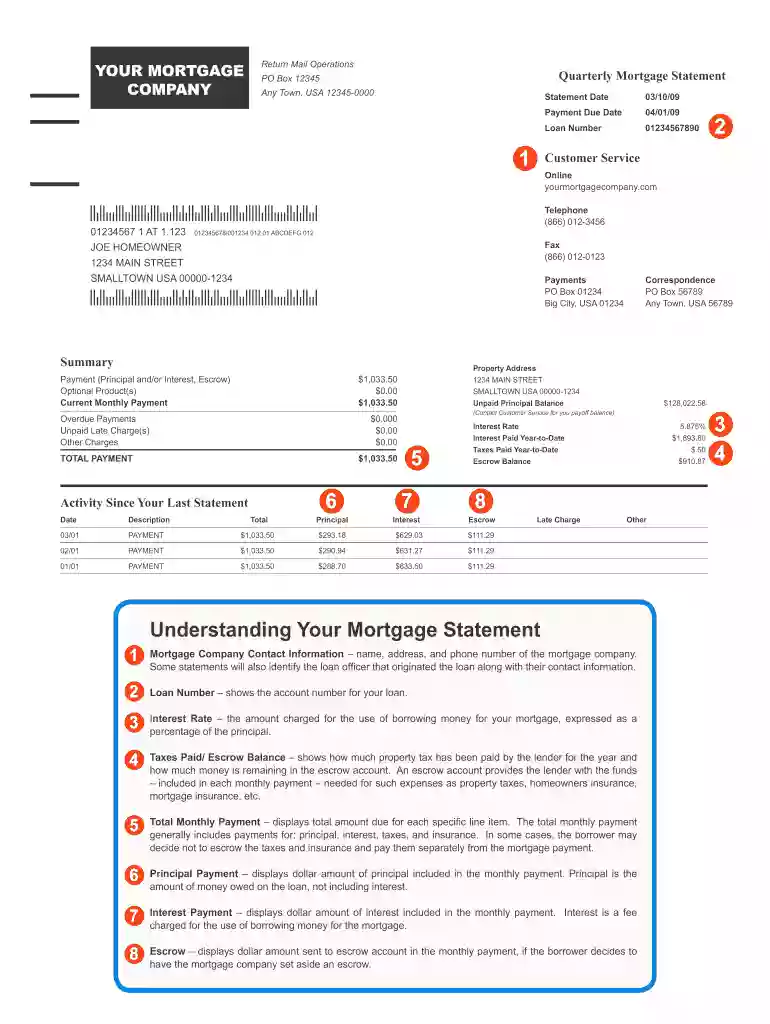
Type text, add images, blackout confidential details, add comments, highlights and more.

Draw your signature, type it, upload its image, or use your mobile device as a signature pad.

Send mortgage statement via email, link, or fax. You can also download it, export it or print it out.
A quarterly mortgage statement is a detailed report provided by mortgage lenders to homeowners outlining essential account information over a three-month period. This document contains key figures such as the unpaid principal balance, monthly payment amounts, interest rate, and year-to-date totals for interest and any applicable taxes. The primary purpose of this statement is to keep borrowers informed about their mortgage status, enable better financial planning, and provide a comprehensive overview of payments made and outstanding loan details.
The quarterly statement typically breaks down the components of each payment, distinguishing between principal and interest. The principal represents the portion of the loan that is being repaid, while interest is the cost of borrowing. Furthermore, it often includes escrow details if applicable, indicating any payments made towards property taxes or homeowners insurance. Understanding these components aids homeowners in seeing the progress they are making towards paying down their mortgage and ensures they remain aware of their financial obligations.
Utilizing a quarterly mortgage statement effectively is fundamental for maintaining a healthy financial posture. To make the most of this document, consider the following steps:
Review Key Information: Start by checking the unpaid principal balance to see how much of the loan you still owe. Pay attention to the interest rate, which may impact future payment amounts if it is adjustable.
Analyze Payment History: The statement outlines your monthly payments, allowing you to track how much has gone towards principal vs. interest. This analysis can provide insights into how quickly your equity is growing.
Check Escrow Details: If your mortgage includes an escrow account, review the contributions made towards property taxes and insurance. Understanding these amounts helps in anticipating any future increases in your monthly payments.
Assess Year-to-Date Totals: This includes interest paid and taxes escrowed over the quarter, which can assist with personal financial and tax planning.
Identify Contact Information: Make a note of your lender’s contact details, as you may need to reach out for clarifications regarding any discrepancies or questions related to your statement.
Homeowners can typically obtain their quarterly mortgage statements through a few common steps, which may vary slightly depending on the lender:
Log into Your Online Account: Most lenders provide an online portal where borrowers can access their mortgage information. Logging in will allow you to view and download your quarterly statement directly.
Check Your Email: Many lenders opt to send statements electronically. Look for emails from your mortgage provider, making sure to check your spam folder if it’s not visible.
Call Your Lender: If online access is inconvenient or if you prefer a physical copy, you may call your lender's customer service. Be prepared with your account details for quicker assistance.
Physical Mail Options: If you have chosen to receive statements via mail, verify that your address is up-to-date with your lender to ensure timely delivery.
Request a Copy: If you cannot find a statement from previous quarters, you can request a copy of the statement by contacting customer support, where they will typically provide it free of charge.
Understanding certain key terms related to the quarterly mortgage statement can enhance your comprehension of the details presented within it. Some essential terms include:
Principal: The original loan amount borrowed, excluding interest.
Interest: The fee charged by the lender for borrowing the principal, typically expressed as an annual percentage rate (APR).
Payment Allocation: The breakdown of how your monthly payment is divided between principal repayment, interest, and escrow contributions.
Escrow Account: An account set up by the lender to pay property taxes and insurance premiums on behalf of the borrower.
Year-to-Date Totals: Cumulative amounts shown through the year that reflect payments made towards interest, principal, and escrow.
Amortization Schedule: A table outlining each payment over the life of the loan, showing the composition of each payment towards principal and interest.
Understanding these terms will provide clarity when reviewing your quarterly mortgage statement and aid in effective financial management.
A quarterly mortgage statement serves various practical purposes that can benefit homeowners significantly. Here are some real-world examples illustrating its use:
Budgeting for Payments: Homeowners can use the statement to effectively budget future payments. For instance, if the statement indicates an increase in the escrow portion due to rising property taxes, homeowners can adjust monthly budgets accordingly.
Evaluating Refinance Opportunities: By reviewing the interest rate and current equity position through the statement, homeowners may identify opportunities to refinance at a lower rate. If they note their principal balance has significantly decreased, it could be a strategic time to approach lenders for better options.
Preparation for Tax Filing: Year-to-date totals for interest paid can be critical for tax reporting, as mortgage interest may be deductible. Homeowners can refer to their quarterly statement to ensure they have the necessary figures when filing taxes.
Monitoring Payment Progress: Regular examination of the statement allows homeowners to track progress against their mortgage timeline, aiding in goal setting, such as preparing to pay off the loan early or strategizing for investment in property.
Utilizing the quarterly mortgage statement in these ways helps homeowners maintain a proactive approach in managing their mortgage and overall financial health.
A quarterly mortgage statement not only serves as a summary of mortgage status but also plays a key role in several legal and regulatory arenas. Here are some important legal aspects associated with its usage:
Required Disclosure: Under federal laws, lenders must provide periodic statements to borrowers, which must contain specific information about the loan. Failing to deliver accurate statements could lead to penalties for non-compliance by the lender.
Record Keeping: Homeowners are advised to maintain copies of their quarterly statements for personal records and as evidence of payment history, which may be necessary in legal disputes or refinancing applications.
Tax Documentation: The mortgage interest and property taxes reported within the statement can be essential for tax documentation. The IRS requires accurate reporting, and statements provide proof of payments.
Foreclosure Protection: In cases where mortgage payments are missed, the documentation can serve as evidence of a homeowner’s payment history. This can be crucial during foreclosure proceedings to demonstrate good faith efforts in maintaining the mortgage.
Legal Recourse: Should issues arise, such as incorrect billing or failure to apply payments appropriately, the quarterly mortgage statement can serve as a primary reference point for legal action or mediation with lenders.
Understanding these legal implications ensures that homeowners are aware of their rights and responsibilities concerning their mortgage and its documentation.
Upload your mortgage statement template word to DocHub (once you’ve set up an account for this). If you need to complete fields in it, use proper tools from the upper pane. For example, drop Signature Fields, assign each to a particular party, and click on Sign → Request signatures from others. Customize your message for your recipients and click Send Request. You can also send your form by fax or as a Signing link instead of using email (you’ll find these options by navigating to the Menu → Send)
If you are using Chrome, there are two easy ways to modify your mortgage statement template excel online. First, visit the DocHub website, add your document, and modify it utilizing our toolbar. You can also install our Chrome extension and modify any document by dragging and dropping it in your browser window.
At DocHub, your data security is our priority. We follow HIPAA, SOC2, GDPR, and other standards, so you can work on your documents with confidence.
(ii) Quarterly reporting. Within 60 calendar days after the end of each calendar quarter except the fourth quarter, a financial institution that reported forRead more
7 days ago This page lists every line of dialogue that is found in Operators and Entry Point: Freelancers Cut. Some dialogue lines depend on the
A periodic statement covering an entire month may be used. Such statement would separately list the upcoming payment due dates and amounts due.Read more


