






Definition & Meaning
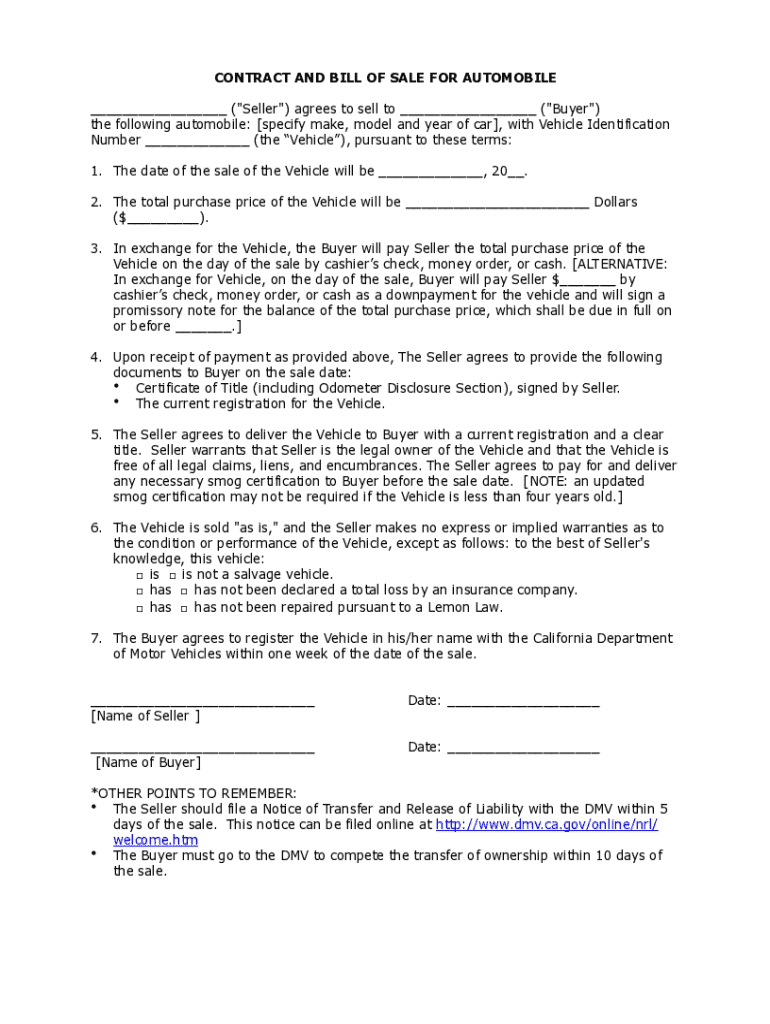
The Form-Auto-Bill-of-Sale serves as a legal document facilitating the transfer of vehicle ownership from the seller to the buyer. It includes crucial details about the transaction, such as vehicle identification, sale price, and conditions of sale. The form is vital because it not only documents the sale but also provides proof of ownership transfer, which is critical for legal and tax purposes. This document ensures that both parties understand their rights and responsibilities, minimizing potential disputes later.
How to Use the Form-Auto-Bill-of-Sale
Using the Form-Auto-Bill-of-Sale involves several key steps to ensure all necessary information is captured accurately. The seller starts by entering details about the vehicle, including make, model, year, VIN, and mileage. The buyer's information is also crucial, such as full name and contact details. Next, both parties must agree on the terms of the sale, including the price and any warranties that may apply. Signing the document finalizes the sale, at which point the buyer typically receives the vehicle, and the seller receives payment.
Steps to Complete the Form-Auto-Bill-of-Sale
- Identify the Parties Involved: Clearly document the names, addresses, and contact information of both the buyer and seller.
- Provide Vehicle Details: Include the vehicle's make, model, year, VIN, and current mileage.
- Outline Sale Terms: Agree on the purchase price, payment method, and any included terms or warranties.
- Describe Vehicle Condition: Mention any known defects or as-is sale conditions to set clear expectations.
- Sign and Date: Both buyer and seller should sign and date the form to validate the agreement.
- Witness Signature: If required by state law, have the document witnessed or notarized to enhance its legal standing.
Key Elements of the Form-Auto-Bill-of-Sale
The Form-Auto-Bill-of-Sale contains essential components that need careful attention to detail:
- Vehicle Description: Detailed specifications including VIN are critical for identification.
- Sale Date and Location: Specify when and where the sale occurred, which is useful for record-keeping and legal compliance.
- Payment Information: Include the full purchase price and payment method to prevent any future discrepancies.
- Legal Disclosures: Acknowledge any legal disclosures related to the vehicle, such as recalls or lien information.
Legal Use of the Form-Auto-Bill-of-Sale
The Form-Auto-Bill-of-Sale is legally binding, protecting both buyer and seller by documenting the transfer of ownership. It can be used in legal situations to prove that the vehicle was sold or to resolve disputes related to ownership questions. This form is crucial when registering the vehicle with the Department of Motor Vehicles (DMV) or transferring insurance. It also serves as a record for tax purposes, as transactions need to be reported accurately.
State-Specific Rules for the Form-Auto-Bill-of-Sale
Different states in the U.S. may have unique requirements for the Form-Auto-Bill-of-Sale. For example, some states mandate notarization, while others might require additional information like emissions certification or a smog check. States may also differ in how they handle title transfers and processing fees. It's essential to check your state's DMV website for specific requirements to ensure the form is compliant and accepted without issues.
Important Terms Related to the Form-Auto-Bill-of-Sale
Understanding common terms in the Form-Auto-Bill-of-Sale clarifies the transaction process:
- VIN (Vehicle Identification Number): A unique code used to identify individual motor vehicles.
- As-Is Condition: Implies that the buyer accepts the vehicle in its current state, with no warranties.
- Lienholder: Refers to any financial institution that holds a security interest in the vehicle.
- Odometer Reading: Indicates the vehicle's mileage at the time of sale. Accurate disclosure is often legally required.
Digital vs. Paper Version
The Form-Auto-Bill-of-Sale can be completed in either digital or paper format, with each option having distinct advantages. A digital form streamlines the process with easy sharing and online storage. Utilizing platforms like DocHub can enhance the process by offering features like electronic signatures and secure document management. Paper forms, however, may be preferred in traditional transactions or where physical signatures are necessary. Both forms, when executed correctly, hold the same legal authority.
Examples of Using the Form-Auto-Bill-of-Sale
In practical scenarios, the Form-Auto-Bill-of-Sale proves its utility across various contexts:
- Private Sale: An individual selling their vehicle to another individual typically uses a bill of sale to transfer ownership properly.
- Dealership Transactions: While dealers may have their own forms, private transactions often rely on this form to document the sale.
- Inherited Vehicles: When transferring ownership of a vehicle received as inheritance, a bill of sale records the new ownership details.
Each of these scenarios illustrates the form's role in providing a clear and legally recognized record of vehicle transactions.