Definition and Purpose of the Emergency Contact Information and Authorization for Release
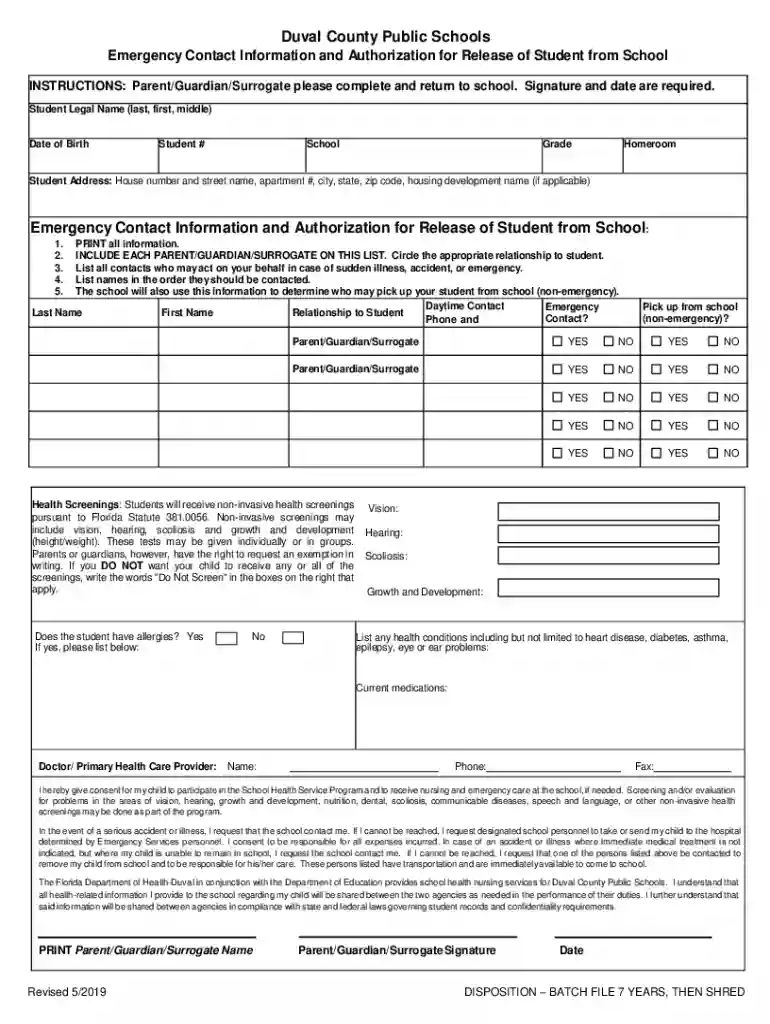
The Emergency Contact Information and Authorization for Release form is a critical document used primarily in educational settings, encompassing both emergency contact details and consent for the release of specific information. It requires parents or guardians to provide essential data regarding a student, including contact information and permissions related to medical care and school-related activities. This form serves dual purposes: it ensures swift emergency responses and grants authorization for the controlled release of a student's information under specified circumstances. By clearly detailing who can access what information and when, the form functions as an essential safeguard for student welfare.
How to Use the Emergency Contact Information and Authorization for Release
Utilizing the Emergency Contact Information and Authorization for Release effectively involves understanding its sections and ensuring that all necessary information is accurately provided. Here are step-by-step instructions for using the form:
- Identify Emergency Contacts: List individuals who can be contacted in case of emergencies. Include names, relationship to the student, phone numbers, and addresses.
- Health Conditions: Clearly detail any health conditions or allergies the student may have. This ensures the school is prepared to respond appropriately in emergencies.
- Authorization Section: Grant permission for certain individuals to pick up the student from school and outline the circumstances under which specific information can be released.
- Medical Consent: Provide explicit consent for school authorities to seek medical care in emergencies. This includes agreement to contact healthcare providers if necessary.
- Signature and Date: Ensure the form is signed by the parent or guardian and dated to confirm consent is current and valid.
How to Obtain the Emergency Contact Information and Authorization for Release
Obtaining the Emergency Contact Information and Authorization for Release form is generally straightforward. Most educational institutions, such as schools in Duval County, will provide this form during student enrollment periods.
- Directly from the School: Request the form at the school’s administrative office. It’s often included in the student registration packet.
- Online Access: Many schools offer downloadable versions of the form on their official websites, ensuring parents can easily access and complete them from home.
- Email Request: Contacting the school via email can also be an effective way to receive a digital copy of the form.
Steps to Complete the Emergency Contact Information and Authorization for Release
Completing the Emergency Contact Information and Authorization for Release involves following precise steps to ensure all information is accurate and comprehensive:
- Read Instructions: Carefully read any instructions or guidelines provided with the form to prevent errors or omissions.
- Fill Out Personal Details: Provide the student's personal information, including full name, date of birth, and address.
- Input Emergency Contacts: Add details of those authorized to be contacted, specifying their relationship with the student.
- Detail Medical Information: Note any existing medical conditions, medications, and healthcare provider details.
- Authorization Section: Clearly indicate individuals authorized to receive information or take certain actions in emergencies.
- Review and Sign: Double-check all entries for accuracy, then sign and date the form to validate its contents.
Importance of the Emergency Contact Information and Authorization for Release
The critical importance of the Emergency Contact Information and Authorization for Release cannot be overstated:
- Safety: It ensures that the school can quickly contact the right individuals in emergency scenarios.
- Medical Readiness: Provides crucial health information to assist in emergency medical situations.
- Legal Compliance: Facilitates adherence to privacy and information-sharing laws like FERPA in the U.S., which regulates how schools manage students' educational records.
- Parental Control: Offers parents the ability to manage who has access to their child’s information and under what circumstances.
Who Typically Uses the Emergency Contact Information and Authorization for Release
The primary users of the Emergency Contact Information and Authorization for Release form are educational institutions and parents or guardians:

- Schools: Administer the form as part of their emergency preparedness and student data management systems.
- Parents/Guardians: Fill out the form to ensure their child’s health and safety information is current and accessible to the school.
- Authorized Individuals: Those designated by parents who may be called upon in emergencies or to collect the child from school.
Key Elements of the Emergency Contact Information and Authorization for Release
Several critical elements are included in the form to ensure it serves its intended purpose effectively:
- Contact Information: Comprehensive details for emergency contacts and parents.
- Medical Details: Information on existing health issues and authorized medical treatments.
- Authorization: Sections detailing who can access certain information or take specific actions regarding the child.
- Signature Section: Ensures legal validity by requiring a parental signature to authorize the contents of the form.
State-Specific Guidelines for the Emergency Contact Information and Authorization for Release
While the overarching purpose of the Emergency Contact Information and Authorization for Release is consistent, some state-specific rules may apply:
- State Regulations: Differences can arise due to state-implemented privacy laws or educational regulations.
- Custom Forms: Schools may adapt the form to better fit state requirements or local policies.
- Consultation: Parents may need to consult with the school administration or legal advisors to ensure compliance with state-specific guidelines.