
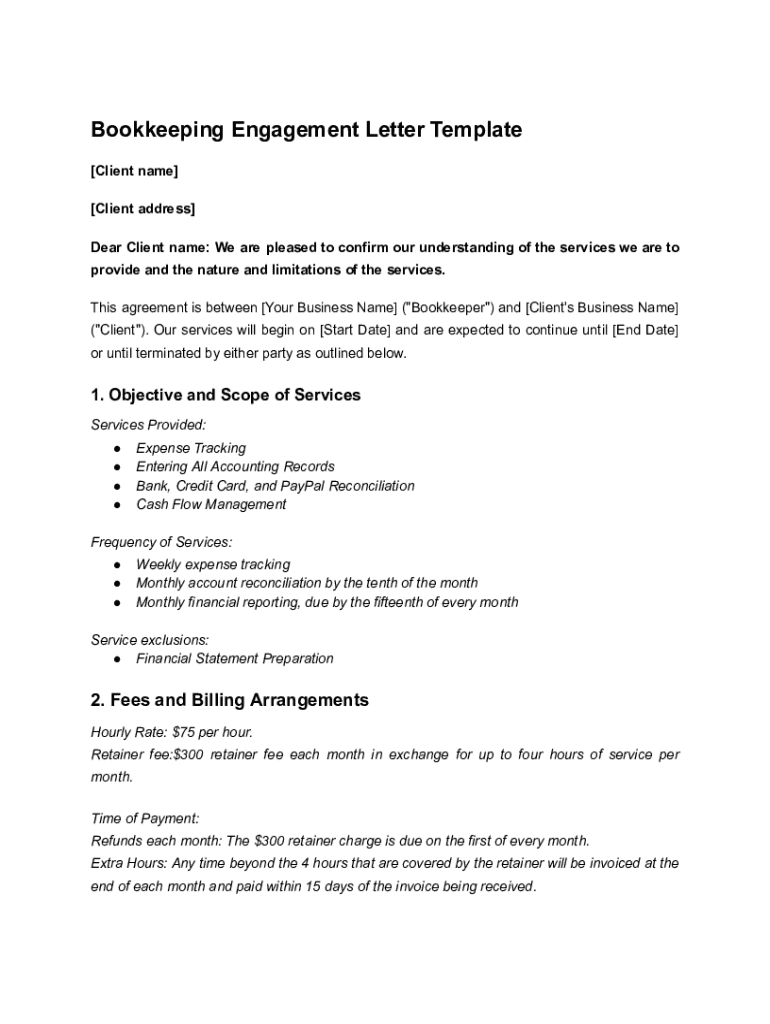







Key Elements of the Bookkeeping Engagement Letter Template
The Bookkeeping Engagement Letter Template is a formal agreement between a bookkeeper and a client that outlines the terms and responsibilities of their working relationship. The document typically includes important components that ensure a clear understanding of both parties' roles and obligations.
Scope of Services
- Specifies bookkeeping tasks to be provided, such as expense tracking, data entry, account reconciliation, and financial reporting.
- Clearly outlines the specific duties the bookkeeper will perform, reducing the potential for misunderstandings.
Fees and Billing Arrangements
- Details the agreed-upon fee structure, whether hourly, flat-fee, or a retainer model, and includes terms for additional services.
- Includes billing frequency and payment terms, providing transparency and facilitating financial planning for both parties.
Duration of the Agreement
- States the period for which the engagement will remain in effect, including the start and end dates.
- May include clauses for renewal, amendment, or termination of the contract by either party.
Confidentiality Obligations
- Outlines requirements for safeguarding sensitive financial data both during and after the contract term.
- May specify measures for securing digital records, reflecting concerns for data security in digital work environments.
Client Responsibilities
- Clearly defines tasks the client must complete for effective bookkeeping, such as providing necessary documentation and access to financial accounts.
- Includes timelines for submitting financial information, ensuring the bookkeeper has adequate data to work with.
Important Terms Related to the Bookkeeping Engagement Letter Template
The language in a Bookkeeping Engagement Letter Template involves legal and bookkeeping-specific terms that define the relationship and obligations. Understanding these terms is critical for both the bookkeeper and the client.
Indemnification Clauses
- Protects the bookkeeper from liability related to the client-provided information by specifying that the client will compensate the bookkeeper for losses resulting from inaccurate data.
Governing Law
- States the legal jurisdiction that will govern the terms of the engagement, typically aligning with where the services are rendered or the bookkeeper is located.
Dispute Resolution Procedures
- Provides a framework for resolving disagreements, whether through negotiation, mediation, or arbitration, thus minimizing the potential for costly legal proceedings.
Legally Binding Clauses
- Ensures that both parties are held to the commitments outlined in the letter, providing a basis for enforcement under applicable contract law.
How to Use the Bookkeeping Engagement Letter Template
Utilizing the Bookkeeping Engagement Letter Template ensures a mutual understanding between the bookkeeper and their client, establishing a foundation for a productive working relationship.
Step-by-Step Instructions
- Review the Template: Begin by reading through the entire template to become familiar with its sections and terms.
- Customize the Content: Modify specifics such as the scope of services, fees, and client obligations to reflect the unique aspects of the engagement.
- Clarify Terms: Ensure that both parties fully understand and agree on the terms, particularly concerning responsibilities, data handling, and payment details.
- Finalize the Document: Once both parties agree, finalize the document with electronic or handwritten signatures for validity.
Case Scenarios
- New Clients: For clients engaging a bookkeeper for the first time, the template serves as a tool to establish expectations upfront.
- Existing Relationships: For ongoing clients, the template can be used to update terms or expand the scope of services.
Steps to Complete the Bookkeeping Engagement Letter Template
Completing the template accurately is important for establishing transparent and mutually agreeable terms between the bookkeeper and client.
Procedure
- Gather Necessary Details: Compile all required information, such as contact information, service offerings, and fee structures.
- Fill Out the Template: Input the gathered details into the allocated sections of the template, ensuring accuracy and clarity.
- Review with Client: Discuss the drafted letter with the client to confirm all terms are understood and agreed upon.
- Sign and Share: Once agreed upon, both parties should sign the engagement letter, and each should retain a copy for their records.
Practical Tips
- Consultation with a Lawyer: Consider having the engagement letter reviewed by an attorney, especially for bespoke service terms or unique service offerings.
- Digital Completion: Use document preparation software to fill out and sign electronically, which facilitates easy sharing and documentation.
Examples of Using the Bookkeeping Engagement Letter Template
Practically applying the template across different bookkeeping scenarios can illustrate its versatility and importance.
Real-World Applications
- Small Business Engagement: A local retail shop contracts a bookkeeper to manage monthly financial statements and tax preparation. The engagement letter would outline these specific duties and financial arrangements.
- Non-Profit Organization: A charity organization seeks bookkeeping assistance for grant tracking and audit preparation. Here, the template would specify compliance reporting and confidentiality requirements reflecting the nature of financial documentation involved.
Different Business Types
- Freelancers and Consultants: Individual professionals using bookkeeping services to maintain personal and business financial clarity will find the template useful for documenting service expectations.
- Larger Corporations: For substantial entities with complex accounting needs, the template can accommodate detailed service levels and escalation clauses for potential future needs.
Software Compatibility with the Bookkeeping Engagement Letter Template
The compatibility of the Bookkeeping Engagement Letter Template with various software platforms ensures seamless integration within existing accounting practices.
Supported Software
- DocHub: Directly supports the editing and signing of engagement letters without needing third-party applications.
- QuickBooks and Xero: Integrates bookkeeping data efficiently, enabling straightforward transfer of client-related financial documents.
- Generic PDF Editors: Most PDF editing software can handle the engagement letter, allowing for flexible customization and distribution.
Advantages of Digital Versions
- Ease of Use: Facilitates swift amendments, document sharing, and signing by leveraging online platforms.
- Enhanced Security: Protects sensitive financial information with advanced encryption when shared electronically.
Legal Use of the Bookkeeping Engagement Letter Template
A critical component of the Bookkeeping Engagement Letter Template is its legal enforceability, providing a structured and defendable agreement between the involved parties.
Compliance with Legal Standards
- ESIGN Act Compliance: Enables legally binding electronic signatures, ensuring the digitized engagement letters hold legal weight similar to pen-on-paper.
- Clarity of Terms: Mitigates legal ambiguities by explicitly articulating the roles, responsibilities, and expectations of both parties within the template.
Considerations
- Amendments and Addendums: Allow for changes to the initially agreed-upon terms, thereby maintaining the document's relevance as the working relationship evolves.
- Audit Trails: Retains a chronological record of all changes made to the document, crucial for legal scrutiny or internal audits.
State-Specific Rules for the Bookkeeping Engagement Letter Template
Compliance with state-specific rules ensures that the terms within the engagement letter respect regional legal guidelines.
Key Considerations
- Jurisdictional Variances: Differences in state laws regarding contract enforceability may necessitate modifications to standard terms or clauses.
- Professional Licensing Requirements: Some states mandate specific licensing for bookkeepers, and the engagement letter may be required to reflect adherence to such regulations.
State Guidelines
- California and New York: These states often have stringent consumer protection laws, influencing how confidentiality and payment terms are treated.
- Texas and Florida: Particular requirements around data protection and electronic transactions might impact how engagement letters are drafted.
Who Typically Uses the Bookkeeping Engagement Letter Template
The Bookkeeping Engagement Letter Template caters to varied users, ensuring professional relationships are structured and managed effectively.


Primary Users
- Professional Bookkeepers: Facilitates the establishment of professional safeguards and clarifies service commitments.
- Accounting Firms: Useful for standardized client onboarding processes and consistent documentation across multiple bookkeepers and clients.
- Small and Medium Enterprises (SMEs): Provides clarity and reassurance for businesses engaging external bookkeeping services.
Secondary Users
- Individual Entrepreneurs: As they grow, formalized bookkeeping arrangements with clear terms become essential.
- Non-Profit Organizations: Utilizing the template helps ensure compliance with financial reporting standards, crucial for regulatory and donor transparency.




