






Definition and Meaning
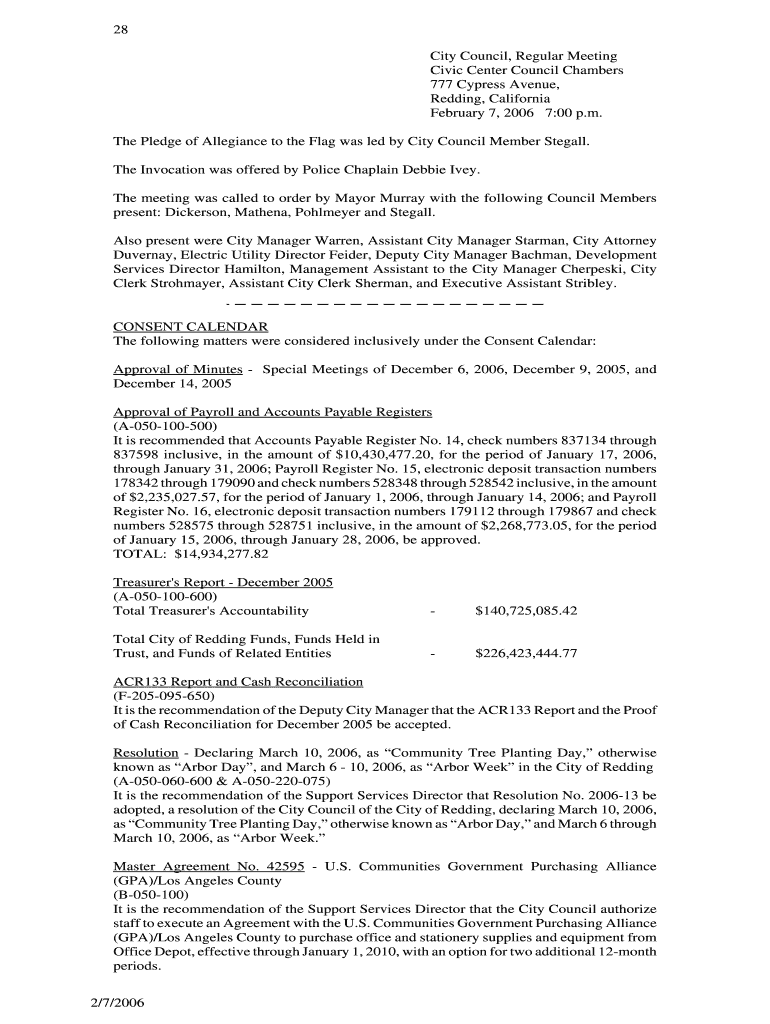
The "2-7-06, Regular Meeting (pdf) - City of Redding" refers to the official record of the City Council meeting that took place on February 7, 2006, in Redding, California. This document is crucial for transparency and public awareness, capturing the decisions made, discussions held, and actions implemented during the meeting. It includes information on topics such as city operations, resolutions, declarations, and community project updates which were addressed by the council members.
Key Elements of the 2-7-06, Regular Meeting
The document encompasses various components that provide a comprehensive overview of the meeting:
- Attendance Records: Lists the council members who were present and absent, offering insight into the participation of city representatives.
- Financial Reports: Contains details about financial approvals and disbursements, crucial for understanding the city's budgetary allocations and expenditures.
- Resolutions and Recommendations: Includes the text of resolutions passed, showcasing the council's stance on different issues.
- Community Project Discussions: Features updates on major projects such as the new library and the California Horse Park, highlighting the council's focus on community development.
- Declarations: Covers special declarations for events like Arbor Day and Spay & Neuter Month, reflecting the council's public awareness initiatives.
How to Use the 2-7-06, Regular Meeting (pdf)
To effectively utilize this document, consider the following steps:
- Identify Relevant Sections: Scan the table of contents or headings to find information pertinent to your interests or research needs.
- Review Financial Decisions: Analyze sections detailing financial registers for insights into budgetary priorities.
- Understand Local Ordinances: Examine any amendments to local laws and ordinances to stay informed on regulatory changes.
- Community Engagement: Use the portions discussing community projects to understand local development initiatives and opportunities for public involvement.
How to Obtain the 2-7-06, Regular Meeting (pdf) - City of Redding
To access this vital document, you can follow these approaches:
- City of Redding Website: Check the official website for downloadable archives of past meeting documents.
- DocHub: Use platforms like DocHub, which might host relevant municipal documents for easy access and review.
- Public Records Request: Visit the City Clerk's office or submit a written request for public records to obtain a physical or digital copy of the document.
Who Typically Uses the 2-7-06, Regular Meeting (pdf)
This document is utilized by a diverse group of individuals and entities, including:
- City Officials and Employees: To track decisions and directives that impact their roles and responsibilities.
- Researchers and Journalists: Seeking information on municipal governance and local policy changes.
- Community Activists and Residents: Engaging with city planning and projects for advocacy or personal interest.
- Legal Professionals: Consulting records for legal matters or compliance with local ordinances.


Steps to Complete the 2-7-06, Regular Meeting (pdf)
While the document itself does not require completion, understanding its contents can be approached strategically:
- Read the Document Thoroughly: Gain complete knowledge of the meeting's proceedings.
- Highlight Key Areas: Emphasize areas relevant to your interests or concerns.
- Take Notes on Action Items: Record any follow-up actions or decisions for further investigation or engagement.
Legal Use of the 2-7-06, Regular Meeting
The document serves an important legal function in maintaining transparency and accountability in local governance. As a public record, it can be referenced in legal settings or used as evidence of the city council's decisions and policies at the time.
Examples of Using the 2-7-06, Regular Meeting
There are various practical applications for the information found within the document:
- Academic Research: Utilized in studies related to political science, public administration, or urban planning.
- Community Advocacy: Used by groups to support initiatives or oppose projects that affect the local community.
- Policy Analysis: Assists policymakers and analysts in evaluating past decisions for future policy development.