






Definition and Purpose
The "Appeal to Student Appeal Committee Against Preclusion" is a formal process that a student can initiate to contest a decision that restricts their educational progression due to preclusion. Preclusion refers to a prohibition often imposed when a student fails to meet academic standards or regulations set by an educational institution. The appeal process offers students a chance to present their case and evidence for reconsideration. Typically used in higher education settings, this appeal aims to provide students with an opportunity to address procedural errors or to present new evidence not available during the initial decision-making. By successfully submitting an appeal, students potentially secure another chance to continue their studies, thereby preserving their academic and future career opportunities.
Reasons to Use the Appeal Process
There are several compelling reasons why a student might choose to file an appeal against preclusion:
- Procedural Errors: Students may identify mistakes made during the initial decision process, such as miscalculation of grades or incorrect application of rules.
- New Evidence: Sometimes, relevant information wasn’t available or considered during the original decision-making.
- Mitigating Circumstances: Personal issues like illness or family emergencies may have impacted a student's academic performance. These should be communicated, ideally with supporting documentation.
- Clarification and Transparency: Filing an appeal allows for a deeper understanding of the decision-making process and provides clarification regarding academic standing and requirements.
By exploring these reasons, students can better understand the viability and potential outcomes of appealing.
Obtaining the Appeal Form
To initiate an appeal, students must first acquire the "Appeal to Student Appeal Committee Against Preclusion" form. Typically, this form can be accessed through the following channels:
- Online Platforms: Most institutions offer downloadable forms through their official website. Students need to log in to their student portals to locate and download the form.
- Registrar’s Office: Hard copies of the form may be available at the registrar or academic advising office, offering a direct method of obtaining the necessary paperwork.
- Student Handbook or Policy Guide: Often, detailed instructions and links to forms are included in academic policy guides provided to students at the start of their program.
Accessing the form promptly ensures that students have ample time to prepare and submit their appeal before any deadlines.
Steps to Complete the Appeal Form
Completing the appeal form involves several meticulous steps:
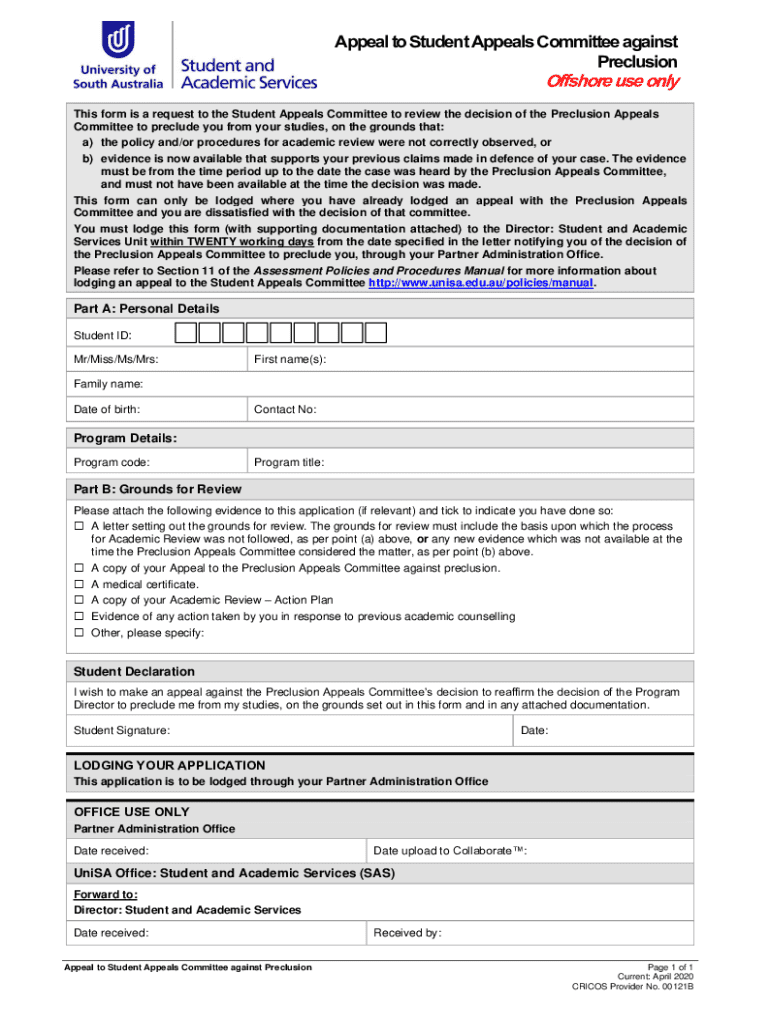
- Personal Information: Fill out all personal details accurately, including full name, student ID, contact information, and program details.
- Grounds for Appeal: Clearly articulate the reasons for the appeal. Make sure to support statements with relevant facts or evidence.
- Supporting Documentation: Compile and attach necessary documents, such as medical certificates, emails, or letters, corroborating your claims.
- Submission Deadline: Double-check submission dates to ensure adherence to timeline requirements. Missing the deadline can nullify the appeal process.
- Verification: Verify that all sections are complete and accurate. If possible, seek guidance or a secondary review from an academic adviser.
Completing these steps diligently facilitates a thorough and professional submission that supports the student’s case effectively.
Key Elements of the Appeal Form
Understanding the critical components of the appeal form enables students to prepare a robust submission:
- Personal Details: Essential information to identify the appellant and their academic standing.
- Grounds for Appeal: A section that demands a concise explanation backed by facts or new evidence.
- Required Documentation: Proof or supportive material that strengthens the student’s case.
- Declaration: A formal declaration affirming the truthfulness of the information provided.
Each element plays a pivotal role in forming a comprehensive appeal that accurately represents the student’s situation and justification for reconsideration.
Required Documentation
Supporting documents are a critical aspect of any appeal, serving as evidence of claims:
- Academic Records: Transcripts or grade reports that illuminate the academic issue in question.
- Medical Certificates: Official documentation that supports claims of medical or personal issues affecting performance.
- Emails/Correspondence: Any prior communications or decisions from the institution that are relevant to the case.
- Statements from Faculty: Letters or testimonials from professors or academic advisors offering insights or support for the student’s claims.
Thorough documentation improves the chances of a positive outcome by providing tangible proof of the student's claims.
Submission Methods for the Appeal Form
Depending on the institutional guidelines, students can submit their appeal form through various channels:
- Online Submission: Most institutions now accept online submissions, which involve uploading the completed form and supporting documents to a dedicated portal.
- Email: As a formal means, sending completed forms along with attachments via email can be an option, typically addressed to the student affairs office.
- In-Person: For those who prefer face-to-face interactions, submitting the appeal in person at the registrar’s or relevant administrative office is possible.
Selecting an appropriate submission method aligns with institutional preferences and ensures the appeal is handled timely and effectively.
Important Deadlines and Timelines
Timeliness is critical in the appeal process. It’s crucial for students to be aware of the following deadlines:
- Submission Window: The appeal must typically be filed within twenty working days from receiving the preclusion notice.
- Response Time: Institutions may offer a standard period, such as two to four weeks, where decisions on appeals are made and communicated.
- Potential Extensions: In unique circumstances, extensions may be granted, but only when formally requested and justified.
Keeping track of these deadlines is vital to maintaining eligibility for appeal and ensuring that submissions are reviewed without unnecessary delays.