Definition and Meaning of the EIN Letter from IRS
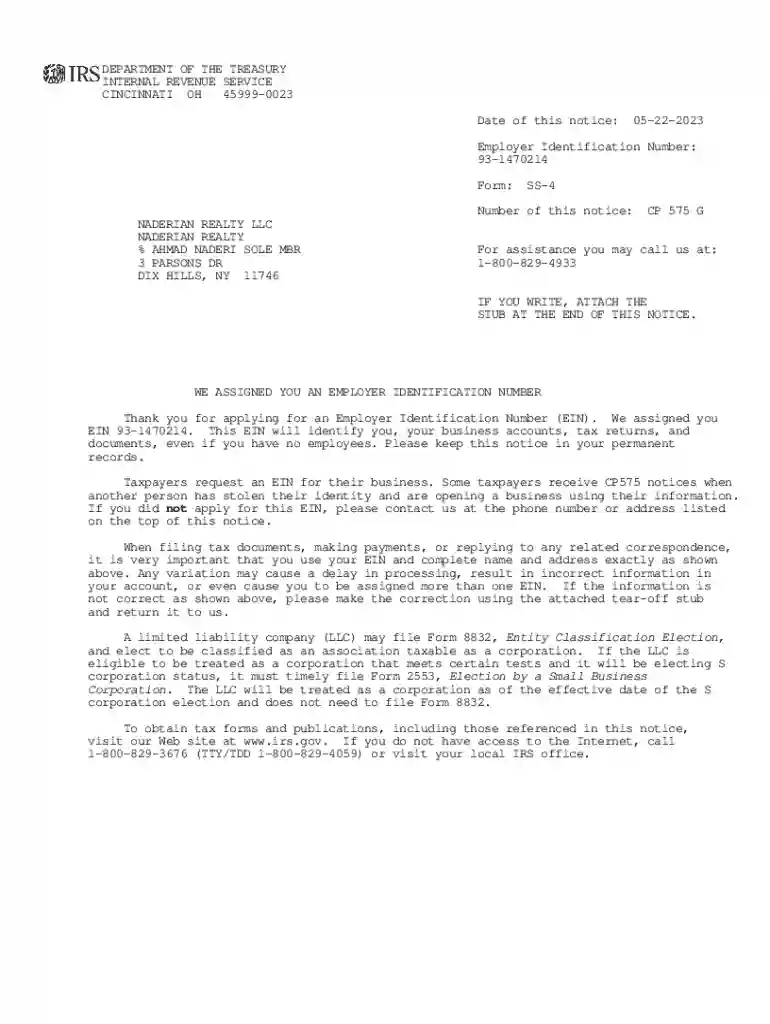
The "Example of EIN Letter from IRS," officially known as the CP 575 notice, is a vital document for businesses in the United States. It serves as an official notification from the Internal Revenue Service (IRS), confirming the issuance of an Employer Identification Number (EIN) to the registrant, which is often a business entity. This unique nine-digit number is crucial for fulfilling tax obligations, opening business bank accounts, and properly identifying business entities during various transactions and filings.
Key Elements of the EIN Letter
The letter typically includes:
- EIN Assignment: Confirmation of the EIN assigned to the business.
- Business Name and Address: Official details of the entity as recognized by the IRS.
- Instructions and Requirements: Guidance on how and when to use the EIN.
- Safeguarding Information: Emphasis on the protection of taxpayer data.
- Contact Information: Resources for further assistance and queries.
How to Use the EIN Letter from IRS
The EIN provided in this letter is pivotal for several business-related functions:
- Tax Filings: Use the EIN in place of a Social Security Number for business tax returns.
- Bank Accounts: Open and manage business bank accounts with the assigned EIN.
- Legal Filings: Apply for business licenses and other legal permissions.
- Payroll: Report taxes and manage payroll for employees.
Additionally, businesses can leverage the EIN to apply for credit and conduct transactions that require official business identification.
How to Obtain the EIN Letter from IRS
To receive the EIN letter:
- Application Methods: Apply online through the IRS website, by mail, fax, or by phone (specifically for international applicants).
- Processing Time: Online applications are usually processed immediately, while others may take up to four weeks.
- Required Information: Prepare details such as the responsible party’s name, Social Security Number or ITIN, and the business structure.
- Location Options: Although the online method is preferred for its speed and convenience, applications can also be processed by mail or fax, with varying processing durations.
Steps to Complete the EIN Application Process
- Choose a Business Structure: Determine whether the entity is an LLC, corporation, partnership, or sole proprietorship.
- Identify the Responsible Party: This is typically the principal officer, general partner, owner, or trustor.
- Gather Required Information: Have the business address, formation date, and any previous EINs handy.
- Submit the Application: Use the chosen method (online, mail, or fax) to submit the application, ensuring all required fields are completed accurately.
- Receive EIN Confirmation: Upon approval, the IRS will issue the CP 575 notice as confirmation.
Legal Use of the EIN Letter from IRS
The EIN serves as a legal identifier:
- Business Operations: It is necessary for legally conducting business transactions.
- Employer Requirements: Used for payroll and employee tax reporting.
- Compliance Obligations: Adheres to state and federal tax laws, ensuring businesses fulfill obligations without using personal Social Security Numbers.
Important Legal Considerations
- Compliance: Businesses must ensure compliance with regulations when using the EIN.
- Privacy: The EIN should be protected as confidential information.
IRS Guidelines for Using the EIN Letter
The IRS provides specific guidelines:
- Proper Usage: The EIN should only be used for business-related activities to distinguish entities.
- Frequent Updates: Keep business information current with the IRS to prevent discrepancies.
- Record Keeping: Maintain records related to EIN usage for at least three years.
Required Documents for Obtaining an EIN
Certain documents and information are needed to apply for an EIN:
- Legal Documents: Articles of incorporation or organization, partnership agreements.
- Identification of Responsible Party: Either a Social Security Number (SSN) or Individual Taxpayer Identification Number (ITIN).
- Business Details: Name, address, and type of entity.
Considerations for Specific Types of Businesses
- Partnerships and Corporations: May need additional documents like operational agreements.
- Sole Proprietors and Single-Member LLCs: Typically require fewer documents as the owner is the responsible party.
Penalties for Non-Compliance with the EIN Letter
Failure to properly use and maintain records of the EIN can lead to:
- Fines and Penalties: Imposed for incorrect filings or misuse of the EIN.
- Delayed Processing: Applications or filings that require an EIN may be delayed without proper documentation.
Businesses are advised to familiarize themselves with IRS requirements to mitigate risks and ensure seamless business operations.