







Definition & Meaning
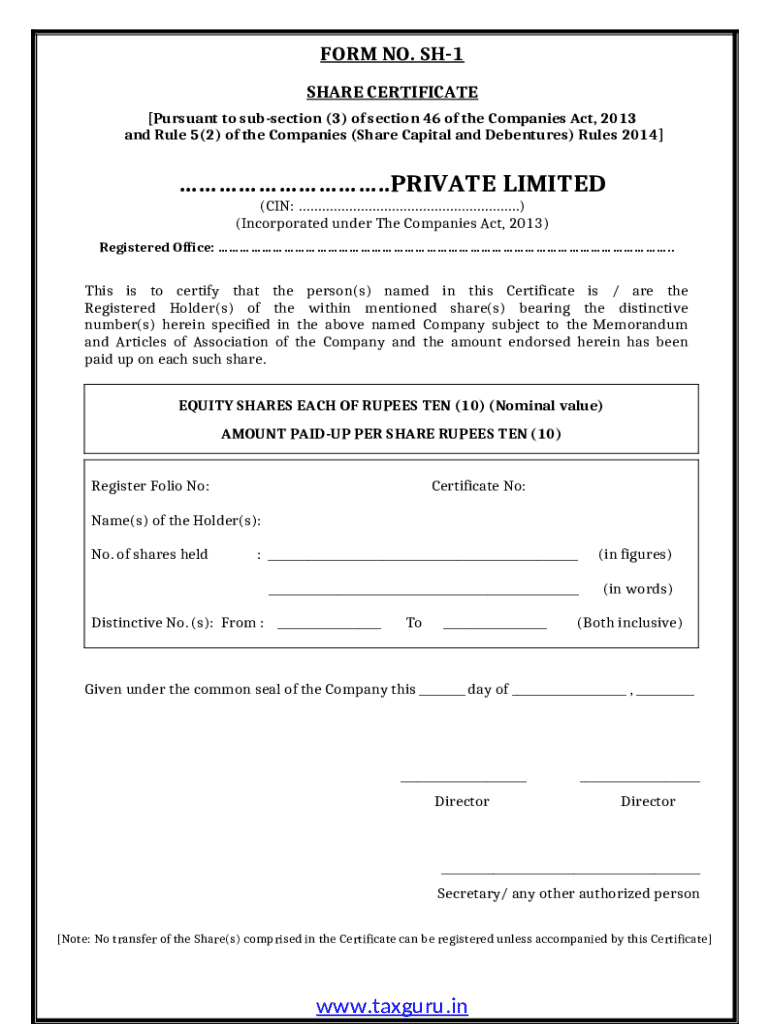
A share certificate, also known as FORM NO. SH-1, is an official document issued by a private limited company under the Companies Act, 2013. It serves as written evidence that the named holder owns a specified number of equity shares in the company. These certificates are typically issued once the shareholder has fully paid for the shares. A share certificate includes crucial details such as the number of shares owned, distinctive numbers, and the signatures of company directors and an authorized person. This document is indispensable for validating ownership during transactions involving shares.
How to Use the Share Certificate
Using a share certificate involves several vital functions, primarily serving as proof of ownership in share transactions. Shareholders must present the certificate when transferring shares to another party. The document ensures the transferor has the right to sell or transfer the shares, protecting against fraud. Furthermore, share certificates can be used to claim dividends or participate in shareholder meetings. Organizations often require physical or digital copies of the certificate as part of their records to verify share ownership.
How to Obtain the Share Certificate
To obtain a share certificate, the process generally begins when an individual or entity purchases shares in a private limited company. Following the purchase and full payment for the shares, the issuing company's registrar or transfer agent will prepare the certificate. It's crucial for the shareholder to ensure that the details mentioned in the certificate, such as the number of shares and shareholder's name, are accurately recorded. The shareholder can typically expect to receive the document within a few weeks after the share purchase, depending on the issuing company's procedures.
Steps to Complete the Share Certificate
Completing a share certificate involves several critical steps:
-
Purchase of Shares: Ensure full payment for the desired number of shares.
-
Details Confirmation: The company records the transaction and issues the certificate with necessary details, including shareholder’s name, number of shares, and distinctive numbers.
-
Verification: The transferee verifies the certificate to confirm accuracy in the recorded information.
-
Signatures: Authorized company personnel, often directors, sign the share certificate to authenticate it.
-
Issuance: The completed share certificate is then issued to the shareholder as proof of ownership.
Key Elements of the Share Certificate
A share certificate comprises several essential components that validate its authenticity and purpose:
- Company Information: Includes the company's name and registration number.
- Shareholder Details: The name and address of the shareholder.
- Share Information: Details about the number of shares, share class, and face value.
- Distinguishing Numbers: Unique identification numbers for the shares.
- Issuance Date: The date when the certificate is issued.
- Authorized Signatures: Signatures from company directors or authorized personnel.
- Company Seal: An official seal or stamp from the issuing company.
Who Typically Uses the Share Certificate
Share certificates are mainly used by shareholders of private limited companies. They are particularly relevant for individual investors, institutional investors, and company insiders who participate in the stock market. Companies, officers, and employees involved in the issuance of shares also utilize share certificates to manage and record share allocations.


Legal Use of the Share Certificate
Share certificates hold legal significance as they act as proof of ownership and entitlement to various shareholder rights. They can be used in legal proceedings where ownership of shares is questioned or when there is a need to resolve disputes involving share transfers. Additionally, they may serve as collateral when seeking financial assistance from institutions. Companies must issue and manage these documents in compliance with relevant securities laws and corporate regulations.
Required Documents
The process of issuing or transferring a share certificate typically requires several supporting documents:
- Purchase Agreement: Documentation that details the transaction of share purchase.
- Proof of Identity: A copy of government-issued identification for verification.
- Proof of Payment: Confirming full payment for the shares designated in the certificate.
- Application Form: Completed application or form provided by the issuing company.
- Board Resolution: In some instances, a copy of the board resolution approving the issuance.
Penalties for Non-Compliance
Failure to comply with regulations related to share certificates can lead to penalties for both the issuing company and the shareholder. Companies may face legal and financial penalties if they fail to issue certificates within the stipulated time frame. Shareholders who do not possess a valid share certificate may encounter challenges in exercising their rights, such as attending shareholder meetings or transferring shares. Non-compliance affects the company’s credibility and may attract scrutiny from regulatory bodies.
Digital vs. Paper Version
In the modern business environment, companies are increasingly offering digital versions of share certificates alongside traditional paper versions. Digital certificates offer several advantages, including ease of storage, instant accessibility, and reduced risk of physical damage. Both versions are legally binding, but digital certificates require secure platforms and authorization mechanisms to ensure their validity.
State-by-State Differences
While the Companies Act, 2013 sets the overarching regulations for share certificates in India, certain states may have additional requirements or nuances in their corporate laws. It's essential for companies and shareholders to be aware of state-specific rules that might affect the issuance or registration process. These variations can include the mode of dispute resolutions regarding share transfers and specific timelines for certificate issuance.




